
Bowen: Trump and Netanyahu wanted to reshape the Middle East - now they risk a permacrisis
Trump and Netanyahu's plans for the Middle East risk a permacrisis amid rising tensions with Iran.
BBC News1 min read
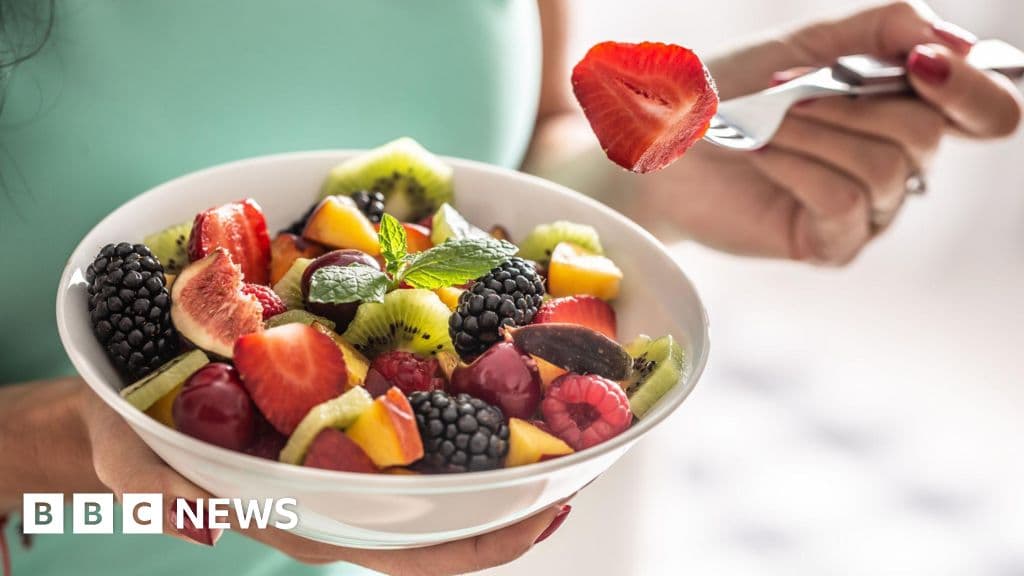
A new study indicates that specific foods, rather than just any five portions of fruits and vegetables, are essential for heart health. Researchers recommend blueberries, plums, blackberries, broad beans, and cherries, along with green tea, to boost flavanol intake.
Eating very specific types of fresh food each day - not just any five portions of fruit and vegetables - could help keep your heart healthy, a study suggests.
Not all five-a-days are equal, researchers claim, meaning people may not be getting enough important nutrients called flavanols in their diets.
Eating blueberries, plums, blackberries, broad beans and cherries, washed down with green tea, is an ideal way to top them up, they say.
In a study of 30,000 people from the US and UK - even in some who regularly ate five portions of fruit and veg a day - these were often lacking.
Other experts are more cautious, saying it is unclear if boosting flavanol levels would prevent heart problems.
According to new research in the journal Food and Function, fewer than one in five people get enough flavanols (500mg) into their bodies every day.
These antioxidants, found in certain foods, can support heart health, circulation and blood vessel elasticity by reducing inflammation, it says.
The study tracked people's diets and used biomarkers in the participants' urine to monitor intake.
Lead investigator Dr Javier Ottaviani said some simple food switches could "make a real difference" to how much of these beneficial compounds are absorbed.
"Most people assume that eating plenty of fruit and vegetables covers this, but what this research shows is that the specific choices you make matter far more than the total amount."
Investigator Prof Gunter Kuhnle, from the University of Reading, said while five-a-day was still the right message, we may need to think more carefully about which five.
"Different fruits and vegetables offer very different nutritional benefits beyond vitamins and minerals," he said.
"As our understanding of these compounds grows, there is a real opportunity to make dietary guidance more specific and more effective."
The NHS does not set a recommended daily flavanol level to hit, but around 500mg a day seems to be beneficial for heart health, according to the US Academy of Nutrition and Dietetics.
Foods with the higher flavanol content per portion, based on the researchers' tests, include:
The study recommends blueberries, plums, blackberries, broad beans, and cherries, along with green tea.
The study involved 30,000 participants from the US and UK.
Many people are often lacking important nutrients called flavanols in their diets.
Other experts caution that it is unclear if boosting flavanol levels would prevent heart problems.
Trump and Netanyahu's plans for the Middle East risk a permacrisis amid rising tensions with Iran.

Protests erupt in Kenya against U.S. Ebola quarantine center for Americans

NASA announces crew for Artemis III lunar mission set for next year

Two men sentenced for violence during protest over Henry Nowak's death

Belfast's Sudanese community is on high alert following a violent attack linked to an asylum seeker charged with attempted murder.

A train passenger is the first to be sentenced under the new UK harassment law for inappropriate behavior.
See every story in News — including breaking news and analysis.
The researchers have been doing flavanol studies with the chocolate manufacturing giant Mars Inc, which is investigating cocoa flavanol supplements.
The British Heart Foundation (BHF) says the actual amount of flavanols in commercial chocolate - and indeed other foods - varies a lot.
Dark chocolate is often seen as a healthier choice than milk chocolate, because it contains less sugar and more cocoa, which is a source of flavanols.
Two or three squares of dark chocolate might contain between 22-73mg of flavanols, while a few chunks of milk chocolate will have 3-7mg.
Heart expert Prof Naveed Sattar, from the University of Glasgow, said although some small trials had shown some favourable effects of flavonoids on blood pressure, there was no real evidence yet showing actual reductions in heart disease outcomes.
He said more trials were needed before they could be recommended as a way "to reduce cardiovascular events", such as heart attacks and strokes.
Prof Ana Rodriguez-Mateos, an expert in nutrition at King's College London, said the levels of flavanol in fruit and vegetables can vary widely, as they also do in fibre content, and that this should be explored further.
Dell Stanford, from the BHF, says how much flavanol is contained in different products depends on where the food is grown, the climate, its ripeness, and how it is stored or processed - and also on who is eating it.
"Small amounts are absorbed directly. Our gut bacteria help break down flavanols into forms the body can use, but everyone's gut bacteria are different, so the benefits people get from flavanols may vary too."
The BHF and the British Nutrition Foundation say the best way to support your heart health is to follow established advice to eat a balanced diet containing a wide variety of fruit and vegetables.