
Dua Lipa and Callum Turner wedding divides Palermo: ‘I could understand if it was for the pope’
Dua Lipa and Callum Turner celebrate their wedding in Palermo, drawing mixed reactions from locals.
The Guardian World1 min read
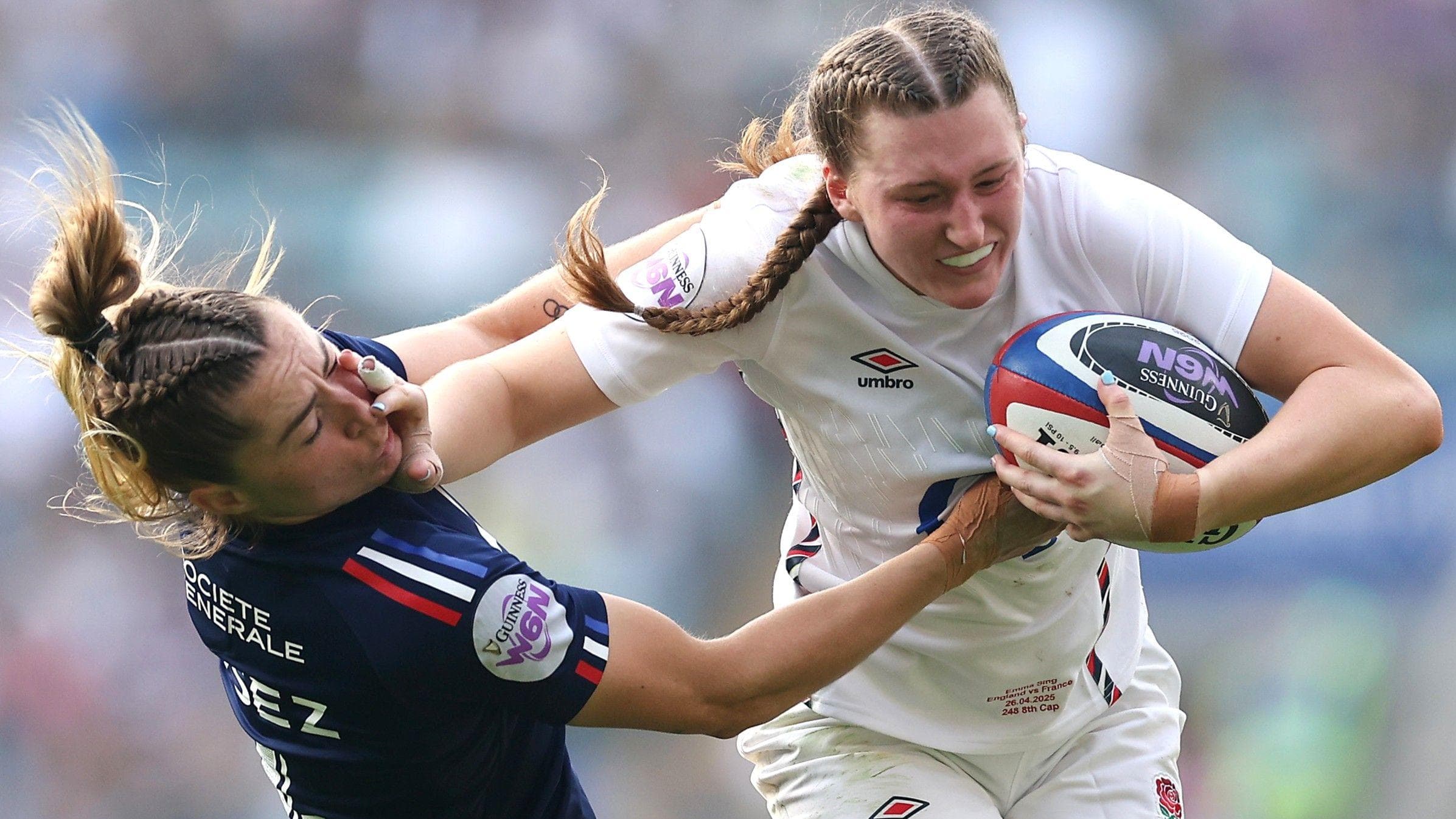
The Women's Six Nations has evolved with increased athleticism and tactical play, leading to a 3-0 halftime score between France and Spain. The competition, now in its 25th year, raises questions about whether these changes enhance or detract from the women's game.
Mentioned in this story
The first 40 minutes of the Women's Six Nations was, at best, a half for the purists.
Estelle Sartini, a PE teacher from Caen, kicked the only points as France, one of the favourites for the inaugural title, headed for the dressing rooms with a 3-0 lead over Spain, who contested the first five editions before being replaced by Italy in 2007.
This year will be the 25th staging of the competition. And the game has changed. But has it been for the better?
Does increased athleticism and tactical nous risk losing the distinctive character of the women's game?
Simon Middleton, who was England's head coach for eight years before standing down after the 2023 Six Nations, saw the change firsthand.
"The women's game doesn't want to be the men's game - and that's how it should be," he said.
But, first, what do the numbers say?
The 2025 Women's Six Nations was the highest scoring ever, with an average of 55.9 points per game. It is part of trend, rather than an anomaly.
The five highest-scoring tournaments have all taken place since 2019.
After two rounds of this season's tournament, the average stands at 58 points a game - on track for another record.
Is it simply the fact that England, world champions and seven-time defending champions, are running amok and pushing up the average?
The Red Roses have certainly been dominant. They racked up winning margins of 55 and 52 points against Wales and Scotland respectively last year.
So far in this year's tournament they have seen off Ireland by 21 points and Scotland by a whopping 77-point margin.
But even if you remove England's results from the calculations, teams are scoring more.
Take the Red Roses' fixtures out of consideration and there was still a record average of 51.2 points per match in 2025, matching the high set for the same metric in 2021.
The growth in points has outstripped the rise in the winning margin as well.
The average number of points per match in 2007, when Italy first joined the tournament, was just shy of 30, nearly half of what it was in 2025.
The average winning margin meanwhile has risen, but only slightly, from 19.5 points to 25.4 over the same period.
In this year's tournament the average winning margin is currently higher than usual at 34 points, but an incomplete fixture list make it an imperfect comparison.
The halftime score was 3-0 in favor of France.
The Women's Six Nations has seen increased athleticism and tactical sophistication, changing the style of play.
Simon Middleton was the head coach of England's women's rugby team for eight years before stepping down after the 2023 Six Nations.
There are concerns that increased athleticism and tactics may compromise the distinctive character of the women's game.
Dua Lipa and Callum Turner celebrate their wedding in Palermo, drawing mixed reactions from locals.

New analysis reveals half of California's waterways are tainted with PFAS pesticides linked to health risks.

Senate passes a $70 billion immigration enforcement bill after 18 hours of debate.

Hamas refuses to surrender arms, stating only police will carry weapons in Gaza.

A 21-year-old man has been charged with attempted murder after a staff member was shot with a crossbow at the University of Surrey. The suspect, Almunthir Daqamah, is a former student and is due in court on Friday.

UN warns US-Iran war is pushing millions into hunger crisis
See every story in News — including breaking news and analysis.
Image caption,
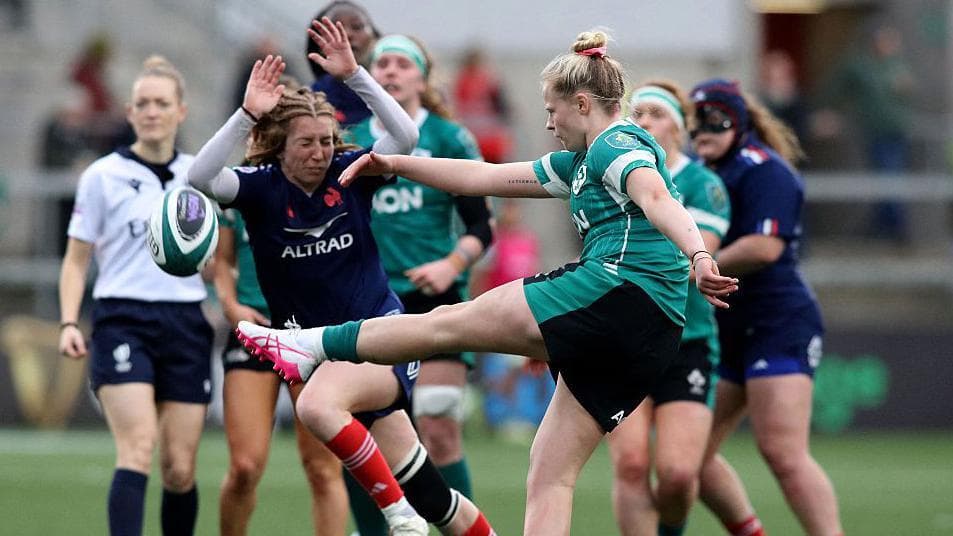
Ireland's Dannah O'Brien led the Women's Six Nations in both the number of kicks (83) and the distance kicked (2,851m) in last year's tournament
That record high in points being scored has come despite teams keeping the ball in hand less.
Over the past five years, the ball has been kicked more than ever in the Women's Six Nations, with a steady and consistent rise from an average of 26.1 kicks per game in 2021 to 44.7 in 2025.
The number of kick metres has doubled.
"I certainly was blessed with England when I came in, because I had so many really technically good players, who could kick the ball really well - Emily Scarratt, Katy Daley-Mclean and a number of other players - and that fit perfectly with how we wanted to play," Middleton told BBC Sport.
"Other teams didn't have that for a long time.
"The whole staffing group level has risen significantly across all the nations, with an increase in coaching standards and a tactical awareness of playing a territory-based game, rather than a possession-based game.
"Over the last four or five years certainly, a lot of teams have probably shaped their key players to fit that.
"You look at Dannah O'Brien - she's got a fantastic kicking game and Ireland built all their game around her, kick-chasing from inside their own half.
"Wales with Lleucu George and Keira Bevan - they play a very kick-dominated game.
"During my time with England, France became a team that kicked more than we did.
"Two things have changed - the game understanding and the technical ability of players to be able to play that way."
Teams are using the boot more, putting the ball in behind defences sooner, rather than playing though multiple passages in search of an opening.
The share of possessions with five or more phases has dropped year-on-year in the Women's Six Nations since 2020.
There has been a parallel change however.
Those passages of play are coming quicker and quicker, with 62.8% of rucks completed in under three seconds in last year's competition, up 10% on the 2020 competition.
That rapid-fire ruck speed was a feature of the Women's Rugby World Cup last year as well, with Canada and England both getting through 45% of their rucks in less than two seconds in their semi-finals, quicker than the average men's Test side.
In the 2021 tournament, England's equivalent figure was only 21%.
"High ruck speed delivers momentum, quick ball is good attacking ball, cutting down the defence's time to organise," says Middleton.
"These are all things we know, but I think there are a couple of things at the root of the game getting faster.
"Firstly there is the technical development in players - body position in the clear out and the like - but also, and probably just as significant if not more so, there is the physical capacity of players now to go again and again and again. There are some tremendous athletes out there."
Perhaps the most predictable change to have coincided with the women's game becoming more professional has been at the set-piece.
Line-outs and scrums are becoming more reliable sources of ball for all teams with success rates of 89% and 95% respectively in last year's tournament.
Goal-kicking, a similarly repeatable skill which benefits from training time, is also up with a 70.1% success rate representing a post-pandemic high.
Kickers are landing more from out wide too. Their success rate from within 10m of the touchline was 41% in 2025, another rise on the previous five years.
More reliable goal-kickers and a greater emphasis on kicking out of hand has made the women's game closer to the men's in some respects.
Middleton warns that it needs to keep some of its catch-pass creativity and distinct difference.
"It is a different type of brand and it's played for a different type of audience and I don't think a game too heavily based on kicking will suit it," he said.
"That's fine coming from me and the way we played!
"But if everybody goes down the route of being really tactical and playing territory rather than possession, being really prescriptive, rather than with heads up and eyes open, you could see a lot of ball being kicked away and the ball pinging back and forth and nobody really wants to see that."