
Venezuela’s Delcy Rodriguez heads to The Hague for land dispute case
Delcy Rodriguez travels to The Hague for Venezuela-Guyana land dispute case
Al Jazeera English1 min read
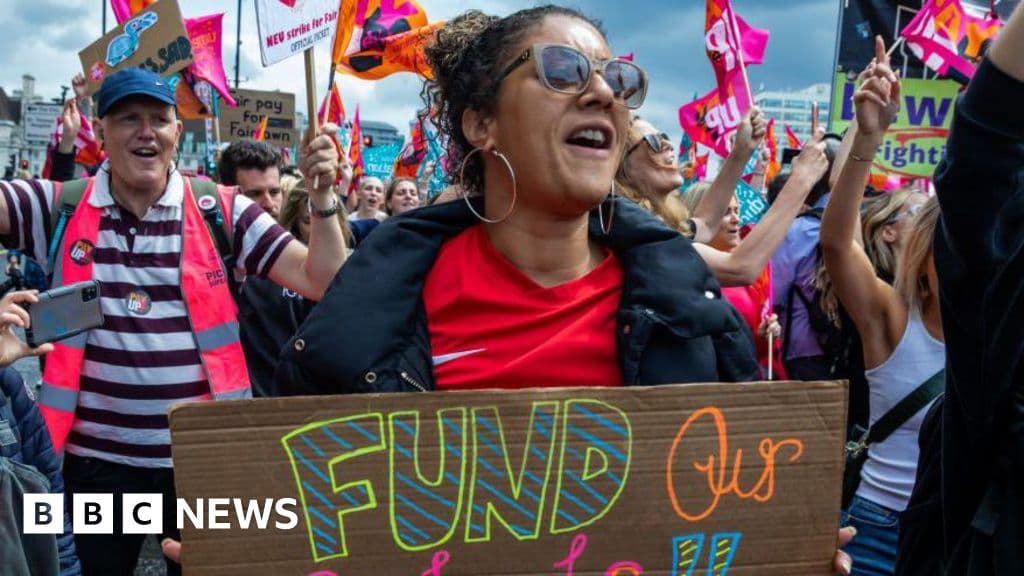
Teachers and support staff in England will vote on a potential strike over government pay recommendations. The National Education Union criticizes the proposed 6.5% pay increase as insufficient amid rising inflation.
Mentioned in this story
Teachers and school support staff in England will vote on whether or not to go on strike if the government stands by its pay recommendation for the next academic year.
The National Education Union (NEU), England's largest teaching union, says it will hold a formal ballot in the autumn if the government "does not take urgent action".
The government has recommended a 6.5% pay award spread over the next three years, but the NEU has said that is unlikely to match inflation and called it an "insult".
The Department for Education said the NEU's announcement was "extremely disappointing", saying it would be children and parents that "pay the price" for any strike action.
The NEU wants the pay offer for teachers to be above inflation, which has risen following the start of the Iran war.
The Consumer Prices Index measure of inflation was 3.3% in the year to March, but the Bank of England warned it could increase still further this year following a "significant energy price shock".
The teaching union also wants the government to fully fund pay rises so schools do not have to find money for them in existing budgets - and says the current recommendation is not enough.
NEU general secretary Daniel Kebede said "no member wants to be taking strike action", but pay and workload issues had fuelled a "recruitment and retention crisis that is directly impacting" education.
"Unfunded below-inflation pay increases are an insult. The government is well aware that schools do not have the money to fund them," he said.
"To avoid this collision course the government needs to step up and deliver the properly funded education system our children and young people deserve."
A Department for Education (DfE) spokeswoman said: "Ultimately, it will be children, young people and hard-working parents who will pay the price for any industrial action.
"We've taken action to restore teaching as the highly valued profession it should be including boosting pay, and tackling poor pupil behaviour, high workload, and poor wellbeing so more teachers stay on in the profession and thrive."
Each year, the independent School Teachers Review Body (STRB) receives submissions about pay from the government, unions and others. It then makes recommendations to ministers, who ultimately decide how much to award.
The DfE's submission proposed a 6.5% pay award over 2026-27, 2027-28 and 2028-29, with "the level of awards weighted towards the latter part".
It said higher awards in the last two years would give schools more time to "plan for changes to their operations, provisions or staffing".
Teachers are voting on a strike due to dissatisfaction with the government's proposed 6.5% pay increase, which they believe does not keep pace with inflation.
The National Education Union plans to hold a formal ballot in the autumn if the government does not take urgent action regarding pay.
The proposed 6.5% pay increase is considered by the NEU to be inadequate as it is unlikely to match the current inflation rate.
The Department for Education expressed disappointment over the NEU's announcement, stating that children and parents would suffer the consequences of any strike action.
Delcy Rodriguez travels to The Hague for Venezuela-Guyana land dispute case

Israeli settlers compel Palestinian family to exhume and rebury father’s body in West Bank.
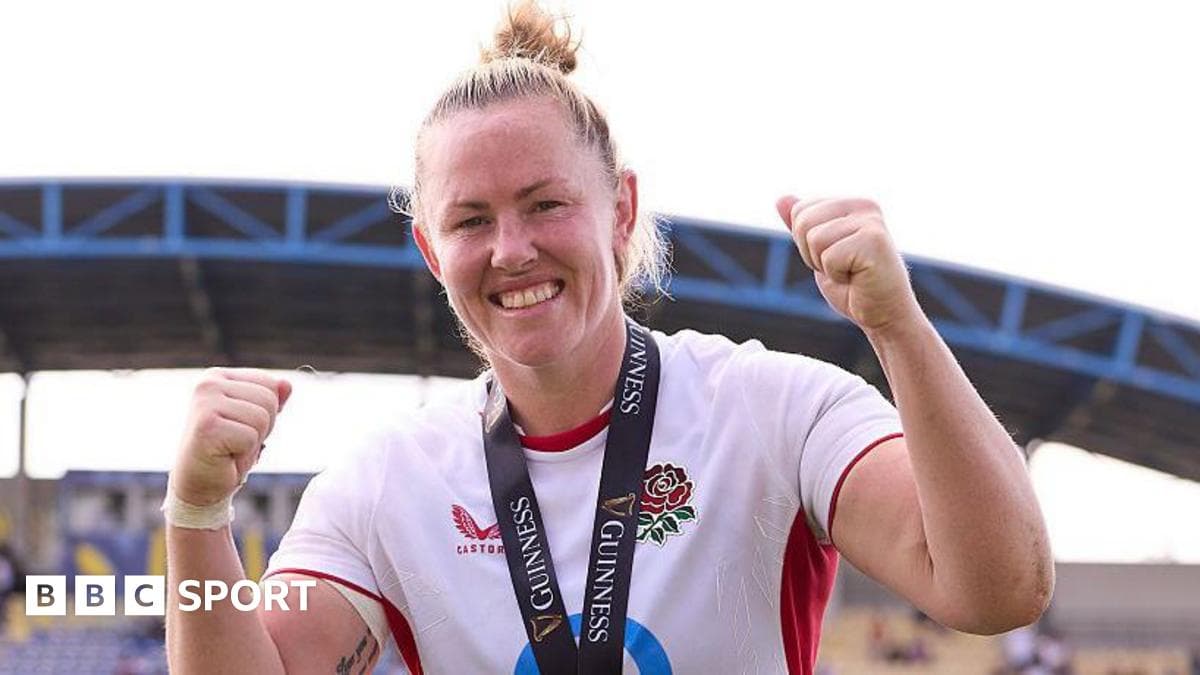
Marlie Packer makes her mark as England prepares for a Grand Slam decider after dominating Italy.

Iran insists on guarantees from FIFA for World Cup participation

Bobby Cox, the iconic manager of the Atlanta Braves, has passed away at 84.

Man City beats Brentford 3-0, closing the gap to Arsenal in the title race.
See every story in News — including breaking news and analysis.
The STRB's report has not yet been published, and so a final pay offer has not been announced.
However the NEU said "early reports" suggested it would not be enough "for schools to prevent redundancies and rises in workload".
An informal indicative ballot held already this year, with a turnout of 48.6%, suggested 90.5% of teachers who are members of the NEU would be prepared to take industrial action over pay.
NEU members went on strike over pay in the first half of 2023, forcing many schools to close on eight days of action.
The NEU called off further action after the government revised its 2023 offer to 6.5%.
Teachers were then given a 5.5% rise in 2024 and a 4% rise in 2025.