
Dua Lipa and Callum Turner wedding divides Palermo: ‘I could understand if it was for the pope’
Dua Lipa and Callum Turner celebrate their wedding in Palermo, drawing mixed reactions from locals.
The Guardian World1 min read
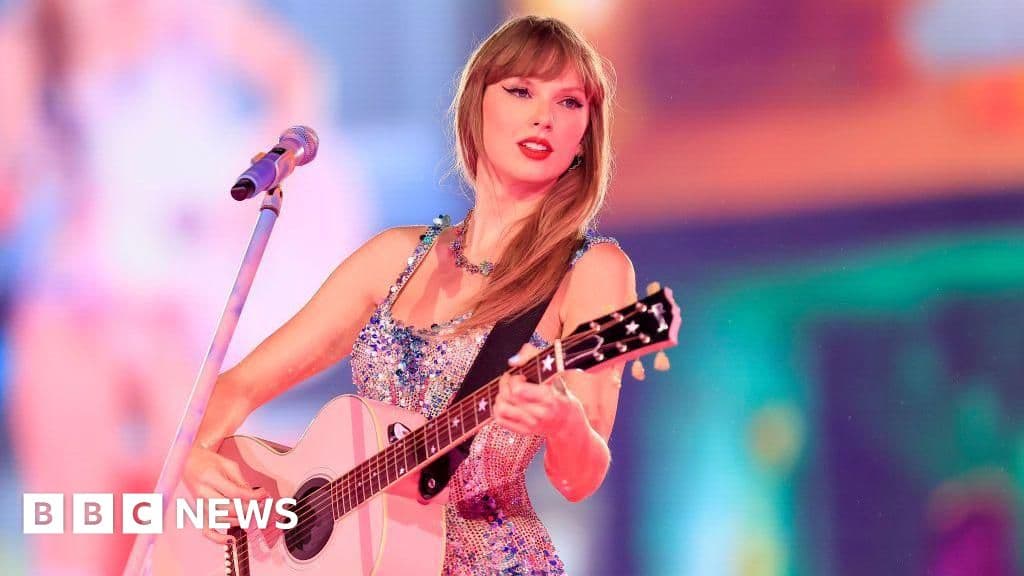
Taylor Swift has filed three trademark applications in the US to protect her voice and image from AI impersonations. This move follows similar actions by other celebrities amid rising concerns over AI-generated content.
Mentioned in this story
Taylor Swift has applied to trademark her voice and appearance in an apparent attempt to protect herself from artificial intelligence impersonations.
The pop superstar has lodged three trademark applications in the US - one using a photo of herself on stage during her Eras Tour, and the other two being audio clips of her introducing herself while promoting her last album.
AI-generated versions of Swift have cropped up in various ways in recent years - from explicit images to a fake election ad in which she appeared to urge people to vote for Donald Trump.
The move comes after actor Matthew McConaughey became the first celebrity to use trademark rules to attempt to protect his voice and image from AI misuse earlier this year.
Trademark applications are a relatively new way for celebrities to combat the growing issue of AI rip-offs.
The photo chosen to represent Swift's image shows her on stage "holding a pink guitar, with a black strap and wearing a multi-colored iridescent bodysuit with silver boots", according to the trademark application.
It has previously been used as one of the official promotional photos for the Disney+ film of the Eras tour.
She has also applied to trademark audio of herself saying "Hey, it's Taylor" and "Hey, it's Taylor Swift" from clips she recorded for Spotify and Amazon Music to promote her album The Life of a Showgirl last autumn.
Even if the photo and sound clips aren't copied directly, registering their trademarks could allow her to stop AI using her image and voice more generally, according to trademark lawyer Josh Gerben, who first published details of the applications on his blog.
"By registering specific phrases tied to her voice, Swift could potentially challenge not only identical reproductions, but also imitations that are 'confusingly similar,' a key standard in trademark law," he wrote.
"Theoretically, if a lawsuit were to be filed over an AI using Swift's voice, she could claim that any use of her voice that sounds like the registered trademark violates her trademark rights.
"Same with the image filing. If someone creates an AI-generated version of Taylor in a jumpsuit with a guitar, or something close to it, now Swift has a federal trademark claim."
Taylor Swift filed to trademark her voice and image to protect herself from potential AI impersonations and misuse.
Swift submitted three trademark applications, including one featuring a photo from her Eras Tour and two audio clips of her introducing herself.
Matthew McConaughey was the first celebrity to use trademark rules earlier this year to protect his voice and image from AI misuse.
Dua Lipa and Callum Turner celebrate their wedding in Palermo, drawing mixed reactions from locals.

New analysis reveals half of California's waterways are tainted with PFAS pesticides linked to health risks.

Senate passes a $70 billion immigration enforcement bill after 18 hours of debate.

Hamas refuses to surrender arms, stating only police will carry weapons in Gaza.

A 21-year-old man has been charged with attempted murder after a staff member was shot with a crossbow at the University of Surrey. The suspect, Almunthir Daqamah, is a former student and is due in court on Friday.

UN warns US-Iran war is pushing millions into hunger crisis
See every story in News — including breaking news and analysis.