
Canadian lynx one of big cat sightings in Welsh countryside
Reports of big cats, including a Canadian lynx, emerge from Wales.
BBC News1 min read
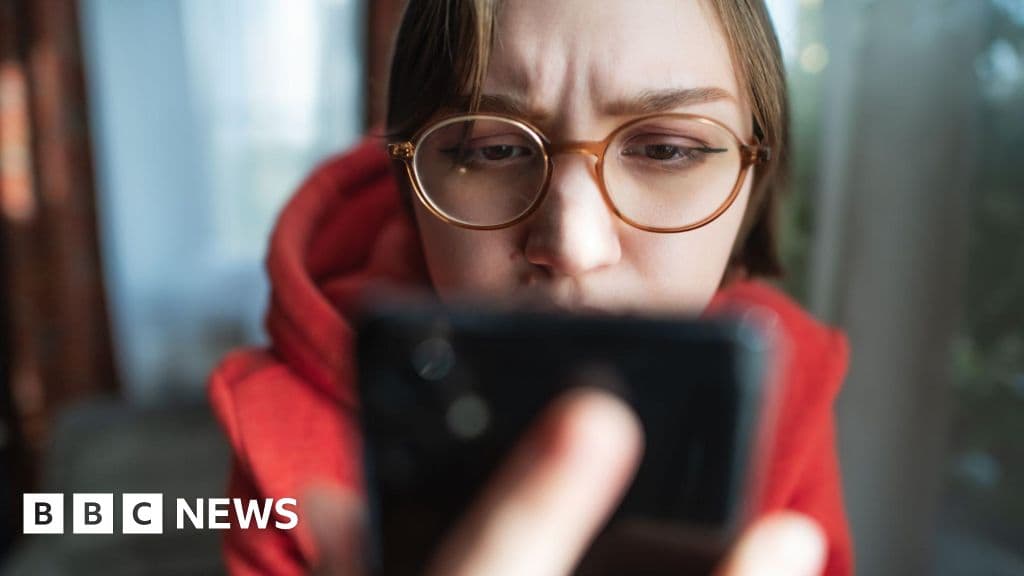
Fraud cases in the UK have surged, with over four million incidents reported last year, as criminals increasingly use AI to manipulate victims. Scammers stole nearly £1.3bn in 2025, prompting calls for better monitoring from tech companies.
Cases of fraud in the UK have surged with criminals using AI to manipulate people and even marrying victims of romance scams to steal more money.
More than four million cases in which money was lost were reported last year - the equivalent of nearly eight on average every minute, according to new figures.
The total has increased by more than one million in two years, with almost £1.3bn stolen by scammers in 2025, according to an annual report by UK Finance.
The enormous scale of the problem could only be tackled if tech companies stepped up monitoring and security of their platforms, the banking trade body said.
Banks said fraud posed "a national security threat" given the impact on victims and the huge sums stolen by organised criminals.
The report, compiled from banking data and the most comprehensive assessment of fraud losses in the UK, reveals:
Fraudsters also use fake profiles on social media and dating sites to meet, groom and ultimately steal from victims who believe they are in a loving relationship.
UK Finance said examples even included a fraudster marrying a victim to continue stealing money.
"The impact goes beyond financial loss; it can cause huge emotional harm, leaving victims burdened by guilt and shame, which is why we must tackle the problem at its source to protect consumers," said Paul Davis, head of economic crime at Barclays. Experts believe the majority of scams are unreported, so do not even register in the statistics.
Scammers are so embedded that the first four men matched with Julie Osgood when she tried out a dating site were all potential fraudsters, the 60-year-old recently told the BBC.
She spotted the problem before being tricked, but many thousands of others were not so lucky.
Kirsty Guest, a florist from North Yorkshire, was scammed out of £80,000 after meeting a man on a dating app, who called himself Patrick.
The relationship developed over months, but was based on a lie, because "Patrick" was a scammer using photos of another, completely innocent, man.
After claiming he had been in an accident on a work trip, he tricked Kirsty into sending thousands of pounds which was then stolen.
"[Fraudsters] are professional and they are making massive volumes of money," she told the BBC in May. "They're intelligent in what they're doing."
Scammers stole nearly £1.3 billion in the UK in 2025.
Over four million fraud cases were reported in the UK last year.
Criminals are using AI to manipulate victims, including tactics like romance scams.
Banks view fraud as a national security threat due to its significant impact on victims and the large sums of money stolen by organized criminals.
Reports of big cats, including a Canadian lynx, emerge from Wales.

India's fury grows over US refusal to apologize for sailors' deaths as G7 summit unfolds.

Raising Awareness: Ebola Prevention in Bunia, DR Congo

The FIFA World Cup 2026 has begun with a thrilling U.S. victory over Paraguay!

Are influencers really helping political campaigns win votes?

Most parents track their 18-25-year-olds on smartphones. Is it healthy?
See every story in News — including breaking news and analysis.
Banks say that criminals are engaging in more sophisticated fraud at greater volume with the use of artificial intelligence (AI).
Criminals have used AI to mimic the voices of celebrities, and even those of the victims' family and friends, which has enabled them to carry out the crime at a greater scale.
As a result, people were more susceptible to being scammed - something that often happened at a vulnerable moment, even if the victim did not consider themselves vulnerable to being tricked.
"One click and you can lose your life savings," said Ruth Ray, managing director of economic crime at UK Finance.
"The financial sector invests huge amounts in protecting customers, but we cannot be the only line of defence."
She said "stronger, enforceable responsibilities" needed to be placed on tech platforms like social media channels and online marketplaces. This could include stronger rules over removing fraudulent advertising, or verification of sellers and secure payment systems.
In so-called authorised push payment (APP) fraud, most victims now have a legal right to their losses being refunded by banks, because they are tricked into transferring money. But losses were up by 19% last year, and 12% of the stolen money was not reimbursed.
Criminals have been adapting their tactics, with experts predicting a surge in scams related to the men's football World Cup in the coming days and weeks.
Data shows a few types of scams fell away last year, such as an 11% drop in impersonation fraud, where criminals pose as a bank, the police or an organisation to convince victims to transfer money to a "safe account".