
Barclays to buy GoHenry kids’ debit card and money app
Barclays is buying GoHenry, a kids' debit card app, to target young users.
The Guardian World1 min read

Suicide-related callouts to fire services in England have tripled over the last decade, reaching 3,250 in 2025. Samaritans are advocating for mandatory training for firefighters to better handle these traumatic incidents.
Suicide-related callouts to fire and rescue services in England have tripled in the last decade, with Samaritans now calling for mandatory training for firefighters, who they say are struggling to deal with the increase in traumatic incidents.
New figures show that fire services in England attended 3,250 suicide callouts in the year ending September 2025, the equivalent to 62 callouts a week. This was up from 997 callouts in 2009-10 when records begin.
Samaritans said firefighters were often among the first on the scene when someone was in suicidal crisis, and despite having to make rapid, life-saving decisions, received no formal mandatory training on how intervene.
Elliot Colburn, public affairs and campaigns manager at the charity, said: “People with this experience are telling us they don’t feel equipped with the training on dealing with someone in suicidal crisis. The data is pretty clear that once someone has undergone a form of suicide prevention training, their confidence in making an intervention and potentially saving a life skyrockets.”
There were 5,717 registered suicides in England in 2024, 61 more than in 2023. Numbers have been increasing since 2017.
The fire service will be called to a suicide-related incident if they have specialist skills or equipment that is needed, for instance breathing apparatus or equipment for working at height or in water.
Paramedics and police will also be called to the scene. Earlier this year, the government announced it was mandating protected time for trauma and suicide prevention training for new police recruits.
Samaritans has written an open letter to the fire minister, Samantha Dixon, calling on her to ensure firefighters receive “the same level of training and resource as their policing colleagues”.
Mark, a firefighter in the West Midlands for almost two decades, said suicide callouts were becoming increasingly common. At the start of his career, he said, he attended them only rarely, and he has been to five incidents in the past year.
Mark said: “We’re attending more and more suicides or suicide attempts*,* and it’sstarting to take a bit of a toll.Quite often we’re first on scene, and we have to intervene or at least attempt to. When you’re waiting for backup and other trained professionals, it can be quite stressful and there’s a lot of pressure on you to act.”
He said callouts for fires was decreasing after extensive prevention work over the past two decades, and he hoped the same could be achieved for suicide attempts.
Mark said: “Fires are actually on the decrease quite significantly, but special service calls like suicides are rising. We’ve done a lot of prevention work on fire over the last 20 years, going into schools and delivering that message, which clearly shows that prevention is better than the cure, and that’s what we’re hoping to achieve here.
“People see us as brave, burly individuals who deal with this kind of stuff on a daily basis, but it does have an effect on you mentally. My hope is that when people see firefighters are being open and discussing this, it might break down some barriers and encourage people to seek help.”
In the year ending September 2025, fire services in England attended 3,250 suicide-related callouts, up from 997 in 2009-10.
Samaritans argue that firefighters often respond first to suicidal crises but lack formal training to effectively intervene, impacting their ability to save lives.
There were 5,717 registered suicides in England in 2024, an increase of 61 from the previous year.
Training significantly boosts firefighters' confidence in making interventions during suicidal crises, increasing the likelihood of saving lives.
Barclays is buying GoHenry, a kids' debit card app, to target young users.

Key FISA provision set to expire as Trump faces backlash over DNI appointment

Watford legend Kenny Jackett passes away at 64

Will Iraq's Prime Minister Ali al-Zaidi succeed in disarming paramilitary groups?
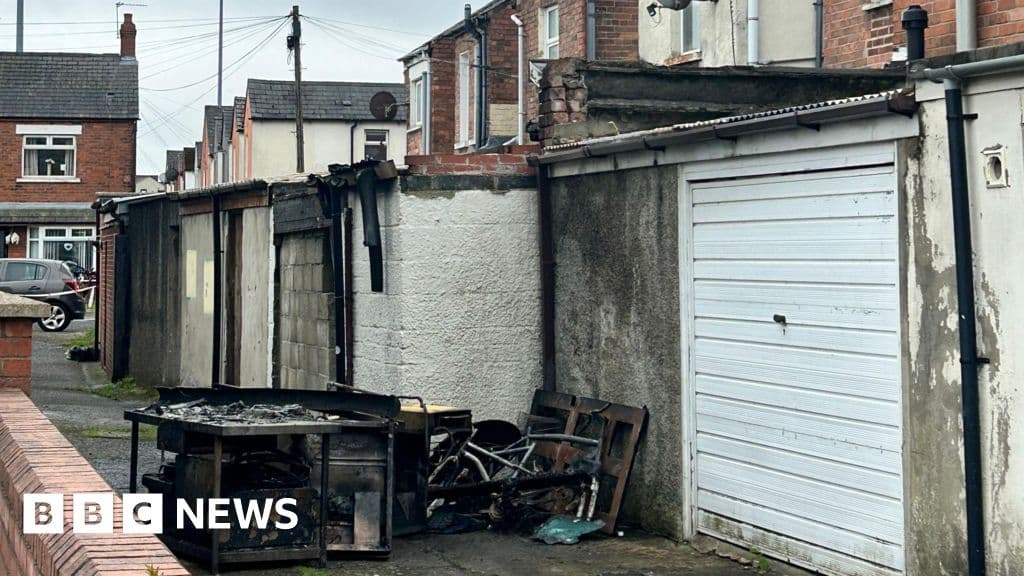
Nineteen people arrested, including a teen, after violence in Northern Ireland and an arson attack.

David Hockney, the iconic British artist known for his diverse work, has passed away at 88.
See every story in News — including breaking news and analysis.