
‘Earth’s first starfleet’: Nasa reveals Artemis III crew and project’s next steps
NASA reveals Artemis III crew and plans for lunar exploration
The Guardian World1 min read
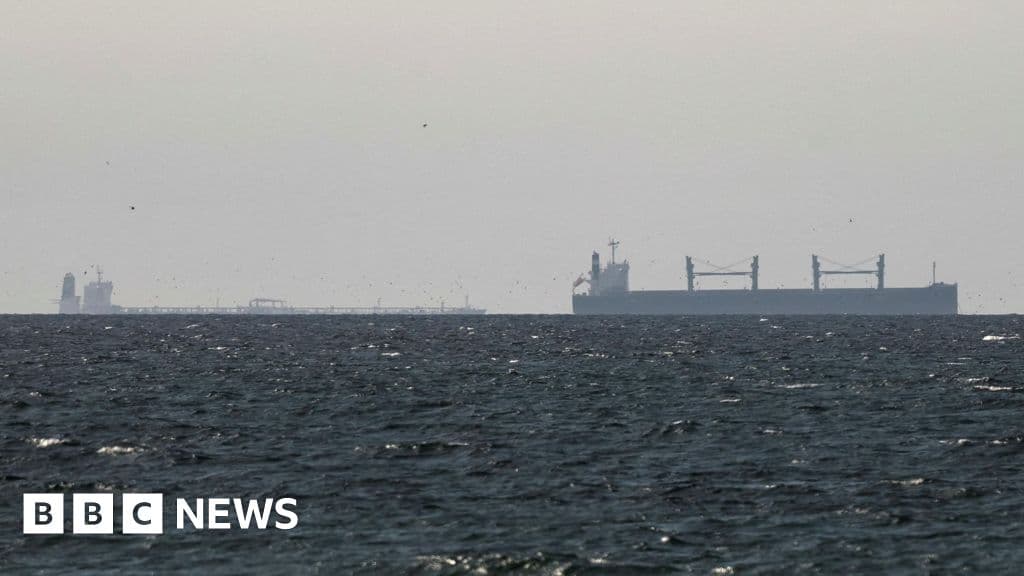
Iran has closed the Strait of Hormuz to commercial vessels, threatening to target any approaching ships. This decision follows recent attacks on vessels in the area and is linked to ongoing tensions with the US.
Mentioned in this story
Iran says it is closing the Strait of Hormuz again to commercial vessels and that any ship that approaches it will be targeted.
The closure came as reports emerged of vessels in or near the strait, including a tanker, were targeted by Tehran on Saturday.
The Islamic Revolution Guard Corps (IRGC) blamed a continuing US blockade for its decision, which comes a day after Iran's foreign minister announced the key global shipping channel had been temporarily reopened.
US President Donald Trump said Iran cannot "blackmail" the US with threats regarding the waterway, which Tehran has effectively blocked for nearly two months - causing global energy prices to soar.
The Islamic Revolutionary Guard Corps (IRGC) Navy warned in a statement on Saturday that "no vessel is to move from its anchorage in the Persian Gulf or the Sea of Oman".
It said a number of vessels had passed through the strait under its management since Friday night, but that it would shut again until the US stopped its blockade of Iranian ports.
"Approaching the Strait of Hormuz will be considered co-operation with the enemy, and the offending vessel will be targeted," the IRGC added.
Trump said on Friday that a naval blockade of Iranian ports would continue until a peace deal was agreed between the two countries. A two-week ceasefire currently in effect is due to expire on 22 April.
The US said it had turned away 23 ships since it began enforcing the blockade on 13 April.
Iran's Supreme National Security Council (SNSC) said this was a violation of the ceasefire agreement and that it would stop the reopening of the strait while it was still in place.
On negotiations to bring about an end to the war, the SNSC said new proposals had been put forward by the US, which Tehran was "currently reviewing and has not yet responded to". Peace talks held earlier this month ended without an agreement.
"We have very good conversations going on. It's working out very well," Trump said about the state of negotiations with Tehran on Saturday.
There have been several reports of vessels being attacked by Iran on Saturday.
Two Iranian gunboats opened fire on a tanker in the strait, the UK Maritime Trade Operations (UKMTO) said.
A container ship was also hit by "an unknown projectile" off the north-eastern coast of Oman, damaging some containers, according to the UKMTO.
Separately, at least two merchant vessels said they were hit by gunfire as they attempted to cross the strait, sources told news agency Reuters.
India's foreign ministry said it had summoned the Iranian ambassador to convey its "deep concern at the shooting incident earlier today involving two Indian-flagged ships in the Strait of Hormuz".
Iran closed the Strait of Hormuz due to ongoing tensions with the US and blamed a US blockade for its decision.
Iran threatened to target any ship that approaches the Strait of Hormuz, warning that no vessel should move from its anchorage.
The closure has contributed to soaring global energy prices, as the Strait is a key shipping channel for oil and gas.
US President Trump stated that Iran cannot 'blackmail' the US with threats regarding the Strait of Hormuz.
NASA reveals Artemis III crew and plans for lunar exploration

Armenians vote for peace as Pashinyan wins election with 49.8%

Are ultra-processed foods becoming the new tobacco? Explore the parallels.

Trump claims Iran shot down US helicopter, vows a response

Social Security funds could run short by 2032, affecting millions
Tragic protest in Herat: Two killed as Taliban police use live fire
See every story in News — including breaking news and analysis.
Data from tracking site MarineTraffic showed some vessels were able to make it through the strait while it was briefly open. Others were forced to change their route after the IRGC denied them access.
About 20% of the world's oil and liquefied natural gas (LNG) is usually transported through the strait, but the number of ships making the journey has dramatically decreased during the recent conflict, which began when the US and Israel attacked Iran on 28 February.
The narrow chokepoint connects the Gulf to the Arabian Sea and is the only way to reach several oil-producing states by sea. The crisis has seen the price of a barrel of oil surge above $100 ($74) at points.
Iran has previously threatened to attack tankers and other ships, as well as warning it had laid mines.