
A powerful US surveillance law is set to expire – what happens now?
Key FISA provision set to expire as Trump faces backlash over DNI appointment
The Guardian World1 min read

Former South Korean President Yoon Suk Yeol has been sentenced to seven years in prison for resisting arrest and bypassing a Cabinet meeting during his martial law imposition in December 2024. This sentence adds to a life sentence he received for rebellion charges.
Mentioned in this story

Supporters of former South Korean President Yoon Suk Yeol stage a rally outside of the Seoul High Court in Seoul, South Korea, Wednesday, April 29, 2026. Ahn Young-joon/AP
Ahn Young-joon/AP
SEOUL, South Korea — A South Korean appeals court on Wednesday sentenced ousted President Yoon Suk Yeol to seven years in prison for resisting arrest and bypassing a legitimate Cabinet meeting before his brief imposition of martial law in December 2024.
The conviction for obstruction of justice and other charges comes on top of a life sentence he has already received on rebellion charges stemming from his baffling authoritarian push, which triggered the most serious crisis for the country's democracy in decades.
Judge Yoon Sung-sik of the Seoul High Court said the conservative former president sidestepped a legally mandated full Cabinet meeting before declaring martial law, falsified documents to conceal the lapse, and deployed security officials "like a private army" to resist law enforcement efforts to arrest him in the weeks following his impeachment. Former President Yoon stood quietly as the verdict was delivered and made no comment.

Yoon Suk Yeol was charged with resisting arrest, bypassing a legitimate Cabinet meeting, and obstruction of justice.
Yoon's martial law imposition in December 2024 triggered a severe crisis for South Korea's democracy, leading to his rebellion charges.
Yoon Suk Yeol faces a total of seven years in prison for the recent charges, in addition to a life sentence for rebellion.
Supporters of Yoon Suk Yeol staged a rally outside the Seoul High Court following his sentencing.
Key FISA provision set to expire as Trump faces backlash over DNI appointment

Nineteen people arrested, including a teen, after violence in Northern Ireland and an arson attack.
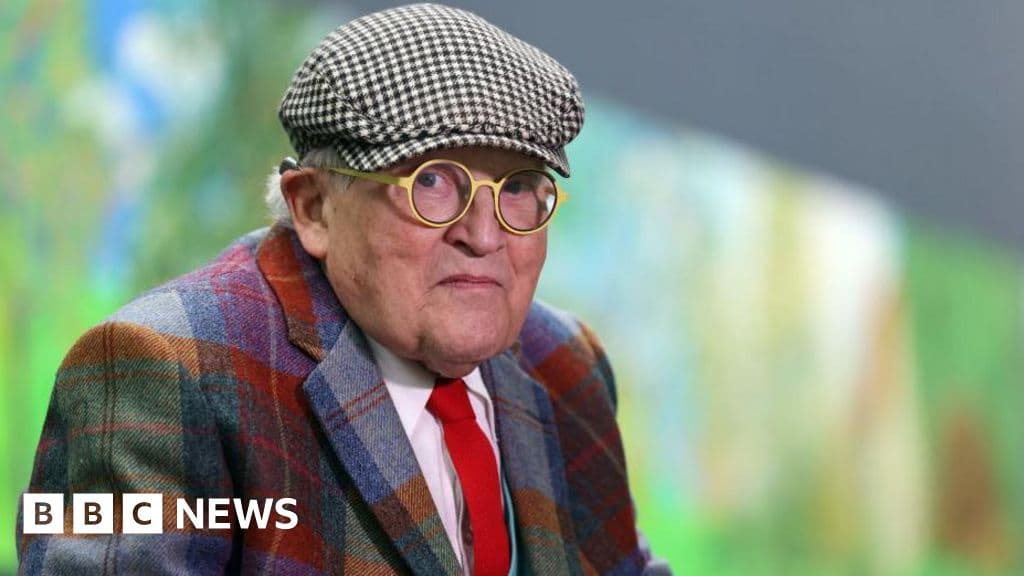
David Hockney, the iconic British artist known for his diverse work, has passed away at 88.

David Hockney, the revolutionary British artist, has passed away at 88.

Exploring the Historical Roots of Torture Against Palestinians

USA faces Paraguay in World Cup 2026 opener at SoFi Stadium!
See every story in News — including breaking news and analysis.
A supporter of former South Korean President Yoon Suk Yeol holds up his portrait during a rally outside of the Seoul High Court in Seoul, South Korea, Wednesday, April 29, 2026. Ahn Young-joon/AP
Ahn Young-joon/AP
Yoo Jeong-hwa, one of Yoon's lawyers, called the verdict "very disappointing" and said the legal team would appeal to the Supreme Court. Yoon has also appealed his life sentence.
A lower court in January sentenced Yoon to five years in prison but partially cleared him of abuse-of-power charges tied to the Cabinet meeting ahead of the martial law declaration, finding he was not responsible for the failure to attend of two members who were invited.
The Seoul High Court reversed that acquittal, finding him guilty on all counts and ruling that he violated the rights of those two as well as seven other Cabinet members who weren't notified by convening only a select few to simulate a formal meeting.
Though brief, Yoon's Dec. 3, 2024, martial law decree threw the country into a severe political crisis, paralyzing politics and high-level diplomacy and rattling financial markets. The turmoil eased only after his liberal rival, Lee Jae Myung, won an early presidential election in June.
Yoon was suspended from office on Dec. 14, 2024, after being impeached by the liberal-led legislature and was formally removed by the Constitutional Court in April 2025.
Following his suspension from office, he refused to comply with a Seoul court's warrant to detain him for questioning, setting up a standoff in which dozens of investigators arrived at the presidential residence in early January 2025 but were blocked by presidential security forces and vehicle barricades. He was detained later that month, released by another court in March, and was then re-arrested in July.
He remained in custody after that as a series of criminal trials, which are continuing, began.
Wednesday's ruling came a day after the same court increased to four years the sentence of Yoon's wife, Kim Keon Hee, for charges including accepting luxury gifts from the Unification Church, which sought political favors from Yoon's government, and involvement in a stock price manipulation scheme.
Prosecutors in a separate trial last week also requested a 30-year prison term for Yoon over allegations that he deliberately tried to escalate tensions with North Korea in 2024 by ordering drone flights over Pyongyang as he sought to create justifiable conditions for martial law at home.