
Me, worry? For US small businesses, Trump’s tariffs are now a non-issue
US small businesses have moved past concerns about Trump's tariffs, adapting to new economic realities.
The Guardian World1 min read
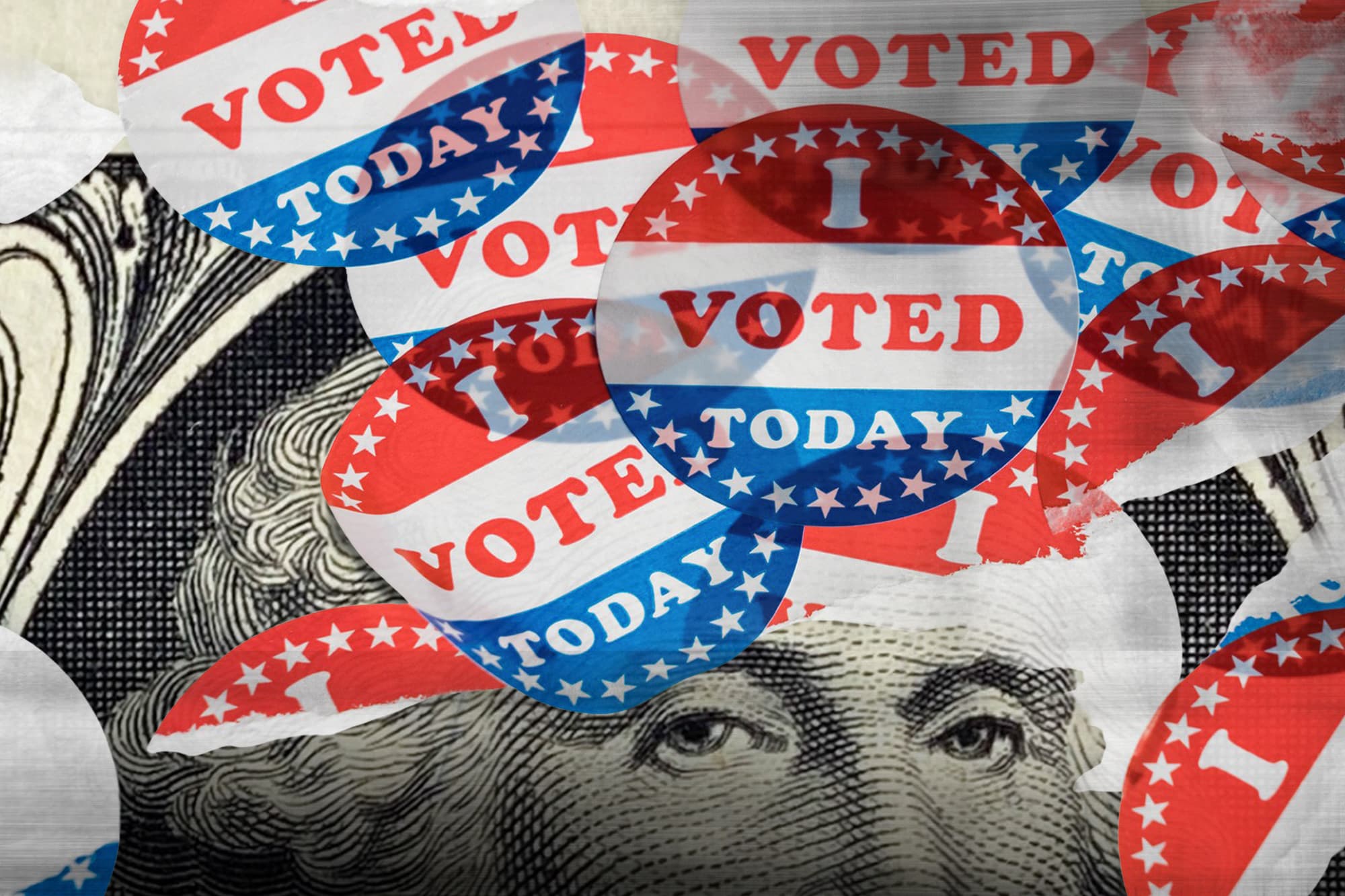
Super PAC spending in the 2024 primaries has exceeded $48 million, more than double the previous cycle. These groups exploit campaign finance laws to avoid disclosing donors until after elections.
A record number of groups are exploiting a gap in campaign finance law to flood this year's primary elections with money — without disclosing their donors until long after the race is over.
More than $48 million has already been spent on House and Senate primaries this year by super PACs that did not have to reveal their donors before elections took place, according to a POLITICO analysis of data from the Federal Election Commission. That is more than double the total at this time in the 2024 cycle, and 10 times higher than in 2018.
The groups are taking advantage of the campaign finance calendar. A super PAC formed after the last pre-election FEC deadline can raise and spend unlimited amounts of money in the crucial final days of an election without disclosing its donors until afterward. The practice has been used for years, but never to the degree of this year’s midterms.
Roughly 1 in 10 dollars in outside spending that has flowed into primaries so far this year has been through these secretive groups.
In some cases, the pop-up super PAC spending has the characteristics of one political party meddling in another’s primary to help boost a candidate seen as more beatable in November, which is what happened in competitive races in Texas’ 35th District, Maine’s 2nd District and most recently New York’s 17th District. In other cases, groups sought to hide their connection to controversial sources, like the American Israel Public Affairs Committee.
“It's certainly a very strategic effort to avoid providing transparency for voters,” said Saurav Ghosh, director of federal campaign finance reform at the nonprofit Campaign Legal Center. “So even if they're acting within the letter of the law, they are ultimately undermining in spirit. Because disclosure requirements exist so that voters — when they're deciding who to cast their ballot for — have the information about who has spent money backing these candidates.”
The path for secretive spending on primaries is relatively straightforward. New groups launch after a monthly or quarterly FEC deadline. They spend millions of dollars to support their preferred candidates, bombarding voters in the final days when they are most engaged with an election. And by the time they have to report their money, weeks after the end of the month or quarter, the election they were aiming to influence is already over.
Super PACs have spent over $48 million on House and Senate primaries this year.
Super PACs formed after the last pre-election FEC deadline can raise and spend unlimited amounts without disclosing donors until after the elections.
Roughly 1 in 10 dollars in outside spending in the primaries has come from these secretive super PACs, influencing candidate selection and election outcomes.
Yes, there have been instances where super PACs have supported candidates in opposing parties' primaries to boost those seen as more beatable in the general election.
US small businesses have moved past concerns about Trump's tariffs, adapting to new economic realities.

US government restricts foreign access to Anthropic's AI models over security concerns.
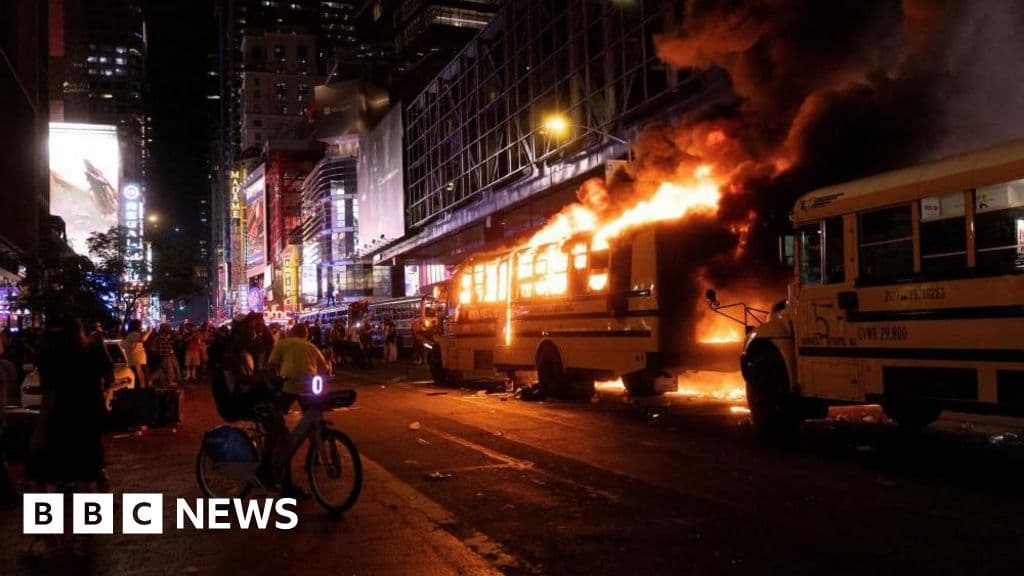
A teenager was shot and buses were set on fire in Manhattan during celebrations for the Knicks' first NBA championship win in over 50 years. The chaotic scenes unfolded as fans celebrated the team's victory over the Spurs.

Democrats face a challenging Senate race in Maine after backing Janet Mills over Graham Platner, who won the primary. Platner's controversial past complicates the party's strategy as they prepare for a tough general election against Republican Susan Collins.

A 94-year-old mother from Cambridgeshire seeks justice for her daughter, Lindsay de Feliz, whose murder retrial begins this week in the Dominican Republic. Lindsay's body was discovered in December 2019, and her mother hopes new evidence will lead to a conviction.

Iran's markets react positively as US deal approaches, despite pushback.
See every story in News — including breaking news and analysis.
The tactic is more common in primaries than general elections because outside groups have to file pre-general reports in mid-October, leaving only a relatively small window before the November election where they would be able to launch and spend without disclosing financial information.
The efforts to hide sources of funding have happened across the country this cycle and to support and oppose candidates of widely varying ideologies. More money has been spent in Democratic primaries than Republican ones so far.
Since the beginning of May, two super PACs widely suspected of being tied to Republicans — Lead Left and Real Change — have spent $4.3 million across Democratic primaries in five competitive House districts to boost progressive candidates that are seen as weaker in the general election. Neither group will have to reveal their donors until mid-July.
In Kentucky’s 4th District, where GOP Rep. Thomas Massie was seeking reelection after President Donald Trump endorsed his challenger Ed Gallrein, a newly created super PAC spent a whopping $6.7 million to attack Gallrein. The PAC shut itself down shortly after the primary, revealing only then that most of its funds came from a Texas-based firm. (The PAC is now facing an FEC complaint alleging it was a straw donor scheme.)
In Illinois’ March primaries, three newly created groups tied to AIPAC spent $16 million on House races. While news reports linked AIPAC to the groups throughout the primaries, it wasn’t revealed until afterward that United Democracy Project, AIPAC’s main super PAC, was the leading funder. That allowed AIPAC — which has become politically controversial in Democratic primaries — to attempt to influence the elections without officially declaring its involvement as ballots were being cast.
In the special primary election to replace the late Rep. Gerry Connolly (D-Va.) last year, a newly launched super PAC called Fight for Virginia’s Future backed Connolly’s former chief of staff, James Walkinshaw. After the election, which Walkinshaw won, it was revealed that the group’s funding was transferred from Connolly’s campaign account.
Not every newly launched super PAC is inherently secretive. In some cases, new groups are clear about their affiliations even if they don’t immediately report their donors to the FEC.
And there are other ways for super PACs to hide their sources of funding beyond taking advantage of the FEC’s timing. Many get transfers from 501(c)(4) nonprofits, which face far fewer disclosure requirements.
As the practice of pop-up super PACs has become more common, it’s also become more sophisticated.
In past cycles, new super PACs that hid their sources of funding were sometimes linked to existing interests through the little information they do have to share when they are formed or spend money: their vendors, address and treasurer name and contact info. But many groups have developed workarounds and now use unknown treasurers or new vendors that also popped up around the same time as the PACs themselves.
In a handful of Democratic primaries in competitive districts this year, pop-up super PACs that have been linked to Republicans through PO boxes and website metadata have run ads that closely mimic the logos and official materials of Democratic campaigns in the race.
In one case last month, the Republican-linked Lead Left PAC spent nearly $1 million backing Democrat Maureen Galindo over Johnny Garcia in Texas’ 35th District. Galindo had been widely condemned by her own party for calls to turn a local ICE detention center into a “prison for American Zionists.”
The spending on her behalf led to the moderate Blue Dog PAC leading a rescue mission for Garcia: It spent more than $1 million to boost the former Bexar County sheriff’s deputy.
Neither Real Change or Lead Left responded to requests for comment sent to the emails listed on FEC filings. Other groups, including Fight for Virginia’s Future, Kentucky 4th PAC and UDP also didn’t respond to requests for comment. Congressional Leadership Fund, a super PAC tied to House GOP leadership that is widely speculated to be behind some of the pop-up PACs, did not respond to a request for comment.
Phil Gardner, a senior adviser to the Blue Dog PAC, said the Lead Left ads were “literally trying to impersonate other campaigns.”
Garcia — who ultimately won his race by more than 20 points — said in an interview that news reports linking Lead Left to Republicans helped show voters the importance of the race.
“It showed just how scared they were of our campaign, that they were willing to invest in a candidate that was clearly antisemitic that they knew they would defeat very easily in the general election,” Garcia said.
A similar pop-up PAC also spent heavily for progressive Matt Dunlap over state Sen. Joe Baldacci in Maine’s battleground 2nd District, which Trump won in 2024 and is open this cycle because moderate Rep. Jared Golden (D-Maine) opted not to seek reelection.
Ian Russell, a national Democratic strategist who is working on Baldacci’s race, said the GOP-linked ads could trick voters who don’t realize they aren’t coming from Dunlap’s campaign.
“They're literally running a positive ad for Matt Dunlap,” Russell said. “They're using his campaign logo. They're using B-roll off of his YouTube page.”
That race is still uncalled as it goes to a ranked-choice count this week.
In recent years, some Democratic and Republican lawmakers have pushed for tightening campaign finance law, saying sources of funding should be more readily disclosed. But there have not been meaningful advances in campaign finance legislation.
Just last week, Rep. Jason Crow (D-Colo.) introduced a bill that would require super PACs to disclose every large donation they receive in the final 20 days of an election — which would make it harder for pop-up PACs to hide their sources of funding.
“All this dark spending money is just skyrocketing,” Crow said in an interview. “Super PACs, corporate donations, pop-up PACs. It's out of control and it's getting worse every cycle.”