Social media ban unenforceable, online safety charity warns
An online safety charity warns that a social media ban for under-16s is unenforceable. Instead, the focus should be on restricting addictive features of social media platforms.

Scotland is set to make a historic return to the World Cup after 28 years, with manager Steve Clarke preparing for a pivotal speech. This marks the end of a long absence, as Scotland aims for success in their opening match in the United States.
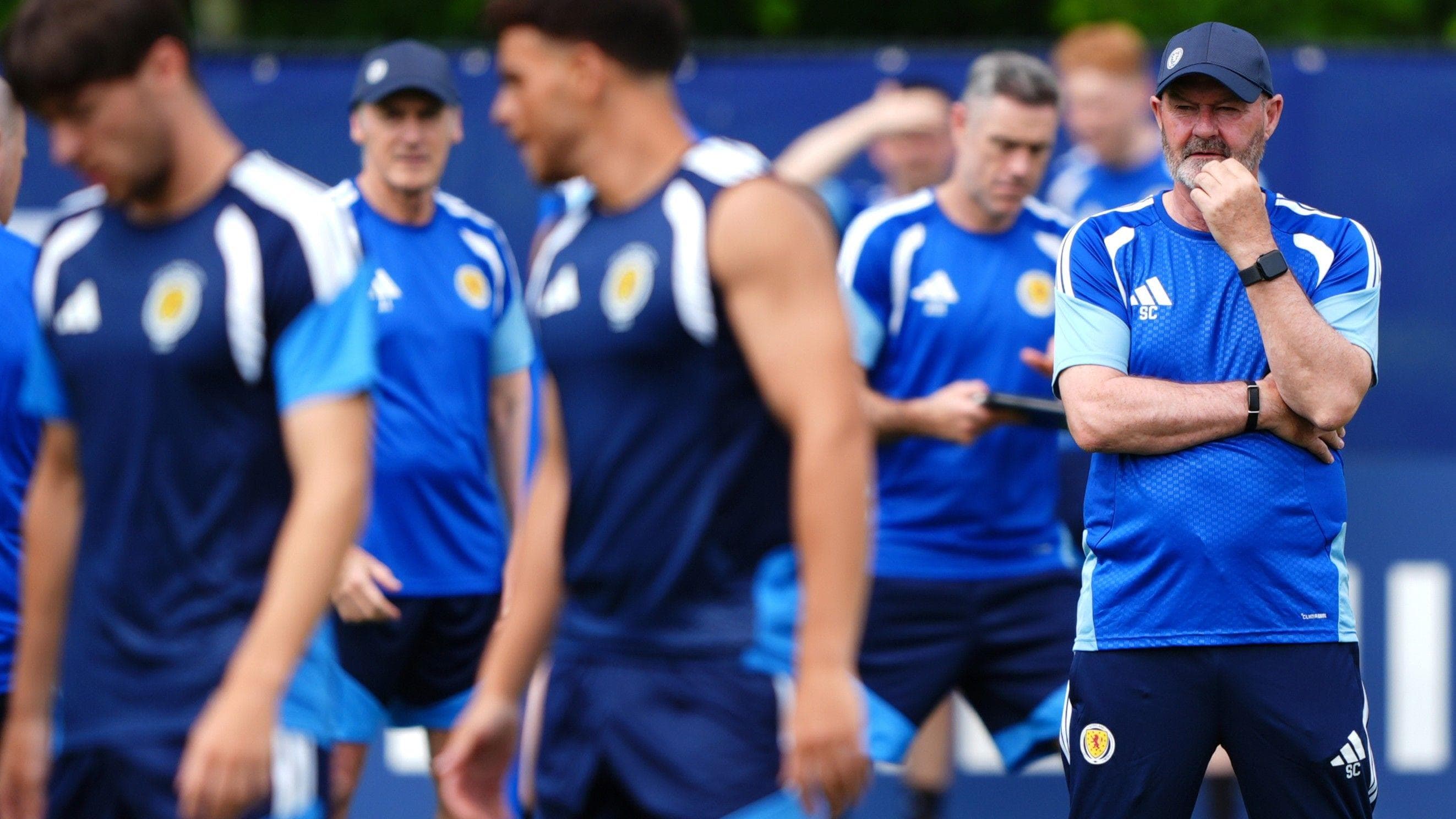
Steve Clarke is ready to make the most important speech of his managerial life, a speech that a succession of Scotland managers over the last 28 largely painful years would have given anything to make.
What for so long had seemed like a pipe dream - as attainable as a lottery win - is now a reality staring Scotland in the face. After missing out on six World Cups in a row, and maybe surrendering to fatalism along the way, game day is upon us here in the United States.
We can play these games forever - the old prime ministers and presidents when Scotland were last at a World Cup, the things that are commonplace now but were not invented then, the music that was in vogue, the simplicity of the way the media was back then compared to the revolution that has happened since.
All of that stuff reflects the passage of time - more than 10,000 days - and the way things have changed. It's been a relative eternity. Sometimes, to the Tartan Army, it must have felt that days like these would never come again.
We know that Clarke keeps his emotions in check most of the time, but we also know that he can be moving when he wants to be, as he was when addressing his players before the momentous Denmark game at Hampden in November, the night that electrified a nation.
All of the work is done now, all of the analysis of Haiti, all of the match strategy and the mechanisms to cope with the heat and humidity are firmly in place.
Clarke probably doesn't need to talk to the soul of these players anymore, because none of them need any reminding of what they're playing for here.
That's not to say that Clarke won't go there. They are the lucky ones - the players chosen to start and the cavalry that will come off the bench.
The history of Scottish football is loaded with really good and truly great players who have never had the privilege of playing at a World Cup.
To go back in time - John Greig, Tommy Gemmell, Billy McNeill, Ron Yeats. None of them got this far. Bobby Murdoch, Jim Baxter, Bertie Auld, Stevie Chalmers the same. Jimmy Johnstone made a World Cup squad but never played.
That list is in no way exhaustive. It's just a snapshot of the legends who didn't get to do what Clarke's men are about to do.
From the more recent crop, there's James McFadden and Scott Brown, Darren Fletcher and Barry Ferguson, Kenny Miller and Callum McGregor. You could go on and on citing the ones who missed out, sometimes narrowly, sometimes overwhelmingly and, at times, embarrassingly.
Best look forward, though. Because forward is a happy place, for now.
In Charlotte this week, Scotland have been relaxed but focused, maybe a little more chilled than they were this time two years ago when heading into an ill-fated Euros campaign pockmarked by negativity and failure on the pitch.
Clarke says he's learned the lessons of the last two Euros and is determined to enjoy this tournament. If you ask him about regret, he'll tell you about those six games, three goals (one an own goal and another a deflection) and no wins across two campaigns. They never really fired a shot in either of them.
Scotland last participated in the World Cup 28 years ago, missing six consecutive tournaments since then.
Steve Clarke is the manager of the Scotland national team and is preparing to deliver a crucial speech ahead of their World Cup opener.
The long absence has led to a sense of fatalism among fans, making the current World Cup participation feel like a dream come true.
Scotland's World Cup opener is taking place in the United States.

An online safety charity warns that a social media ban for under-16s is unenforceable. Instead, the focus should be on restricting addictive features of social media platforms.

A Palestinian man yearns to reunite with his family amid the Gaza war.

Drug diversion schemes led by police are more effective in reducing reoffending rates than prosecution, according to a new study. The analysis of over 62,000 incidents in 13 English police forces shows a one-third reduction in reoffending for those diverted to treatment and education services.

One killed in Israeli air raids on southern Lebanon despite ceasefire efforts.

Brazil faces Morocco in a crucial World Cup match this Saturday at 6pm local time.

Exciting news for birdwatchers: a western reef heron has been spotted in North Wales, marking its first appearance in the UK!
See every story in News — including breaking news and analysis.
Captain Andy Robertson referenced this on Friday. If they're true to their mantra then they're giving this a rattle and if they die in the group stage as every one of their seven predecessors have done at World Cups then they won't die wondering about what might have been had they been more brave.
Lady Luck has been by Scotland's side on their path to America, poor performances in qualifying against Belarus and Greece at home still ending up as wins. There was a freakish nature to some of it.
They beat themselves up over both of those performances - "jobby" was midfielder John McGinn's description and no bard could have come up with a better description.
They then went to Greece last November and lost. Only a miracle in Copenhagen - where Belarus, under siege for practically 90 minutes, somehow managed to draw 2-2 - kept their hopes of automatic qualification alive.
Sitting with McFadden that evening in Athens, he said he was certain that Scotland would beat Denmark the following week and go through. He was utterly unshakeable in his view.
Why? Fate, he replied. It just felt destined to happen. And he was right.
But the way it happened? If Belarus' shock draw with Denmark was weird then the manner of Scotland's victory - and the quality of the goals scored - was other worldly.
Figure caption,
Dear Scotland...
An overhead kick from Scott McTominay, a Lewis Ferguson corner that was going in until Lawrence Shankland helped it on its way, a curler to beat all curlers from Kieran Tierney and then a fourth from the other end of the earth - or the halfway line to be precise - from Kenny McLean.
It was the perfect night, a night that further reinforced the bond between these players, which is genuinely tight. That's always said, but this group is extremely close, a club side in national team colours, a band of brothers who have each other's back.
There was a collective swoon when news came through on Thursday that McTominay, the totem, had an iffy tummy, but he's good now. The Napoli midfielder with the Midas Touch probably just waved his hand over his stomach and, hey presto, he was healed.
What's absolutely fascinating about this game is the options that Clarke has and the way he's talking about the utilisation of his bench, hinting that he might keep a heavy hitter in reserve.
On more than one occasion he's suggested that the team that finishes the game might have to be as strong, or stronger, than the one that starts.
It's inconceivable, for this game, that he'll go away from his new approach of playing Shankland and Che Adams up front, so one of his star midfielders most probably won't start.
Scotland are buoyed by the eight goals they scored in their last two games. There were caveats - Curacao had 10 men for much of it at Hampden and fell away to lose 4-1 and Bolivia were, well, not all that good.
But confidence is a valuable thing, no matter how you get it. Clarke, as is his wont, has been talking up the threat of Haiti, referring regularly to their size, their power and their athleticism.
In warm-up games, Haiti hammered New Zealand 4-0 before New Zealand lost just 1-0 to England soon after. That form line makes them a theat.
Haiti are a distant 83rd in the Fifa world rankings, but Clarke has been at pains to point out their strengths. One of those strengths is a mental fortitude that comes with representing a country that is riven by crisis and humanitarian disaster.
The capital, Port-au-Prince, is controlled by armed gangs - instability, hunger, killings, kidnappings and sexual violence is rife. Public services have collapsed. Thousands of schools have closed, 10% of the population have fled. The football team can't play any games at home. Two years into his role as head coach, Sebastien Migne still hasn't been able to set foot in Haiti.
That level of hardship could breed some amount of determination. Clarke knows it and you sense that his players know it, too.
Scotland have played 23 matches at World Cups and have won only four, a sobering stat when you set it alongside the memories of nightmares past, the loss to Costa Rica in 1990 chief among them.
So Clarke is taking nothing lightly. This is a must-win given the scale of what's to come against Morocco and Brazil.
Nobody in Clarke's camp is hiding from that. They have said repeatedly that they're here to make history as the first Scotland team to make it through a group.
They have a vast travelling army with them and millions more at home, a strange amalgam of positivity and anxiety, belief and fear. All human emotion on the grandest stage.
Thrilling and terrifying. What a time to be alive.