
Barack Obama says US is ‘worse off’ than before war with Iran
Obama claims the US is 'worse off' after 15 weeks of war with Iran.
The Guardian World1 min read

A Lancashire schoolgirl's viral response to a proposed social media ban for under-16s highlights concerns about alternatives for youth. Experts suggest focusing on providing connection and belonging rather than simply replacing social media platforms.
When a Lancashire schoolgirl was asked what she would do if the proposed social media ban for under-16s came into effect, her answer hit a national nerve: “Stare at a wall,” she deadpanned.
The clip went viral, not least because it distilled a question many parents have been asking themselves about the consequences of the government’s proposed social media ban.
The answer, said Arran Wilson, from The Wildlife Trusts is not simply go outside, read a book or join a club. “It’s not as simple as that,” said Wilson. “We need to think about the world we’ve been raising them in.”
But nor, however, should parents institute a hunt for the perfect substitute for TikTok or Instagram. “Kids don’t go on social media because they love social media per se,” said children’s author Rob Biddulph. “They go there looking for connection and for belonging – and for entertainment and inspiration.”
The challenge, he said, is not to replace social media itself; it is to replace the things it provides.

Youth Music-supported projects include everything from DJing, podcasting and gaming to organising gigs. Photograph: Karen Robinson/The Observer
One reason social media is so hard to replace is that many teenagers use it to keep up with friends and find others who share their interests.
At the Scouts, Simon Carter said one of their biggest attractions is it brings young people into contact with others outside their friendship circles. Film clubs, youth theatres and music projects offer similar opportunities: BFI film clubs bring young people together to make films in teams. Youth Music-supported projects include everything from DJing, podcasting and gaming to organising gigs.
Libraries and bookshops can play a similar role: many now host gaming sessions, manga clubs, creative workshops, reading groups and book clubs.
Youth organisations are not the only route to connection. Wilson recommends environmental activism for older children. Sally Kettle, deputy chief guide at Girlguiding, recommends volunteering at community events, helping local charities or mentoring younger children. “Purpose and connection are two of the things many young people are actually seeking when they go online,” he said.
She humorously responded that she would 'stare at a wall' if the proposed ban came into effect.
Experts suggest focusing on providing connection, belonging, entertainment, and inspiration rather than simply replacing social media platforms.
Parents are worried about the potential consequences of the ban and how it may affect their children's social connections and entertainment options.
Rob Biddulph states that kids use social media not for its own sake, but to seek connection, belonging, and inspiration.
Obama claims the US is 'worse off' after 15 weeks of war with Iran.

Meloni refutes Trump's claim she begged for a photo at G7 summit

Six-year-old Ebola patient abducted in DR Congo found safe and stable

Discover the key figures in Andy Burnham's inner circle as he aims for Labour leadership.
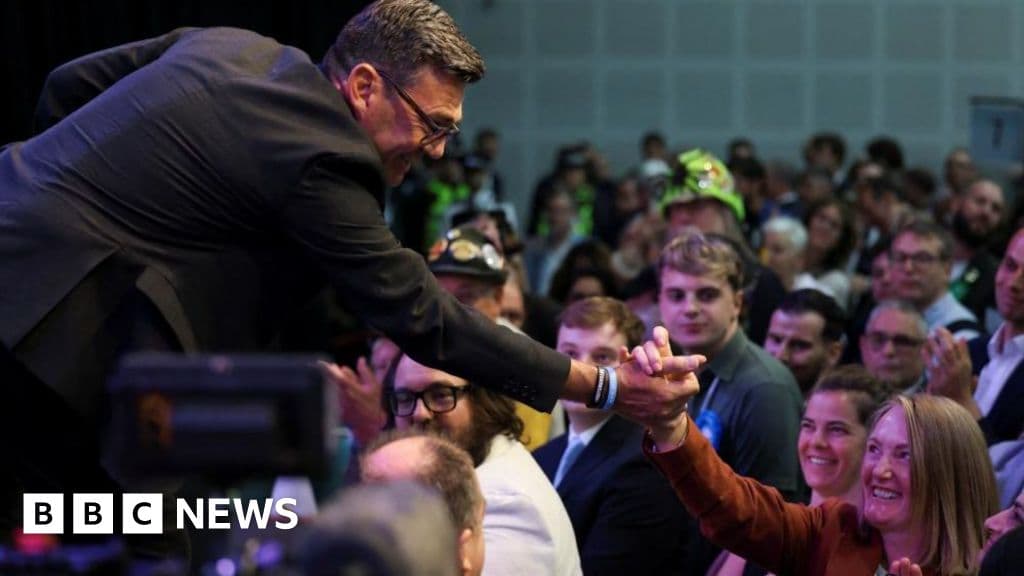
Andy Burnham's by-election win raises his profile as a potential Labour leader with specific economic policies.

Israel's Foreign Minister cuts ties with EU's Kaja Kallas after apartheid comments
See every story in News — including breaking news and analysis.
Museums, galleries and dance organisations are another option. The free National Saturday Club runs weekly sessions for 13- to 16-year-olds at museums, galleries, universities and cultural venues across the UK where young people can try everything from art, design and photography to creative writing and film-making. Many museums now run youth panels and creative projects. Arts Council-supported programmes include the National Youth Dance Company and local youth dance groups around the country.

Bouldering? Photograph: Blake Sharp-Wiggins/The Guardian
John Glancy of the National Trust believes parents should start by asking their children why their favourite social media platform and video game appeals to them.
“The answer might reveal they’re searching for a sense of identity, stimulation or a sense of achievement,” he said. “Once you know which it is, it becomes easier to find alternatives.”
But Joe Doherty of Outward Bound cautions against expecting too much, too quickly. “We can’t just expect children to switch off their screens one day and walk up a hill the next,” he said.
Instead, he recommends activities that offer rewards – be it novelty, progression or excitement - not entirely dissimilar to social media. Geocaching turns a walk into a treasure hunt. MapRun combines running, navigation and problem-solving challenges. Bouldering allows young people to work their way up increasingly difficult routes.
Kettle recommends ‘micro-adventures’: exploring an unfamiliar neighbourhood or setting yourself a challenge to discover something new within a mile of home.

Extraordinary wildlife doesn’t exit only on screens. Photograph: Aleksei Antropov/Alamy
Biddulph spent much of his own childhood making comics. Today he encourages children to write fan fiction; inventing sequels to their favourite books or drawing scenes from stories they love.
At National Youth Theatre workshops around the country, young people write, perform and tell stories. At BFI film clubs, they make films. Youth Music groups encourage young people to create zines, podcasts and music. Free tools such as GarageBand make it easier than ever to experiment with music production at home.
For children who enjoy collecting, exploring and discovering things online, wildlife spotting can offer a surprisingly similar thrill. James Benwell of Birmingham & Black Country Wildlife Trust said many young people have come to think extraordinary wildlife exists only on screens. In reality, he said, even urban Britain is full of natural wonders from kingfishers and woodpeckers, to wild orchids and legless lizards. Free apps such as iNaturalist and Merlin can help identify what they find.

Children learning about coding and AI at the Raspberry Pi Foundation in Cambridge. Photograph: Sarah Lee/The Guardian
Less social media does not necessarily have to mean less technology, said Gareth Jandrell of Digital Schoolhouse.
The ban won’t stop young people from learning how to design games and build websites with organisations including Code Club or the Raspberry Pi Foundation. Schools, libraries and community groups around the UK run coding and robotics clubs.
Leah Dungay from the National Videogame Museum in Sheffield recommends games that encourage creativity, collaboration and problem-solving rather than passive scrolling. “Minecraft allows players to build worlds together; It Takes Two can only be completed through teamwork; while Football Manager rewards strategy, planning and long-term thinking,” she said.
One comfort for parents faced with such a plethora of options, is that the alternatives young people actually gravitate towards are often remarkably familiar.
In 1967, long before the arrival of social media, a Duke of Edinburgh’s Award survey found young people’s favourite pursuits included reading, dancing, music, cookery and knitting. Nearly 60 years later, a new survey found these favoured activities had barely changed – proving that, given the chance, children are remarkably good at finding things to do that are more interesting than staring at a wall.