
Gina Rinehart makes ‘significant investment’ in Elon Musk’s SpaceX
Gina Rinehart makes a significant investment in Elon Musk's SpaceX, aiming for AI collaboration.
The Guardian World1 min read
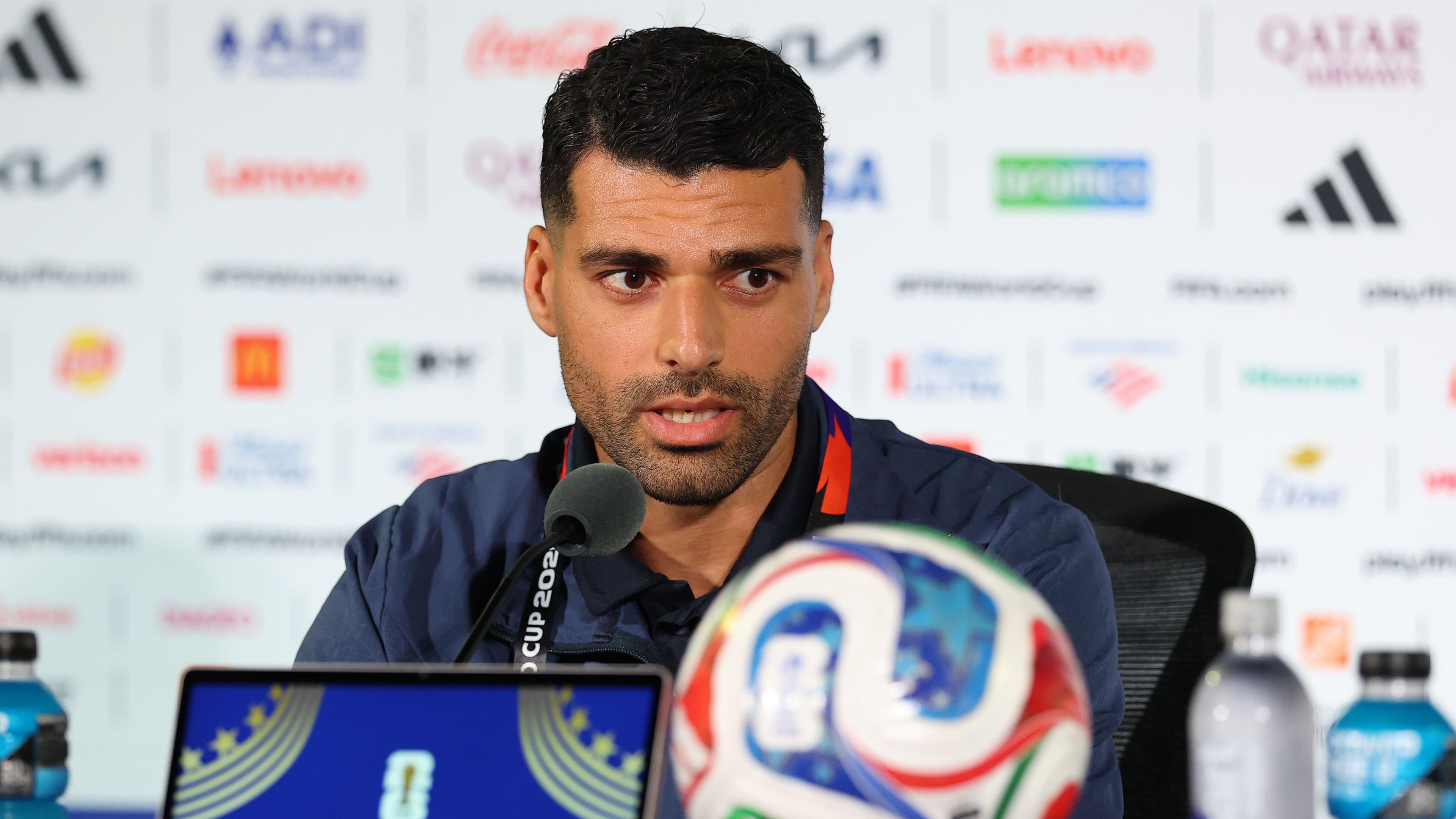
Iran's national football team faces significant political challenges as they prepare for the World Cup, including visa issues and a tense backdrop with the U.S. striker Mehdi Taremi states that this tension detracts from the joy of the tournament.
Mentioned in this story
Rarely has a team arrived at a World Cup carrying so much political baggage than Iran.
Until this week, the host nation, the United States, had been at war with the country.
The team has faced visa problems. They have had to relocate their base camp. And when they take to the pitch here in Los Angeles on Monday (Tuesday, 02:00 BST), they will do so under the gaze of one of the world's largest Iranian diasporas.
An agreement to halt hostilities and reopen the Strait of Hormuz was announced on Sunday. It may have eased fears of further escalation, but tensions remain high.
"This kind of tension undermines the joy of the World Cup," said striker Mehdi Taremi.
"I felt the tension from the first moment we arrived. The tension started even before we got here."
After months of uncertainty, Iran moved their World Cup base camp from Tucson, Arizona, to the Mexican border city of Tijuana.
The decision followed concerns over visas, security and the increasingly fraught political climate surrounding the team's participation.
Iran's manager, Amir Ghalenoei, told the BBC the disruption had inevitably affected preparations.
"Without any doubt, this kind of behaviour has impacted the spirit of football," he said.
"Football is supposed to bring nations and cultures together. It is about bringing joy. These conditions have affected our focus, but I have tried to make sure the players concentrate on strategy and performance."
He added that the team had arrived late and had little time to adjust.
"But I know how committed these players are to performing."
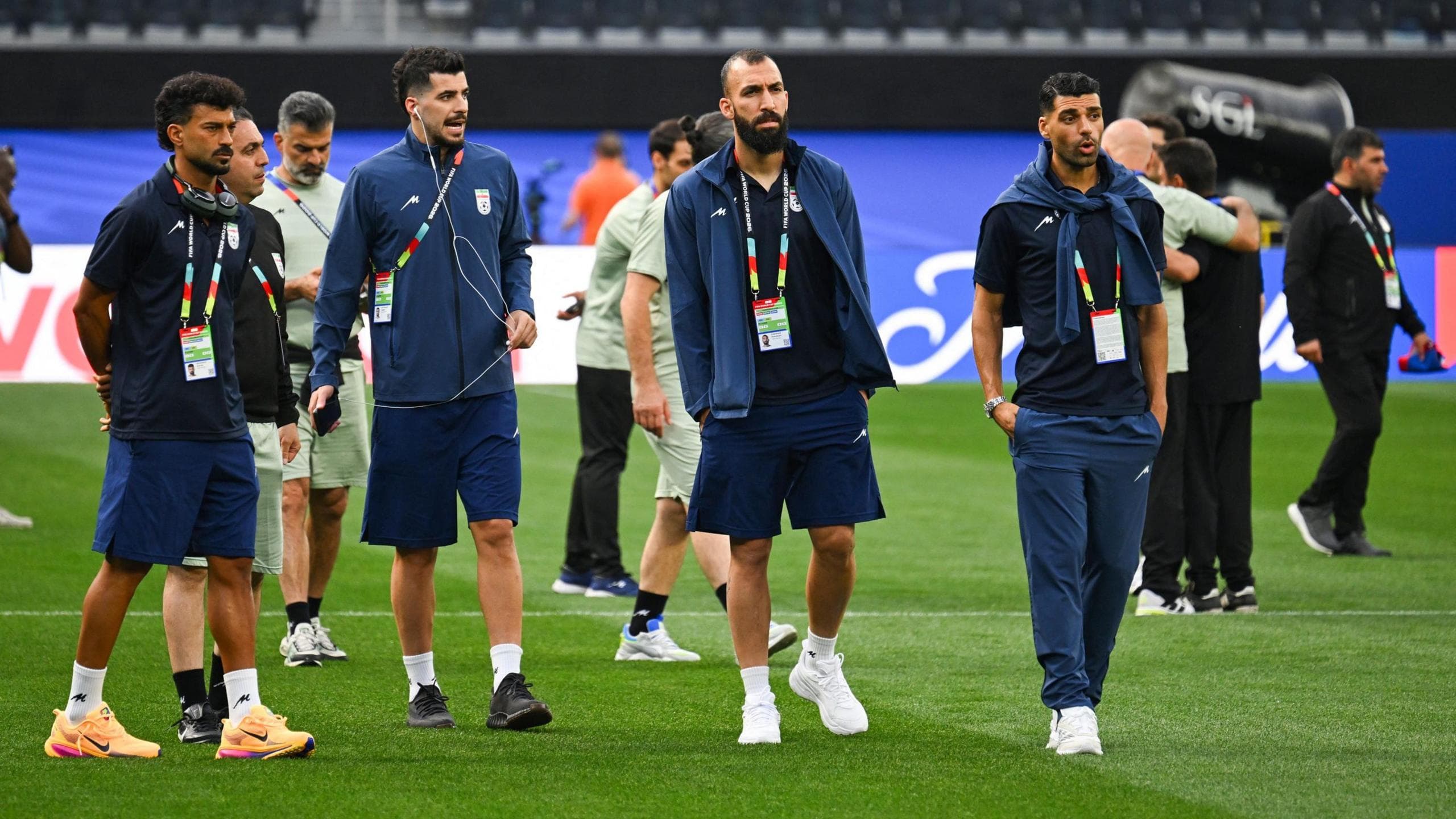
Image caption,
Iran's players arrived in Los Angeles on Sunday from their base in Tijuana
Los Angeles is often nicknamed "Tehrangeles" - a fact that drew smiles from both player and manager when it was mentioned at the news conference.
Many Iranian-Americans will be heading to SoFi Stadium on Monday where Iran will open their World Cup campaign against New Zealand.
Many will not be there to cheer, but to protest.
Fifa has banned the pre-revolutionary Lion and Sun flag - a powerful symbol for many Iranians living abroad.
The decision has angered parts of the diaspora.
Iran's World Cup team is dealing with visa problems and has had to relocate their base camp due to political tensions with the United States.
The strained relationship has created a politically charged atmosphere for the Iranian team, affecting their preparations and overall experience at the World Cup.
Mehdi Taremi stated that the ongoing political tension undermines the joy of participating in the World Cup.
An agreement to halt hostilities and reopen the Strait of Hormuz was announced, which may have eased some tensions but did not eliminate them.
Gina Rinehart makes a significant investment in Elon Musk's SpaceX, aiming for AI collaboration.

World reacts as Iran and US reach deal to end US-Israel war

Keir Starmer set to announce a social media ban for under-16s in the UK.

Starbucks Korea shuts stores for employee history training after backlash over 'Tank Day' marketing

David Munk appointed as the new editor of Guardian Australia, succeeding Lenore Taylor.

Labour MPs urge government to increase male teachers and paternity leave in England.
See every story in News — including breaking news and analysis.
"You don't come to Los Angeles and tell us we can't fly the Lion and Sun flag," said activist Arezo Rashidian, who is helping organise demonstrations outside the stadium.
"This is the largest Iranian community outside Iran. Many of us came here after the revolution. We're opposing Fifa's ban and standing in solidarity with the people of Iran."
Many members of the diaspora are hostile towards Iran's regime, and some see the squad as an extension of the Islamic Republic.
"It's unfortunate that the regime turns athletes into mouthpieces." said Rashidian. "We want athletes to remain athletes."
Despite that, she and many others still plan to attend the match.
"We understand the pressure they're under," she said. "We'll carry our colours. We'll cheer for Iran - the country - held captive by the Islamic Republic."
But while protesters prepare to make their voices heard outside the stadium, Iran's players say their focus remains on football.
"As players of the national team, we play for every single Iranian, whether in the diaspora or in Iran," Taremi said.
"In every country people have different opinions. We are here to unite people and bring joy. Everyone is entitled to their opinion. We don't get involved in politics."
That may be the ideal.
But for Iran's team, keeping politics outside the stadium could prove difficult in a tournament where football has often felt like a sideshow for this squad.
"There is no winning for Iran's team," investigative football journalist Samindra Kunti said.
"Given the circumstances, the political pressure, the location of the matches and the diaspora in Los Angeles, they're under enormous pressure."
"It's impossible to avoid the politics.
"Everything becomes a reminder of their situation."
The players face pressure from home, pressure from the host nation and pressure from a diaspora determined to make its voice heard.
All before a ball has been kicked.