
U.S. strikes Iran. And, immigration courts use new tactic to speed up deportations
U.S. military strikes Iranian boats in self-defense; peace talks expectations lowered.
NPR Topics: News1 min read

Pakistan and China have established a new consensus to enhance strategic ties, focusing on the China-Pakistan Economic Corridor and Gwadar port development. This agreement follows Prime Minister Shehbaz Sharif's visit to China amid regional tensions.
Mentioned in this story
China and Pakistan have reached a “new broad consensus” on deepening strategic ties to bolster the development of a joint economic corridor and establish the port of Gwadar as a regional connectivity hub, according to a joint statement.
“The two sides engaged cordially and reached a new broad consensus on further deepening the China-Pakistan All-Weather Strategic Cooperative Partnership,” the neighbours said in a joint statement shared by Pakistan’s Ministry of Foreign Affairs on X on Tuesday.
The statement comes as Pakistan’s Prime Minister Shehbaz Sharif concludes a visit to China, at a time when Islamabad is seeking investment while navigating tensions with Afghanistan and mediating in the US-Israel war on Iran.
Both sides agreed to advance the China-Pakistan Economic Corridor (CPEC), a flagship project under China’s Belt and Road Initiative, by upgrading the 1,300km (808-mile) Karakoram Highway and developing Pakistan’s Gwadar port, they said in the statement issued after Sharif met Chinese President Xi Jinping and Premier Li Qiang in Beijing.
Pakistan also promised targeted steps to boost security and cooperation to ensure the safety of Chinese workers and investments in Pakistan, a key concern for Beijing after repeated attacks on its nationals and projects.
The two countries also agreed on the importance of promoting a multipolar world, while opposing unilateral actions by other nations.
China appreciated Pakistan’s efforts in mediating the temporary ceasefire in the US-Israel war on Iran, and both sides reiterated support for early adoption of a five-point initiative to restore Middle East peace, offering to make positive contributions towards it.
Pakistan also reaffirmed its commitment to the one China principle, calling the democratically-governed island of Taiwan, claimed by China, an “inalienable” part of China and saying it opposed any form of Taiwan independence.
Taiwan rejects China’s claims, saying only the island’s people can decide its future.
Pakistan also welcomed China’s efforts to boost its dialogue with Afghanistan. Both sides said they opposed the use of territory by groups, such as the Pakistan Taliban, known by the acronym TTP, and East Turkestan Islamic Movement, also known as the Turkistan Islamic Party, to imperil regional security or launch attacks.
The new consensus aims to deepen strategic ties and enhance the China-Pakistan Economic Corridor, which is vital for regional connectivity and economic development.
The development of Gwadar port is expected to establish it as a regional connectivity hub, boosting trade and investment in Pakistan.
Pakistan has promised targeted steps to enhance security and cooperation to protect Chinese workers and investments, addressing concerns over previous attacks.
U.S. military strikes Iranian boats in self-defense; peace talks expectations lowered.

Iran's government announced an end to an 88-day internet blackout, but internet monitors report no immediate changes. The blackout, the longest in Iran's history, was imposed during protests in January.

Mali crisis worsens as rebels attack, killing Defence Minister

Texas Senate runoff sees rising anti-Muslim rhetoric in ads

Ben Davies and Connor Roberts return from injury for Wales' friendlies against Ghana and Romania.
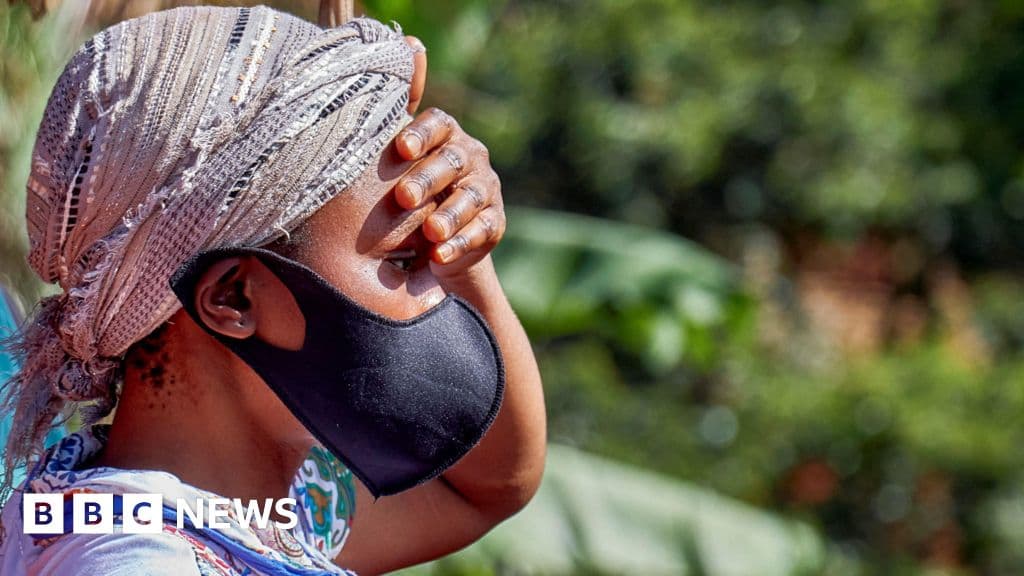
DR Congo's governor warns of a looming catastrophe due to Ebola outbreak.
See every story in News — including breaking news and analysis.