
Protests and boycotts rock prestigious Venice Biennale
Protests and boycotts disrupt Venice Biennale 2026 opening
NPR Topics: News1 min read
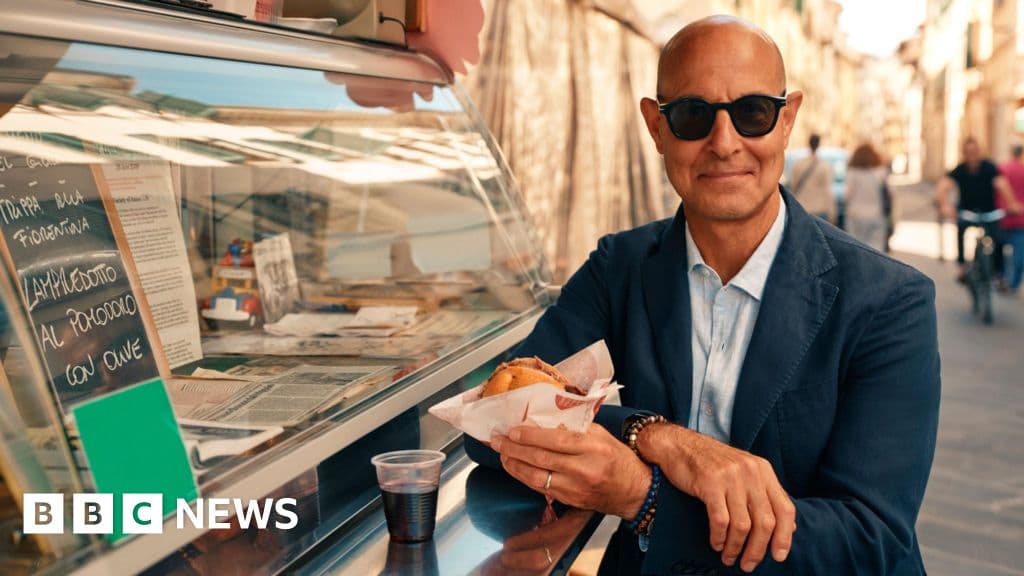
Stanley Tucci highlights the importance of food in Italian culture, emphasizing how meals symbolize affection and hospitality. In his show, he often faces pressure to eat more from family and chefs, reflecting a common Italian experience.
There's a recurring theme in the second season of Tucci in Italy where someone tells Stanley Tucci he must eat more.
Usually it's a nonna (grandmother), sometimes it's a chef, and occasionally it's an entire family placing more food on the table in spite of his protests.
It reminds me of when I visit my own nonna's house in Rome; I'm immediately ushered to the dining table and presented with enough pasta, bread and favourite dishes to feed an entire family.
And before I've even finished my first plate, I'm encouraged to help myself to seconds.
Such moments are instantly familiar to any Italian, because being Italian means understanding that food is affection, hospitality and identity rolled into one.
Watching the new season of Tucci in Italy, which is released on Disney+ on 12 May, you might find that second portion hard to resist.
The series sees the Devil Wears Prada 2 star travel across the country - from Sicily to Sardinia to northern Italy - exploring regional cooking traditions, local communities and family-run kitchens.
It features plenty of glistening seafood, market produce and local delicacies, alongside Tucci telling the story of a people for whom family and rituals hold communities together.
"We think we know what Italy is," Tucci tells me, "but it's incredibly complex and diverse."
That diversity is reflected most strongly in food and regional identity, he says, with Italians often identifying more with their own city or region than with the country itself.
"When you say to someone, 'You're from Italy', they'll say, 'No, I'm from Tuscany' or 'I'm from Florence', so they're very territorial, especially when it comes to food."
In Siena, which is featured in one of the episodes in the news series, Tucci explores the Tuscan city's historic contradas - districts which maintain strong local identities.
"They all believe their contrada is the greatest," he laughs. "And they express that in many ways, including food."
Similar culinary differences can be found in the north of Italy, where ingredients and dishes are shaped by climate and geography.
"You go up north and you might only find tomatoes in the summer and you'll find the likes of goulash, polenta and buckwheat which you would never find in the south," Tucci adds.
Such regional divides dispel one of the biggest misconceptions internationally that Italian food is "just pizza and pasta," he says. "It's not."
The 65-year-old speaks fondly about a number of places and dishes that have stayed with him after filming.
Asked to name the best thing he ate during season two, he immediately says "everything" - before singling out a handful of pasta dishes, including one made with different types of mozzarella.
But while Tucci's love of food is clear throughout the series, he's worried that society is losing its ability to find pleasure and emotional connection in food.
Stanley Tucci emphasizes that food in Italian culture represents affection, hospitality, and identity.
His experiences, such as being encouraged to eat more by grandmothers and chefs, mirror the Italian tradition of hospitality and abundance at the dining table.
A recurring theme is the insistence from others, particularly grandmothers and chefs, that Stanley Tucci must eat more food during his visits.
Italians often view food as a way to express love and care, leading them to offer more food as a sign of hospitality.
Protests and boycotts disrupt Venice Biennale 2026 opening

Putin suggests the Ukraine war is coming to an end, signaling potential negotiations.

Putin believes the Ukraine conflict is coming to an end, citing a recent parade in Moscow.

Catherine West's comments raise leadership challenge concerns for Starmer.

How the winner-takes-all voting system affects Labour and Tories in the UK.

Indian model Bhavitha Mandava's Met Gala debut sparked mixed reactions due to her understated Chanel outfit, which cleverly mimicked denim with silk muslin. The event reignited discussions on cultural representation and the perception of Indian fashion on global platforms.
See every story in News — including breaking news and analysis.
Asked about the growing influence of weight loss drugs and how they may be changing some people's attitude towards food, Tucci says society's relationship with eating has become "really messed up".
"We overthink it, and the idea of what we're supposed to look like has messed up our relationship with food."
The actor feels modern culture increasingly pushes people, places and food towards uniformity because "we want everything to look the same, taste the same and be generic".
Instead, the star believes diversity and imperfection, particularly when it comes to food, is important - we "should celebrate the tomato or the onion that comes out of the ground not looking perfect".
He also insists he is "not a food fad person" who cares much for trends - and criticises the way food is increasingly treated as simply hunger-quenching, discounting its richer significance.
"Our relationship with food now is it's just something you eat to feed your belly, but that's not what it is."
Our conversation moves on to some of the apparent crimes committed against Italian food - and thankfully we agree on them all.
Pineapple on pizza is a no-go for Tucci. Learning that some people make a Carbonara with cream, bacon or cheddar cheese makes him shudder (I'd say Guanciale, pecorino and egg yolk is all you need).
I ask him whether it's OK to crack spaghetti in half before cooking it. No, he replies, though adds that some regional dishes and soups are made with broken spaghetti.
What about a cappuccino after dinner, ketchup on pasta or parmesan on seafood pasta?
"Absolutely not," he says.
Tucci in Italy S2 will be on Disney+ from 12 May.