TL;DR
Hungary's Prime Minister Viktor Orbán will not take his parliamentary seat after a landslide defeat, ending his 16-year rule. His party, Fidesz, suffered a significant loss, dropping from 135 to 52 seats.
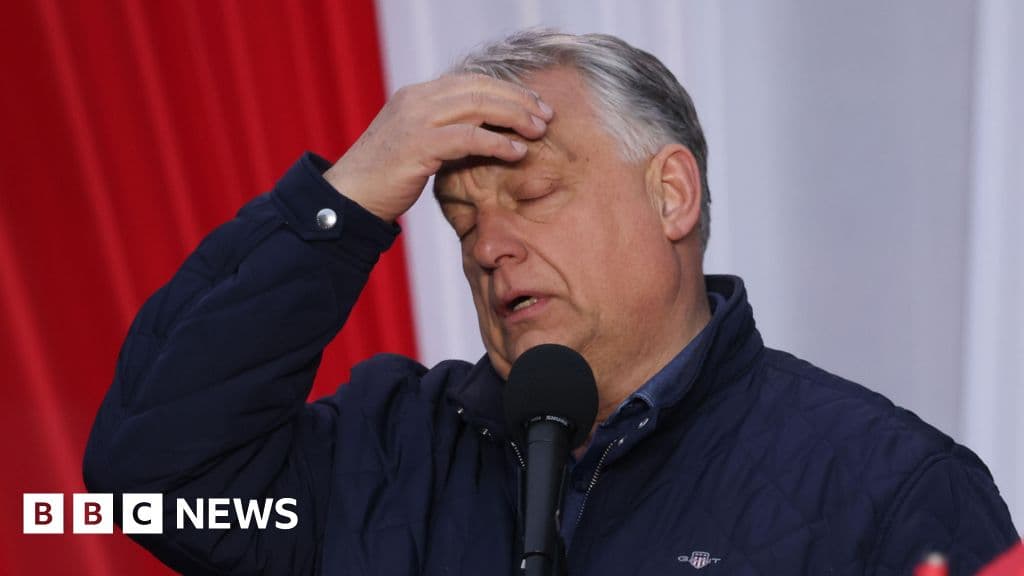
Hungary's outgoing Prime Minister Viktor Orbán has said he will not take up his seat in parliament after his party was defeated in a landslide that ended his 16-year rule.
"I am now needed not in parliament, but in the reorganisation of the patriotic movement," he said in a video statement released on social media on Saturday evening.
Despite his nationalist party Fidesz going from 135 seats to 52 in the 12 April vote, Orbán was re-elected as an MP on its proportional representation list.
Tisza, led by former Fidesz insider Péter Magyar, won more than a two-thirds majority in the 199-seat parliament, paving the way for a reset of both Hungary's domestic policies and its global relationships.
Following a meeting of Fidesz officials, Orbán, 62, said the party's parliamentary bloc would be led from Monday by Gulyás Gergely, who until now has served as the minister overseeing the prime minister's office.
"The mandate I obtained as the lead candidate of the Fidesz-KDNP list is, in fact, a parliamentary mandate of Fidesz. For this reason, I have decided to return it," Orbán said.
About half of Hungary's parliamentary seats are divided among political parties according to their national vote share, while the other half represent individual constituencies.
Orbán has held a seat through one electoral format or the other since 1990, and has led Fidesz throughout that period. He has served as Hungary's prime minister since 2010, becoming the predominant figure in Hungarian politics.
However, voters abandoned him in their droves amid brewing public unhappiness over allegations of corruption and graft while living standards slipped.
Hungary's incoming PM has promised to reverse Orbán-era changes to education and health, tackle corruption, restore the independence of the judiciary and kill off the widely loathed system of patronage known as NER that helped enrich party loyalists and squander state resources.
While Orbán aligned himself with US President Donald Trump and Russia's Vladimir Putin, "Russians go home" was an oft-heard chant of Tisza supporters during the campaign.
Instead of being a stumbling block for the EU and Ukraine, Magyar has pledged to seek more cordial ties with Brussels and Kyiv.
The Tisza leader has urged a swift handover of power, and Hungary's new parliament is due to hold its first session on 9 May.
Orbán's fate as Fidesz leader, meanwhile, will be decided at a party conference in June, he said as he vowed to continue shaping the nationalist movement.