
Barclays to buy GoHenry kids’ debit card and money app
Barclays is buying GoHenry, a kids' debit card app, to target young users.
The Guardian World1 min read

GoGet and Flexicar have removed fuel cards from their Melbourne vehicles due to a series of thefts. Users will now need to pay for fuel upfront and seek reimbursement, impacting them amid rising fuel prices.
Australia’s two biggest car-share companies, GoGet and Flexicar, have removed fuel cards from their Melbourne vehicles after a spate of break-ins and thefts that a senior GoGet executive described as “one of the dumbest crimes ever”.
The change will force users of share cars to pay for fuel themselves before seeking reimbursement, leaving them temporarily out of pocket amid record-high fuel prices caused by the US-Israel war on Iran.
Car-share companies operate on a subscription system that allows members to book cars for use from half an hour to multiple days at a time. The cars are unlocked by members using a swipe-card.
Car-share users ordinarily do not have to pay to refuel, a significant point of difference from traditional car hire and a key selling point for car-share companies.
Sign up for the Breaking News Australia email
Fuel cards have been kept in vehicles to cover fuel costs, but they are useless for non-members, as security measures mean only a member with an active booking has the information required to use the card.
“GoGet pays for fuel but you actually need to book the GoGet for the fuel card to work,” GoGet’s head of space, Christopher Vanneste, said. “This could be one of the dumbest crimes ever.”
GoGet notified its members on 25 March that the company was removing fuel cards from its Melbourne vehicles due to “a number of vehicle break-ins and fuel card thefts”.
“To protect our vehicles and members while we work on a longer-term fix, we will be removing fuel cards from Melbourne cars,” the notice said.
Users were told they would need to pay for fuel and provide a receipt to request a reimbursement or equivalent GoGet credit after their booking was completed.
GoGet is Australia’s biggest car-share business, with 35.2% of the national market.
Flexicar, the second-biggest operator and Hertz subsidiary, followed suit a few weeks later, notifying users on 10 April that fuel cards were being “temporarily” removed from Melbourne vehicles “due to a high number of vehicle break-ins and the theft of fuel cards in recent weeks”.
Flexicar users were also told to pay for fuel themselves and request reimbursement.
Flexicar did not answer Guardian Australia’s questions about the alleged break-ins and thefts, or indicate how long they expected customers to pay upfront for fuel.
“As with all operational decisions, these are reviewed regularly. We’ll monitor the impact of this change and refine our approach as needed. Our customers will continue to be updated on any changes,” a Flexicar spokesperson said in a statement.
They removed fuel cards due to a spate of break-ins and thefts described as 'one of the dumbest crimes ever' by a senior executive.
Car-share users will now have to pay for fuel themselves before seeking reimbursement, which may leave them temporarily out of pocket.
The article mentions record-high fuel prices in Australia, which are influenced by the ongoing US-Israel war on Iran.
Barclays is buying GoHenry, a kids' debit card app, to target young users.

Key FISA provision set to expire as Trump faces backlash over DNI appointment

Watford legend Kenny Jackett passes away at 64

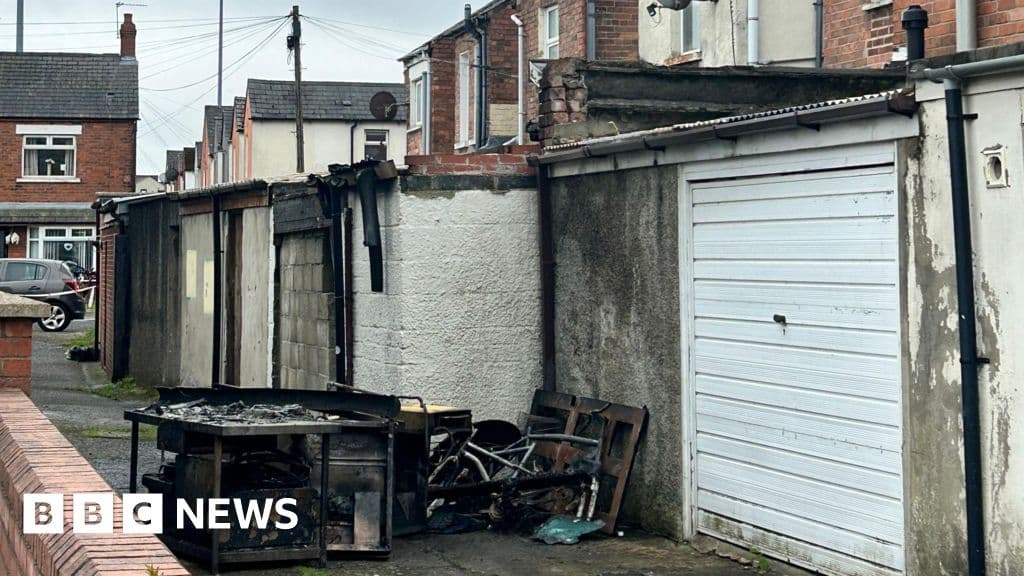
Nineteen people arrested, including a teen, after violence in Northern Ireland and an arson attack.

David Hockney, the iconic British artist known for his diverse work, has passed away at 88.
See every story in News — including breaking news and analysis.
Victoria Police did not answer questions about whether it had received reports of fuel card thefts from car-share cars.
A police spokesperson said reports of theft of fuel itself had increased throughout 2026 but it had “directly coincided with Victoria Police enabling retailers to report petrol drive offs online for the first time”.
“It remains unclear how much of the increase is due to these changes which were introduced to encourage further reporting of a crime traditionally underreported by service stations, as opposed to an actual increase in offending,” the spokesperson said.