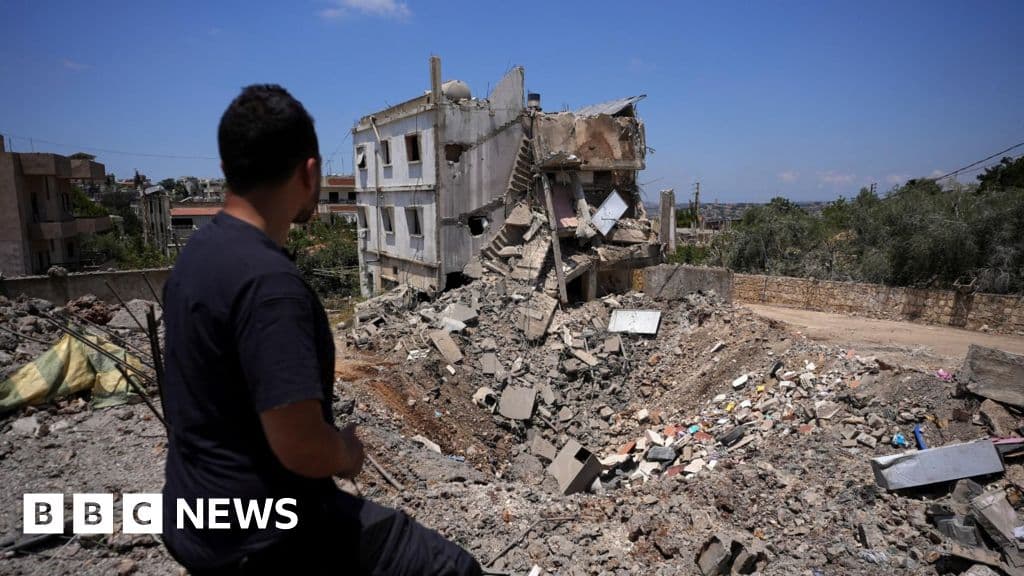
Fragile quiet in Lebanon as US-Iran truce leaves unanswered questions
A fragile calm settles in Lebanon as US-Iran ceasefire unfolds, but doubts linger.
BBC News1 min read

Experts criticize One Nation’s health policies as misguided and potentially costly for taxpayers, jeopardizing care for vulnerable Australians. The party's proposals include withdrawing from the WHO and scrapping the Therapeutic Goods Administration.
Mentioned in this story
Medical experts have blasted One Nation’s health policies, saying they do not make sense, are based on misconceptions and could cost taxpayers more money while leaving vulnerable Australians without access to care.
The party has promised to withdraw Australia from the World Health Organization and to scrap regulator the Therapeutic Goods Administration, rolling its “essential functions” into the health department. It has also proposed adding photo ID to Medicare cards.
The Grattan Institute health program director, Peter Breadon, said some of the policies look like mistakes.
Breadon pointed out that the TGA was already part of the health department.
“Targeting an agency that is majority funded through cost recovery [fees and charges to pharmaceuticals], not through taxpayer funding, also doesn’t make a lot of sense. So that really doesn’t stand up to even a very small amount of scrutiny,” he said.
“It just looks to me like an error.”
One Nation’s website claims up to $3bn is lost annually due to “fraudulent claims and misuse of Medicare, money that should be used to improve healthcare affordability”.
But Breadon said the data the party cites – from the 2023 Independent Review of Medicare Integrity and Compliance – shows the $3bn rort was in relation to provider non-compliance, not fraud by the public.
Sign up for the Breaking News Australia email
“They’re talking about an estimate of savings that has nothing to do with their proposal, and there’s not much evidence that consumer fraud for Medicare cards is a meaningful cost to government,” Breadon said.
“And if we did implement this policy of putting photo IDs on that, that does impose a lot of costs.”
Hanson has previously attempted to add photo ID to Medicare cards, and introduced a private member’s bill in the Senate in 2019. The bill ultimately lapsed at the end of the parliamentary term in 2022.
The party has also pledged a royal commission on the management of the Covid-19 pandemic, opposes vaccine mandates, and wants to “review” $3bn in medications approved for the Pharmaceutical Benefits Scheme during the pandemic.
Hanson has long been an objector to the Covid-19 vaccine, refused to get it during the pandemic, and twice tried to introduce legislation to stop the “discrimination” against Australians who also refused to get the jab.
One Nation proposes withdrawing from the World Health Organization, scrapping the Therapeutic Goods Administration, and adding photo ID to Medicare cards.
Experts warn that the policies could lead to increased costs for taxpayers while leaving vulnerable Australians without necessary healthcare access.
The Therapeutic Goods Administration regulates medicines and medical devices in Australia, ensuring safety and efficacy, and is primarily funded through cost recovery from pharmaceuticals.
Peter Breadon from the Grattan Institute criticized the policies as based on misconceptions and lacking logical consistency, particularly regarding the TGA's funding and function.
A fragile calm settles in Lebanon as US-Iran ceasefire unfolds, but doubts linger.

Federal judge steps down from Georgia election case after scandal involving police officer

UNICEF warns nearly all children face climate hazards, urgent action needed!

Living with a partner? You might be sharing more microbes than you think.

European Parliament approves Trump tariff deal with key conditions.

The World Cup shows how food can win over visitors' hearts.
See every story in News — including breaking news and analysis.
One Nation has also proposed withdrawing from the United Nations, World Health Organization and the Paris climate agreement, which it claims would save up to $1bn a year.
The Australian Medical Association president, Dr Danielle McMullen, condemned the suggestion, and said Australia received vital data from the global health body.
“The World Health Organization plays an incredibly important role in global health and it is in Australia’s interests to continue to contribute to its work,” she said.
“We are part of a global community and health threats do not stop at national borders.”
Breadon and McMullen also both stressed the importance of the TGA’s independence.
“Australian’s want to know their medicines are safe and clinically effective and the independent Therapeutic Goods Administration ensures this is the case. Its independence means that the safety of the community is put first,” McMullen said.
Breadon added that if Australia withdrew from the World Health Organization, it would face similar issues to the US after the Trump administration took the same action.
“When the US withdrew from the WHO, the Trump administration then proposed spending many times over what they would have saved to replace some of the functions that were lost.”
The former Howard health policy adviser Terry Barnes said One Nation’s policies had many similarities to the Trump agenda, and called them “disconnected thought bubbles without a clear understanding of how the healthcare system works”.
“I think there is imitation of Donald Trump’s health policy particularly in relation to the ‘make America healthy again’ agenda. But certainly the Trump administration’s hostility to international health agencies is reflected in One Nation’s policy statement,” he said.
The federal health minister, Mark Butler, said One Nation was a “risk to Medicare and cheaper medicines”.
The populist rightwing party has soared in recent polls, with its leader, Pauline Hanson, polling ahead of Anthony Albanese as preferred prime minister in the latest Resolve Political Monitor.