

Abuse hurled at judge as first group of rioters sentenced for Ely disorder
Court erupts in anger as first rioters sentenced for Cardiff violence
BBC News1 min read

Rebecca Simonitsch experienced convulsive seizures at 15, leading to a coma. After three years on medication, she discovered subtle focal seizures at 18 when her treatment ended.

Rebecca (right) smiles with her mother in 2001, the year she had her surgery. Rebecca Simonitsch
Rebecca Simonitsch
In the summer of 1995, when she was 15, Rebecca Simonitsch woke up in the hospital. She later learned she had had a series of convulsive seizures that put her into a coma. For the next three years, she took medication to prevent future episodes.
At 18, before she left for college, her doctors took her off the medication. That's when she began noticing more subtle kinds of seizures, known as focal seizures. She later realized she had probably been experiencing them on and off ever since she left the hospital.
"The average person would likely have never known when I was having a seizure," Simonitsch said.
"[But] if I tried to speak during them, my words would come out sounding a little like gibberish. And then I would also feel nausea, weakness and fatigue."
Simonitsch was diagnosed with epilepsy. She cycled through multiple medications to stop the seizures, but nothing worked. She could no longer drive, and the side effects of the medication became unmanageable.
At 15, Rebecca Simonitsch woke up in the hospital after suffering a series of convulsive seizures that resulted in a coma.
After her medication ended at 18, Rebecca began noticing subtle focal seizures.
Rebecca took medication for three years to prevent further seizures after her initial hospitalization.
Rebecca realized she had been experiencing focal seizures on and off since leaving the hospital at 15, after her medication was discontinued.
Court erupts in anger as first rioters sentenced for Cardiff violence

Hull City risks a six-point deduction in the Premier League due to financial overspend.

Despite Donald Trump's push for fossil fuels, the American public remains concerned about climate change and supports action to address it. Polls show that around two-thirds of Americans worry about the climate crisis, even as media coverage declines.
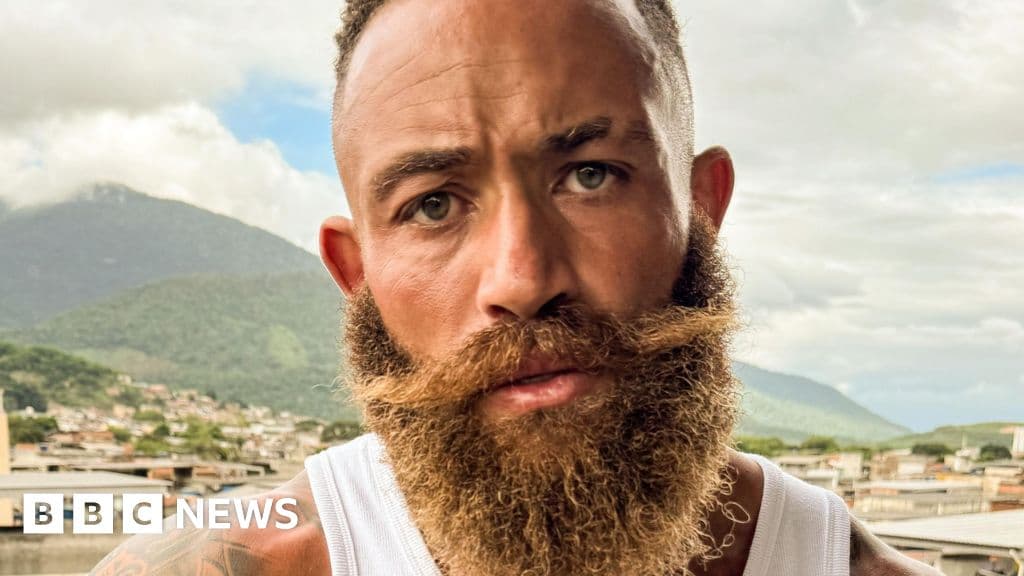
Ashley Cain accused of using misogynistic language on social media

Canada's immigration policies are tightening, raising concerns among experts about migrant rights.

Taiwan claims Kenya deported its delegates under Chinese pressure ahead of a global oceans conference.
See every story in News — including breaking news and analysis.
By the time she was 20, it was clear something had to change. That winter, she flew from Charleston to Baltimore to meet with a neurologist at Johns Hopkins Hospital. After many tests, he identified the source of her seizures — scar tissue in her left temporal lobe — and told her she was a candidate for brain surgery.
On the flight home, Simonitsch kept replaying what the doctor had told her.
"And like so many patients who receive difficult or big news, I had really only absorbed 10 to 15 percent of the conversation. And now I had so many questions," Simonitsch said.
"So I just recall being on the plane, looking out the window and feeling so many emotions in that moment…everything from fear to worry to relief."
As she continued to grapple with these feelings, the man sitting next to her struck up a conversation. He asked her what she was doing in Baltimore, and she told him about the surgery.
"He turned to look at me. And he shared with me that he had an expertise in neuropsychology, and he had worked with patients like me."
For the rest of the two-hour flight, the man listened as she shared what the doctor had told her and the questions she still had. He clarified what the surgery would involve and made sure she understood. Then he reached for his bag and pulled out a notebook and pen.
"He had some really old school graph-like paper that he put on the airplane table," she said.
"And then he just started drawing pictures of the brain. And even marking sections of his drawing as he spoke…and 'This is what they would do with the surgery and how they would remove that scarred region.'"
Twenty-five years later, she still remembers how that conversation made her feel.
"I'll just never forget his kindness and the warmth that he exuded. And how it helped my anxiety fade," she said. "And that was what I needed on that flight back to Charleston by myself."
Simonitsch went on to have the surgery, and today, she remains seizure-free. She still has that piece of paper with the man's drawing of the brain.
"He gave me something that I deeply needed that day: realistic hope, reassurance and compassion," she said. "All from a complete stranger sitting beside me on a crowded flight."
My Unsung Hero is also a podcast — new episodes are released every Tuesday. To share the story of your unsung hero with the Hidden Brain team, record a voice memo on your phone and send it to myunsunghero@hiddenbrain.org.
