
Two children die from measles as England data shows 100 new infections
Tragic news: Two children die from measles in England as cases surge.
The Guardian World1 min read
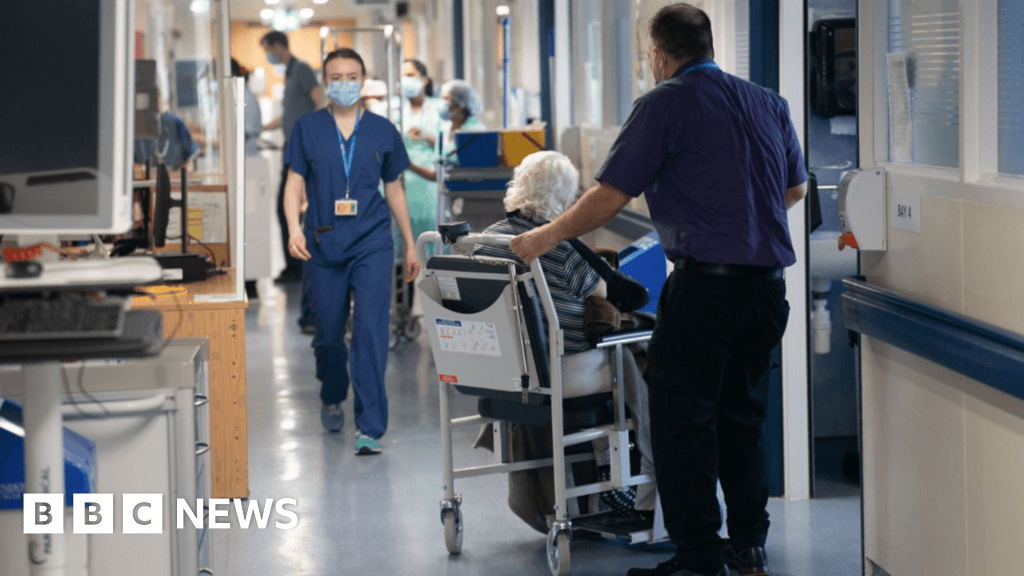
Nearly 3,000 patients a day in England received care in hospital corridors or makeshift areas last month, highlighting significant NHS challenges. Ministers have labeled this practice as 'unsafe' and aim to eliminate it by 2029.
Nearly 3,000 patients a day had to be cared for in hospital corridors or make-shift treatment areas rather in a bed on a ward in England last month, figures show.
It is the first time the data has been published and reveals the scale of the challenge facing the NHS in tackling what ministers say is "unsafe" and "unacceptable".
Corridor care is when patients spend more than 45 minutes waiting for an appropriate place for their care and ministers have pledged to eradicate the practice by 2029.
In A&E this can be in corridors and side-rooms and make-shift treatment areas where there is not the proper equipment to keep them safe and maintain dignity.
On the wards, it is when patients have been waiting for a bed for 45 minutes or more.
The figures show during May there were 2,241 patients a day, on average, who experience corridor care, while on wards there were 669.
Health Secretary James Murray said: "Corridor care is unacceptable, undignified and has no place in our NHS.
"That is why, for the first time, we are publishing this data to shine a spotlight on where the problems are greatest and ensure trusts get the support they need, with the vast majority of corridor care concentrated in a small number of organisations."
Staff and patients have told BBC Your Voice of the problems they have experienced with corridor care.
Suzanne has taken her mother, in her 80s, to A&E in the East Midlands five times this year. Every visit meant more than 24 hours waiting in a corridor.
"Mum was one trolley in a sea of trolleys," Suzanne recalls.
Confused and distressed, her mother was only helped to the toilet or given a drink because family were there, she says.
"If we hadn't been, I dread to think what might have happened."
Kathy's experience was no better. Sent in by her GP one morning earlier this year with a suspected eye infection, she waited 36 hours in a chair, alone, in a hospital in the East of England before being told her blurred vision was caused by a brain tumour.
"It was horrendous… I got home and threw up. I was exhausted and broken."
Nurses, who asked to remain anonymous, described burnout and impossible conditions.
One recalled a shift where the corridor was lined with patients. A body had to be wheeled past them on its way to the mortuary. Later, another patient went into cardiac arrest in the same corridor.
"Those frail patients watched chest compressions. There's no dignity in that."
Another nurse said her emergency department felt "like a war zone". She described a patient who died unnoticed in the corridor.
"He'd started to stiffen because he had been there for so long, dead, with no-one noticing. It's horrific to think someone's loved one died with no one near them."
Corridor care refers to patients receiving treatment in hospital corridors or makeshift areas when they wait over 45 minutes for a proper bed.
Nearly 3,000 patients a day faced corridor care in England last month.
Ministers have pledged to eradicate corridor care by 2029, labeling it as 'unsafe' and 'unacceptable'.
Tragic news: Two children die from measles in England as cases surge.

For the first time, solar power generates more electricity than coal in the US.

38-year-old Brazilian woman arrested for pretending to be a 12-year-old girl

Declan Rice admits to sunburn issues as England prepares for World Cup heat.

As the world celebrates the World Cup, Gaza's players face a harsh reality.

Jingye Steel pursues compensation from UK for British Steel nationalization
See every story in News — including breaking news and analysis.