
Dua Lipa and Callum Turner wedding divides Palermo: ‘I could understand if it was for the pope’
Dua Lipa and Callum Turner celebrate their wedding in Palermo, drawing mixed reactions from locals.
The Guardian World1 min read
A new German search engine allows users to check if their ancestors were members of the Nazi Party. Users can search through millions of membership cards, with one individual discovering his grandfather's membership shortly after Austria's annexation by Hitler.
Mentioned in this story
A new German online search engine is helping people to discover if their ancestors were members of the Nazi Party.
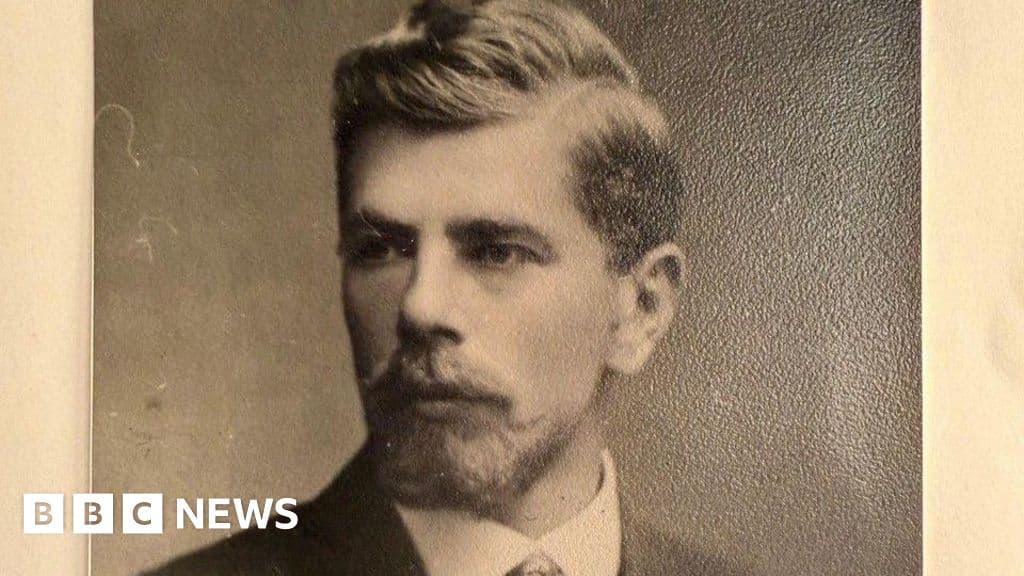
Christian Rainer, from Austria, told the BBC he found the name of his grandfather "within a few seconds".
"I found out that he became a member of the Nazi Party around 21st of April 1938, just a few days after the Anschluss," when Adolf Hitler annexed Austria to Germany, he said.
The online tool allows people to search through several million Nazi Party membership cards, the "NSDAP-Mitgliederkartei".
"He applied to become a member of the NSDAP (Nazi) Party, just five days after it became legal in Austria," Rainer, the former editor of the Austrian news magazine profil, said.
The search tool was set up by the German newspaper, Die Zeit, in cooperation with archives in Germany and in the United States.
Rainer never met his grandfather, who died shortly before he was born in 1961.
"I always knew that he was close to the Nazis, but I was surprised that it only took him five days" to join them, he said.
"He was an academic," Rainer added. "He should have known in 1938 who the Nazis were."
The search engine was important, Rainer said, not only for what it told him about his grandfather, but because it also helped clear other members of his family, including his father.
"I was happy I didn't find anyone else from my family, especially not my father. I had never suspected him of being a Nazi. He was drafted into (the Wehrmacht) in 1941 and wounded few times," he said.
Die Zeit said the response to the search engine has been "overwhelming".
It has been "accessed millions of times and shared thousands of times" since it was launched at the beginning of April, said Judith Busch, spokesperson for Die Zeit.
One user wrote on Die Zeit's website: "I've already found two close relatives, which destroys the myth that no one in our family was involved.
"To have my perspective changed at the age of 71 is a bitter shock."
Around 10.2 million Germans became members of the party between 1925 and 1945.
The membership cards, which were stored in the Nazi headquarters in Munich, almost got destroyed during the last days of World War Two.
Die Zeit said that with Hitler's Reich in ruins, orders were given for the records to be pulped, but they were saved by Hanns Huber, the director of a nearby paper mill, who later handed them over to the Americans.
The cards, which helped identify people, were to play a key role in the de-Nazification process in post-war Germany.
For almost half a century, the cards were kept by the Americans at the Berlin Document Center. In 1994, they were handed over to the German Federal Archives and microfilm copies were sent to the US National Archives in Washington DC.
Until recently it was only possible to make enquiries by making a formal request to the German Archives. In March this year, the US Archives began to make its records available online.
You can use the new German online search engine that allows you to search through millions of Nazi Party membership cards.
The NSDAP-Mitgliederkartei is a collection of Nazi Party membership cards that the new search engine utilizes for ancestry research.
The Nazi Party membership became legal in Austria shortly after the Anschluss on April 15, 1938, with individuals applying for membership soon after.
The online tool was developed in Germany to help individuals discover their ancestors' affiliations with the Nazi Party.
Dua Lipa and Callum Turner celebrate their wedding in Palermo, drawing mixed reactions from locals.

New analysis reveals half of California's waterways are tainted with PFAS pesticides linked to health risks.

Senate passes a $70 billion immigration enforcement bill after 18 hours of debate.

Hamas refuses to surrender arms, stating only police will carry weapons in Gaza.

A 21-year-old man has been charged with attempted murder after a staff member was shot with a crossbow at the University of Surrey. The suspect, Almunthir Daqamah, is a former student and is due in court on Friday.

UN warns US-Iran war is pushing millions into hunger crisis
See every story in News — including breaking news and analysis.
Die Zeit said it obtained the data, and "backed up the documents to make them easily searchable".
Christian Rainer said the information still has huge resonance.
Previously, research focused on "higher-ranking people who became politicians, judges or doctors later on", he told the BBC.
"A lot of people now are searching for family members so it's a very individual thing now."
"Eight decades on, after the end of the World War, you can still find out truth that you haven't known before," he said.