
Ask AI or just Google it? Google makes a big change to a little search box
Google's major update: AI-generated answers for searches in the U.S.
NPR Topics: News1 min read
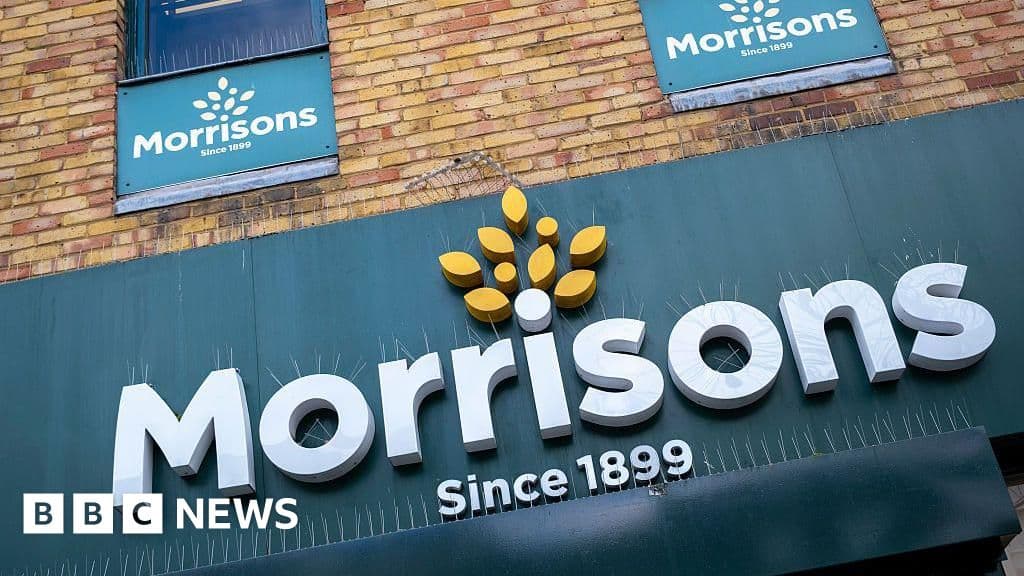
Morrisons plans to close 100 stores in the coming months, citing government policy choices as a factor in rising costs. The closures mainly affect loss-making convenience stores acquired through the McColls acquisition in 2022.
Mentioned in this story
Morrisons is planning to close 100 stores over the coming months, as it blamed government policy choices for rising costs.
The supermarket chain said the affected convenience stores had been loss-making for some time and were acquired through its McColls acquisition in 2022.
It said the difficulties had been exacerbated in more recent years by "significant cost increases resulting from government policy choices", but did not give any further detail.
The planned closures come after Morrisons said last year it was closing 52 cafes and 17 convenience stores, putting hundreds of jobs at risk.
It also comes after it revealed last month that about 200 jobs were at risk at its Bradford headquarters.
The supermarket chain said its proposal to take the "tough but necessary decision" to close more Morrisons Daily stores meant more staff would be at risk of redundancy and a consultation would start shortly. It did not say how many jobs were potentially affected.
The chain has around 1,700 Morrisons Daily convenience stores and opened more than 120 franchise stores last year.
It also did not immediately specify which of those stores it was proposing to close, but said they were ones "whose performance has been challenged for a number of years and which are loss making, despite remedial action".
"This situation has been exacerbated in more recent years by significant cost increases resulting from government policy choices, which have made returning these stores to profitability even more difficult," it added.
It said it had a "robust expansion plan" for 2026, and saw the opportunity to open hundreds more franchise stores in the coming years.
Many retailers have argued they have been hit with a wave of extra costs since April last year, including increased employer National Insurance contributions (NICs) and higher minimum wages.
In addition, food and drink companies are now charged for the cost to councils of recycling the packaging of some products, under the government's Extended Producer Responsibility (ERP) programme.
Meanwhile, inflation has been above the Bank of England's 2% target for some time. Newly-published inflation figures show the annual rate of food price rises was 3% in April - higher than the overall rate of inflation of 2.8%.
There have been warnings that food inflation in the UK could reach 10% by the end of the year due to the impact of the US-Israel war with Iran.
This week multiple supermarket sources said the government had , in return for an easing of regulations.
Morrisons is closing 100 stores due to rising costs attributed to government policy choices and the stores being loss-making.
The affected stores are primarily convenience stores that were acquired through the McColls acquisition in 2022.
The planned closures could put hundreds of jobs at risk, following previous announcements about job losses at its cafes and headquarters.
Google's major update: AI-generated answers for searches in the U.S.
Trump's $1.8 billion investigation fund criticized by Republicans

Putin vows retaliation after Ukraine's drone strike on a dormitory in Starobilsk, killing six.

Guardiola's Impact: More Than Just Football

Drones carrying explosives create fear among families in Colombia's Catatumbo region.

US requires temporary visa holders to leave for Green Card applications, reinforcing immigration rules.
See every story in News — including breaking news and analysis.
But the suggestion was met with a furious response by key figures in the industry.
The former boss of Sainsbury's Justin King said the British supermarket sector was already highly competitive and it was "hypocritical" for the Treasury to ask supermarkets to cap prices when its policies were contributing to inflation.