
How to help children cope after shootings like the San Diego mosque killings
San Diego mosque shooting leaves three dead; how to support children affected
NPR Topics: News1 min read

Over £52m allocated for social housing is at risk due to the partial collapse of Heylo Housing's investment firms. This situation threatens 3,500 social homes and raises concerns about the government's housing deregulation efforts.
Mentioned in this story
More than £52m in public money earmarked for social housing is at risk after the partial collapse of one of the England’s fastest-growing housing providers.
Two of the investment companies run by the Heylo Housing group, which is backed by the asset managers Blackrock, have gone into administration leaving the government regulator scrambling to find a rescue deal to protect taxpayers’ money and prevent 3,500 social homes switching to the private sector.
The saga has exposed serious flaws in a deregulation of housing conducted by the government and has raised questions about attracting new investors into social housing, and giving public money to for-profit companies.
It has also set an unprecedented challenge for the Regulator of Social Housing (RSH) which oversees the landlords of 2.9m social homes, and risks tarnishing its record of never having lost a single property or any public money to a financial default.
One of the companies, or investment pods, in the Heylo group, went into administration owing £46.46m in unsecured credit to Homes England – the government agency that allocates public money for social housing. The other company owes Homes England £6.21m.
Homes England has estimated its total grant exposure is nearer £43m. This was granted from 2018 to 2023 in its shared ownership affordable homes programme under which residents could buy a partial share of the homes and pay rent on the remaining share.
This grant is typically recycled when it is paid back to provide more social homes, and could help fund about 500 new homes for social rent, but it would be lost if an insufficient bid is made for the stricken companies.
The administrators, PWC, has assured about 3,500 residents in more than 100 council areas they will not lose their homes and should continue to pay their mortgage and rent as usual.
The regulator is hoping the homes can stay in the social housing sector, if it is able to persuade another regulated landlord to buy the stock, similar to when the black-led provider Ujima was taken over by L&Q.
The RSH’s powers, which include the appointment of its own administrators, has helped reassure lenders who have invested a combined total of £130bn in the sector.
The risk is due to the partial collapse of investment firms run by Heylo Housing, which has left public money in jeopardy.
3,500 social homes are at risk of being transferred to the private sector due to the financial issues faced by Heylo Housing.
Heylo's companies owe Homes England a total of £52.67m, which includes £46.46m in unsecured credit and £6.21m from another firm.
The Regulator of Social Housing must find a rescue deal to protect taxpayers' money and maintain its record of safeguarding public funds amidst this crisis.
San Diego mosque shooting leaves three dead; how to support children affected

Raúl Castro charged with murder by US over 1996 plane downing, reviving old charges.

Young Americans demand court halt to Trump's pollution rollbacks

James Murdoch to acquire New York Magazine and Vox Media Podcast Network for over $300 million.
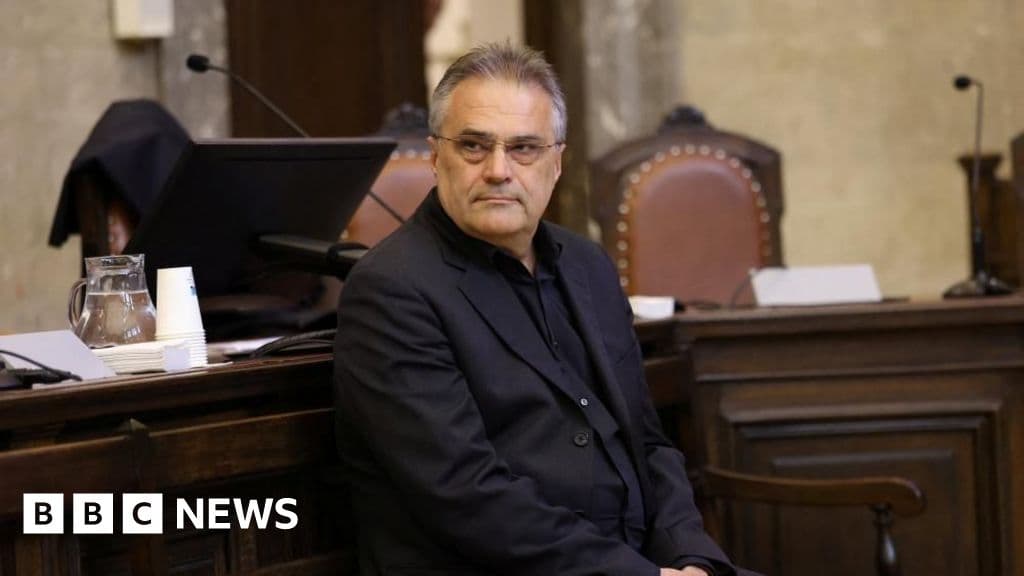
Egisto Ott, former Austrian intelligence officer, convicted of spying for Russia.

Michael Bay set to direct a film on US military rescue mission in Iran
See every story in News — including breaking news and analysis.
However, Heylo’s case is different, because the part of its structure that is registered with the regulator does not own the homes involved. Instead, it leases them from six investment companies, including the two that have gone into administration.
In addition, it is the investors or these companies that have appointed the administrators, not the RSH. As PWC has a duty to protect the funds of the investors – Blackrock and two pension funds Phoenix Life and the Universities Superannuation Scheme. PWC’s duty does not include keeping the homes in the social housing sector as RSH administrators would.
The RSH has raised concerns about Heylo’s structure since it was set up by its founder Giles Mackay. In 2022, it warned it was too risky because registered providers had no control over the homes. Mackay had a similar dispute with RSH over a his previous company Assettrust. Its investment companies went into administration in 2014, after RSH shared concerns about its viability and governance.
The regulator now has fewer powers to intervene. Under deregulation introduced in 2017, Mackay was able to buy an existing registered provider and add a complex structure of investment companies around it.
The acquisition arguably gave Heylo the benefits of regulation, including successfully bidding for public money. But its structure offers no public oversight over the homes this money paid for.
According to RSH, Heylo’s current difficulties demonstrate why this loophole should be closed. Its chief executive Jonathan Walters said: “It highlights the importance of going through full registration so potential issues can be identified early – rather than bypassed through acquisitions.
“By leasing homes from investment pods, Heylo RP [registered provider] was less able to assess and address risks, and unable to protect tenants’ homes when problems developed.”
Paul Kershaw, the chair of Unite’s housing workers, who used to work for the regulator, said: “In this situation it’s going to be difficult to find a saviour.”
“The structure of the company is the risk for the regulator. Who picks up the tab when things go wrong? The investors, like Blackrock want the profit when things go well, but they don’t want the risk.”
Kershaw claimed the regulator has been under political pressure to register for-profit companies as a way of increasing the building of new homes. “Heylo shows the risk associated with that approach,” he said.
The RSH, the investors, and the administrators are hoping that Heylo’s homes can stay in the social housing sector and at least partially protect the public grant involved. However, this outcome is far from certain and at least some of public money may have to be written off.
Walters said: “Because the pods own the social homes but are not regulated by us, we do not have a formal role in the administration. But we are working closely with the administrator to support a resolution that safeguards the long-term future of these homes.”
A spokesperson for Heylo said: “The team at Heylo is working closely with the administrators, and our customers remain our top priority to ensure a smooth and orderly transition. As this is an ongoing matter, we are unable to comment further at this stage.”