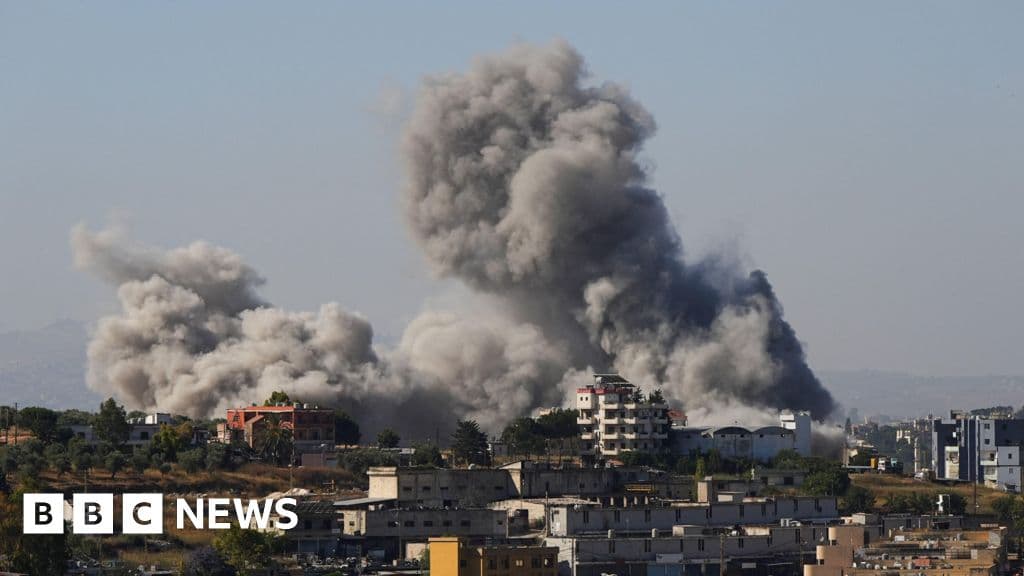
Donald Trump has paused the US effort to guide vessels out of the Strait of Hormuz to facilitate negotiations with Iran. The US blockade of vessels leaving Iranian ports will remain in effect.
Key points
Trump paused the effort to guide vessels out of the Strait of Hormuz
The pause aims to facilitate negotiations with Iran
The US blockade of vessels leaving Iranian ports remains in place
The decision was influenced by requests from Pakistan and other countries
Trump cited military successes against Iran as part of his rationale
Mentioned in this story
Donald TrumpIranPakistan
From
Welcome to the Guardian’s continuing coverage of the crisis in the Middle East.
Donald Trump has said the effort to guide vessels out of strait of Hormuz is paused while the US aims to finalise a deal with Iran. The president announced the decision in a social media post on Tuesday evening, saying he was pausing the effort for a short period to give space for US efforts to final a settlement with Iran to end the war.
Trump said he was making the move based “on the request of Pakistan and other Countries, the tremendous Military Success that we have had during the Campaign against the Country of Iran and, additionally, the fact that Great Progress has been made toward a Complete and Final Agreement with Representatives of Iran.”
He added that the US blockade of vessels leaving Iranian ports would remain in place.
US secretary of state Marco Rubio said the military objectives of so-called “Operation Epic Fury” have concluded and the offensive stage of the war with Iran is “over”. Speaking at the White House press briefing, Rubio insisted that ongoing US military action in the strait of Hormuz is “defensive” in nature and a separate operation, in line with the Trump administration’s argument that it doesn’t need approval from Congress to continue the war against Iran. “There’s no shooting unless we’re shot at first,” he told reporters, urging Iran to “make the sensible choice” and negotiate a deal.
With the status of the ceasefire in doubt, Donald Trump declined to say what would constitute a violation, telling reporters only that Iran knows “what not to do”. It comes amid rising tensions after both sides exchanged fire in the strait of Hormuz on Monday. “Well, you’ll find out because I’ll let you know,” the US president said. “They know what to do, or what not to do more importantly.”
Before Trump’s announcement on Tuesday evening, his defense secretary Pete Hegseth insisted that “Project Freedom” had allowed the US to gain control of the strait, despite Iran claiming it has actually strengthened its control of the waterway, and thousands of cargo ships remain stranded there.
Q&A
Why did Trump pause the Strait of Hormuz vessel guidance effort?
Trump paused the effort to allow time for the US to finalize a deal with Iran, responding to requests from Pakistan and other countries.
What is the current status of the US blockade on Iranian ports?
The US blockade of vessels leaving Iranian ports will continue despite the pause in guiding vessels out of the Strait of Hormuz.
What military successes did Trump reference regarding Iran?
Trump mentioned tremendous military successes during the campaign against Iran as part of the rationale for his decision.
What progress has been made in negotiations with Iran?
Trump indicated that significant progress has been made toward a complete and final agreement with representatives of Iran.
See every story in News — including breaking news and analysis.
US secretary of state Marco Rubio briefs reporters on Iran war at White House
US secretary of state Marco Rubio briefs reporters on Iran war at White House. Photograph: Samuel Corum/EPA
Rubio framed the US’s operation in the strait of Hormuz as a rescue effort, saying that Iran had left thousands of mariners “for dead”. He said the US was trying to reopen the strait “as a favour to the world”, neglecting to mention that its closure is the result of the war the US started.
Iran’s foreign minister Abbas Araghchi met with his Chinese counterpart, Wang Yi, in Beijing on Wednesday morning, the official Xinhua news agency reported, without providing further details. It was the first time since the start of the war that Araghchi has traveled to China, whose close economic and political ties to Tehran give it a unique position of influence.
Meanwhile, theUK maritime authority reporteda cargo vessel being struck “by an unknown projectile” in critical waterway.
And for a second consecutive day, the United Arab Emirates said its air defences had shot down missiles and drones from Iran. Tehran did not immediately comment. It comes a day after the UAE said it had intercepted 15 Iranian missiles and four drones.
Iranian foreign minister Abbas Araghchi met with China’s top diplomat Wang Yi for talks in Beijing on Wednesday, China’s Xinhua news agency reported, without giving details on the discussion.
Iran’s Fars news agency earlier said Araghchi would “discuss bilateral relations and regional and international developments with his Chinese counterpart”.
On Tuesday, the US secretary of state, Marco Rubio, expressed hope that Beijing would reiterate to Tehran the need to release its chokehold on the strait.
Ordinarily, China buys more than 80% of Iran’s oil. Those Iranian imports make up about 12% of China’s oil supply.
Welcome to the Guardian’s continuing coverage of the crisis in the Middle East.
Donald Trump has said the effort to guide vessels out of strait of Hormuz is paused while the US aims to finalise a deal with Iran. The president announced the decision in a social media post on Tuesday evening, saying he was pausing the effort for a short period to give space for US efforts to final a settlement with Iran to end the war.
Trump said he was making the move based “on the request of Pakistan and other Countries, the tremendous Military Success that we have had during the Campaign against the Country of Iran and, additionally, the fact that Great Progress has been made toward a Complete and Final Agreement with Representatives of Iran.”
He added that the US blockade of vessels leaving Iranian ports would remain in place.
US secretary of state Marco Rubio said the military objectives of so-called “Operation Epic Fury” have concluded and the offensive stage of the war with Iran is “over”. Speaking at the White House press briefing, Rubio insisted that ongoing US military action in the strait of Hormuz is “defensive” in nature and a separate operation, in line with the Trump administration’s argument that it doesn’t need approval from Congress to continue the war against Iran. “There’s no shooting unless we’re shot at first,” he told reporters, urging Iran to “make the sensible choice” and negotiate a deal.
With the status of the ceasefire in doubt, Donald Trump declined to say what would constitute a violation, telling reporters only that Iran knows “what not to do”. It comes amid rising tensions after both sides exchanged fire in the strait of Hormuz on Monday. “Well, you’ll find out because I’ll let you know,” the US president said. “They know what to do, or what not to do more importantly.”
Before Trump’s announcement on Tuesday evening, his defense secretary Pete Hegseth insisted that “Project Freedom” had allowed the US to gain control of the strait, despite Iran claiming it has actually strengthened its control of the waterway, and thousands of cargo ships remain stranded there.
US secretary of state Marco Rubio briefs reporters on Iran war at White House
US secretary of state Marco Rubio briefs reporters on Iran war at White House. Photograph: Samuel Corum/EPA
Rubio framed the US’s operation in the strait of Hormuz as a rescue effort, saying that Iran had left thousands of mariners “for dead”. He said the US was trying to reopen the strait “as a favour to the world”, neglecting to mention that its closure is the result of the war the US started.
Iran’s foreign minister Abbas Araghchi met with his Chinese counterpart, Wang Yi, in Beijing on Wednesday morning, the official Xinhua news agency reported, without providing further details. It was the first time since the start of the war that Araghchi has traveled to China, whose close economic and political ties to Tehran give it a unique position of influence.
Meanwhile, theUK maritime authority reporteda cargo vessel being struck “by an unknown projectile” in critical waterway.
And for a second consecutive day, the United Arab Emirates said its air defences had shot down missiles and drones from Iran. Tehran did not immediately comment. It comes a day after the UAE said it had intercepted 15 Iranian missiles and four drones.