
Thai Princess Bajrakitiyabha dies after more than three years in coma, palace officials say
Thai Princess Bajrakitiyabha has passed away after being in a coma for over three years.
BBC News1 min read
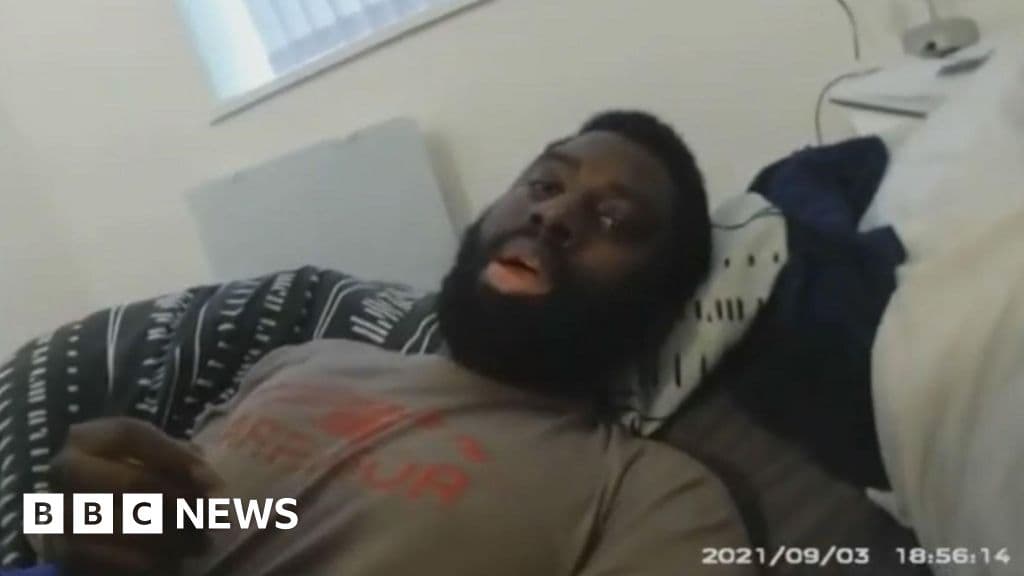
A mental health nurse has admitted to making errors in the records of Valdo Calocane, who went on to kill three people in Nottingham. Calocane, diagnosed with paranoid schizophrenia, was discharged from care nine months before the attacks due to lack of engagement.
Mentioned in this story
A nurse has admitted to a public inquiry that she made errors in the records of a mentally ill man before he went on to kill three people in a spate of attacks.
Valdo Calocane, who was diagnosed with paranoid schizophrenia, stabbed to death Barnaby Webber, Grace O'Malley-Kumar and Ian Coates, and tried to kill three others, in Nottingham on 13 June 2023.
Calocane was under the care of Nottinghamshire Healthcare NHS Foundation Trust (NHFT) from 2020 but was discharged due to a lack of engagement nine months before the attacks.
On Monday at the Nottingham Inquiry, mental health nurse Busayo Ajewole admitted her notes were at times lacking information, copied and pasted and fundamentally wrong.
Calocane first presented to NHFT with symptoms of psychosis in May 2020, after he broke into a neighbour's flat where he lived at Brook Court in Radford, Nottingham.
Between then and February 2022, he had six Mental Health Act assessments which led to four hospital admissions.
The inquiry was shown risk assessment forms from that period, which showed a series of incorrect information.
Calocane's first admission to a psychiatric ward at Highbury Hospital in Nottingham was from 25 May 2020 to 17 June 2020, the inquiry heard.
That began the day after he broke into a woman's flat, causing her to flee before she fell from a window and fractured her spine.
The inquiry was told Calocane was transferred back to the same ward on 14 July until 31 July, after he tried to force entry to another neighbour's flat.
Following his detention, Ajewole - a clinical team leader at Highbury - updated a form used to assess patients' risk and recorded he had "no past history of mental health difficulties" and "no past history of violence and aggression".
Of the records, Julian Blake - counsel to the inquiry - said: "That's not only lacking in detail, but that's also wrong isn't it?"
Ajewole replied: "Yes, I understand that was an error from me.
"It should have reflected that he had a history of violence and aggression on the risk assessment."
One of the entries also shown to the inquiry used the phrase "Valdo is usually a very polite and gentle, personable young man", of which Ajewole could not identify where that wording had come from.
Calocane was detained under the Mental Health Act again on 3 September after he assaulted Nottinghamshire Police officer PC Barnaby Pritchard while a warrant was being carried out to facilitate a mental health assessment.
During that assault, Calocane headbutted and repeatedly punched the officer, and had to be Tasered and restrained by a number of officers.
The nurse admitted that her notes were lacking information, copied and pasted, and fundamentally wrong.
The victims were Barnaby Webber, Grace O'Malley-Kumar, and Ian Coates.
Valdo Calocane was diagnosed with paranoid schizophrenia.
He was discharged due to a lack of engagement with the care provided by Nottinghamshire Healthcare NHS Foundation Trust.
Thai Princess Bajrakitiyabha has passed away after being in a coma for over three years.

California officials recover body of five-year-old swept out to sea

Wataru Endo retires from international football after injury, missing World Cup 2026.

From near death to World Cup hero: Jimenez's emotional moment for Mexico

Julian Quinones and Raul Jimenez score as Mexico wins 2-0 in World Cup opener!

Satellite images reveal damage to over 50 Iranian military bases from US strikes since the war began.
See every story in News — including breaking news and analysis.
On patient summary records shown to the inquiry, it had been documented that Calocane - who is being referred to throughout the inquiry as VC - arrived with multiple police officers and was "angry and agitated".
Ajewole told the inquiry she would have been made aware of that assault during a handover, but in Calocane's risk assessment form, recorded no mention of it.
Instead, the nurse recorded details of an earlier incident involving one of Calocane's neighbours in May.
"I can't recall why that was not recorded in this assessment, it should have been," she said.
The inquiry heard the form also included reference to "no further incidents of violence aggression", despite multiple incidents by that point.
That information was collated in a letter about Calocane's risk to others, which was sent to his GP replicating the "same mistakes", the inquiry heard.
Blake said: "Can you see how that's a significant problem?"
Ajewole said: "Yes I can. Upon review, the information contained under [risk] summary and formulation is accurate but not complete.
"I am aware that VC had in fact seriously assaulted a police officer while detaining under [section] 136."
Blake said: "It's quite fundamentally wrong the information that I've just showed you."
"Yes," Ajewole replied.
Asked if inaccurate filling out of forms was a problem across the trust, Ajewole said she believed it was an "individual" issue, and was "not entirely sure if it's an error that reoccurs a lot with other nurses".
She added she since changed her "usual practice" to ensure she checked her documentation and created new risk assessment forms in the system, instead of updating existing forms.
Dr Omar Manzar, who was involved with four of Calocane's assessments, also gave evidence to the inquiry - which is examining the events leading up to the killings and the aftermath - on Monday.
He agreed it was "astonishing" the University of Nottingham - where Calocane studied between 2017 and 2022 - was not made aware of his assault on PC Pritchard and incidents involving neighbours.
The inquiry heard Calocane was due to return to studies in September 2021 after taking a break due to his mental health.
Manzar, alongside other mental health practitioners, was responsible for assessing Calocane's risk to others.
The inquiry was previously shown a series of text messages Calocane had sent to his brother Elias, expressing thoughts of violence, which were given to his inpatient consultant Dr Faizal Seedat.
Seedat summarised and reviewed those messages, but did not show them to any other mental health workers or agencies.
Manzar told the inquiry that had he seen those messages, they would have factored into his assessment of Calocane. He agreed seeing the messages would have "significantly escalated" his assessment of Calocane's risk to others.
In a written statement to the inquiry, Manzar said "with the benefit of hindsight", detaining Calocane under section 3 of the Mental Health Act - which would have allowed the trust to detain him for a longer period and led to supervised treatment in the community upon discharge - might have been more appropriate.
However, he told the inquiry "the benefit of hindsight should not conflate" what his assessment was of Calocane at the time.
Calocane, now 34, is currently serving an indefinite hospital order at a high-security facility after pleading guilty to three counts of manslaughter on the grounds of diminished responsibility and three counts of attempted murder.
The inquiry continues.
Listen to BBC Radio Nottingham on Sounds and follow BBC Nottingham on Facebook, on X, or on Instagram. Send your story ideas to eastmidsnews@bbc.co.uk or via WhatsApp on 0808 100 2210.