
What you need to know about the preliminary U.S.-Iran agreement signed by Trump
Key details on the U.S.-Iran agreement signed by Trump and the postponed peace talks.
NPR Topics: News1 min read

A group of Emory University law students is petitioning the U.S. Supreme Court to address the lack of workplace protections for federal court employees. They aim to challenge the judiciary's self-policing system, which currently leaves many workers without recourse against harassment and discrimination.
Mentioned in this story

Federal court employees are not covered by key civil rights protections, leaving them vulnerable to harassment and discrimination without a clear way to seek help.
Emory law students have petitioned the U.S. Supreme Court to challenge the judiciary's internal system that lacks independent oversight for workplace complaints.
Title VII of the Civil Rights Act of 1964 prohibits workplace harassment and discrimination, but federal court employees currently do not receive these protections.
Caryn Strickland is a former public defender who faced harassment at work and is supporting the Emory students' efforts to improve workplace protections in federal courts.
Key details on the U.S.-Iran agreement signed by Trump and the postponed peace talks.

Morocco captain Achraf Hakimi will face trial for rape allegations in February 2026.

12-Year-Old Markos Abaye's Compassion for His Sick Chicken Touches Hearts in Ethiopia
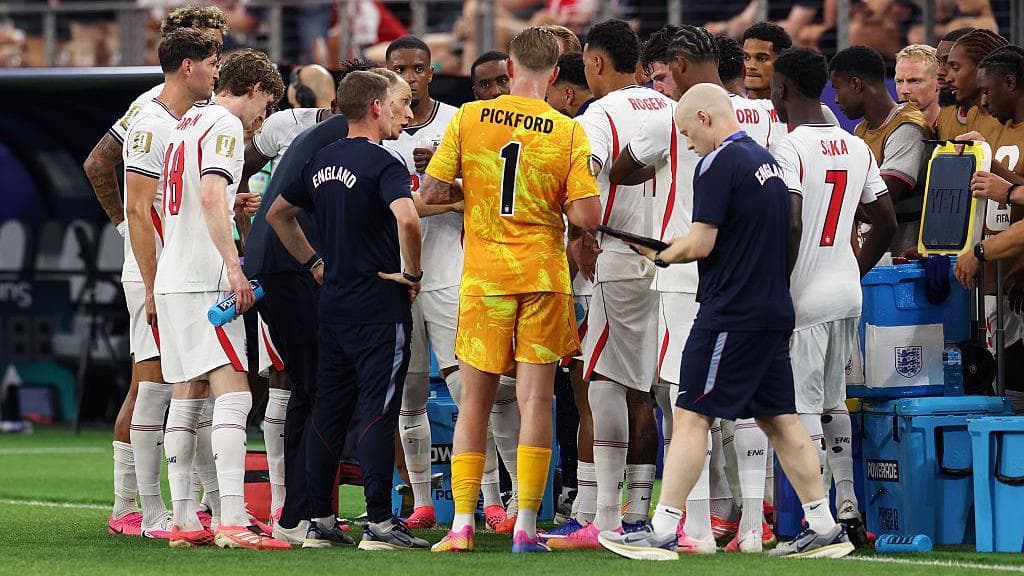
Are hydration break ads here to stay at the World Cup? Fans face extra ads totaling over 7 hours.

US-Iran peace deal hangs by a thread as Israel bombs Lebanon, killing 18.

Veteran James Brown saves fellow truck driver, honored as 'angel' of highways
See every story in News — including breaking news and analysis.

Professor Paul Koster said it's the only student-led Supreme Court litigation program in the country. "These students aren't getting credits for this, they're not getting graded on this, they're doing the work because they want to do the work," Koster said.
At the center of the case is the unique system the courts use to police themselves and whether it gives workers due process and equal protection under the law.
Student Andrew Taramykin said the judiciary is a special place, with some 30,000 employees.
"Yes it's a huge employer but in many ways it's a small community," said Taramykin, who will enter his third and final year of law school in the fall.
He spent hours researching a fundamental civil rights law, known as Title VII, for that Supreme Court petition.
"Title VII goes back to the Civil Rights Act of 1964 and it prohibits certain unlawful workplace conduct that includes what we generally understand as workplace harassment, workplace discrimination," he said.
By 1995, lawmakers had passed a new law to extend those protections to workers in Congress. And Taramykin said by his read, Congress intended federal court employees to get protections too. **But he said lawmakers wanted to give the judiciary wide berth to execute on them.** **<<*can we say:* But he said lawmakers wanted to give the judiciary plenty of room to carry them out.>>**
Every federal circuit court has since developed its own human resources program for workers to resolve disputes. Those rules typically leavejudges to oversee complaints against people they know and might work with every day.
The Emory law students said that's not the kind of neutral, independent decision making that's promisedin the civil rights law.
"Autonomy for the institution cannot come at the cost of basic workplace rights and safety for people within it," Bettini said.
An earlier NPR investigation found clerks and other employees who face abuse in the courts often find little recourse.

Caryn Strickland, the former public defender who says she faced harassment at work, said she's proud of the students for taking up her cause.
"The shortcomings in civil rights protections for the judiciary's 30,000 employees will only be addressed if the legal community is willing to stand up publicly against this serious injustice," Strickland said in a written statement to NPR.
A spokesman for the Administrative Office of the U.S. Courts in Washington declined comment on the case. But that office has been defending the judiciary's internal system as robust. And they've said changes are underway to make it easier to report wrongdoing.
The Supreme Court has asked the Justice Department for a response to the students' petition —due next month.

The law student-drafted petition comes as misconduct in the judiciary is drawing renewed attention. This month, three federal judges in three different states came under scrutiny for their behavior off the bench. Impeachment by Congress is the most severe sanction federal judges can experience. But just 15 judges have been impeached, and only eight removed from office.