
FDA panel considers a first-of-its-kind flu vaccine using mRNA technology
FDA considers Moderna's mRNA flu vaccine, mFlusiva, for those 50 and older.
The Guardian World1 min read

Louisiana Republicans abolished the elected clerk of New Orleans' criminal court just days before Democratic exoneree Calvin Duncan was set to take office. A temporary restraining order allowed Duncan to assume his position, but the future of the office remains uncertain.
Mentioned in this story
Louisiana Republicans eliminated an elected position days before a Democratic exoneree who overwhelmingly won the New Orleans-based post was set to take office on Monday.
A temporary restraining order did allow the exoneree, Calvin Duncan, to take office as scheduled Monday as the clerk of New Orleans’ criminal district courthouse – though it remained unclear how long his tenure may prove to be.
Conservative governor Jeff Landry, a Republican, quietly signed legislation abolishing the longstanding New Orleans clerk of criminal court position into law Thursday, according to Louisiana secretary of state spokesperson Trey Williams.
Republicans say wiping away the office is a consolidation effort meant to make the local judicial system more efficient and cut costs. But Democrats describe the change as government overreach – arguing that it infringes on a predominately Black city’s decision at the polls.
Duncan, who spent nearly 30 years behind bars for a crime he did not commit, easily won election to the criminal court clerk position in November, beating the incumbent and earning more than two-thirds of the vote.
At Duncan’s request, New Orleans-based federal judge John deGravelles on Sunday ruled the law which eliminated his office was unconstitutional and issued a temporary restraining order which stopped it from taking effect.
A statement from Duncan said he was “elated because the people’s right to vote is being honored”.
But Landry’s administration and state attorney general Liz Murrill can appeal against the ruling to the US fifth circuit court, which many regard as the country’s most conservative appellate court.
Duncan, 63, whose murder conviction was vacated in 2021 after evidence emerged that police officers had lied in court, has vowed to help fix the system that once failed him.
He and his supporters say he is being targeted by the most powerful Republicans in the state, including those who have denied his innocence, even though Duncan’s name is listed on the National Registry of Exonerations.
“We’re doing something because powerful people don’t like him,” Louisiana state representative Mandie Landry, a New Orleans Democrat, told lawmakers during a legislative committee hearing in April. Landry, who is not related to the governor, described the Republican efforts as “atrocious” and worries what it could mean for other elected positions in the state.
Republicans say the legislation consolidates the civil and criminal court clerks’ offices in New Orleans, putting it in line with all other parishes in the state, which have single clerk’s office. The civil clerk position would remain and absorb the criminal clerk’s role.
Louisiana Republicans claim the elimination is part of a consolidation effort to improve efficiency and reduce costs in the local judicial system.
Calvin Duncan is a Democratic exoneree who spent nearly 30 years in prison for a crime he did not commit before winning the election for the clerk position.
Calvin Duncan won the election with over two-thirds of the vote, defeating the incumbent clerk in November.
Democrats argue that abolishing the position represents government overreach and undermines the electoral decision of a predominantly Black city.
FDA considers Moderna's mRNA flu vaccine, mFlusiva, for those 50 and older.

Amber heat warnings issued as southern England braces for heatwave

High-stakes Supreme Court rulings on birthright citizenship and immigration expected today.
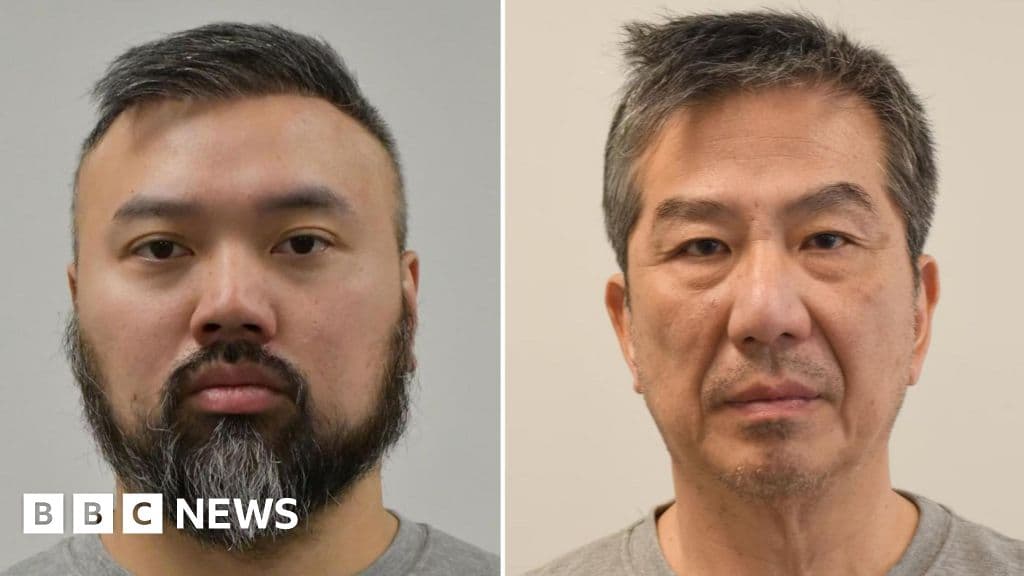
Two men sentenced for assisting Chinese intelligence in the UK, threatening national sovereignty.

Great Britain's major rail operators are now mostly public. Is it working?

World Cup update: 75 goals scored, 9 draws in 24 matches!
See every story in News — including breaking news and analysis.
Eliminating the clerk position saves the state about $27,000 and the city $233,000 according to the office of the legislative auditor, which added that the long-term costs of consolidation are “unknown”. The legislation also shifts about $1.17m in state expenditures to the parish. The civil and criminal court of clerk have separate physical offices and different case management systems.
The governor told the Associated Press that eliminating Duncan’s elected office was about improving government efficiency and “cleaning up a system in [New Orleans] that has been plagued by dysfunction and corruption for years”.
The consolidation is part of a broader Republican effort during the ongoing legislative session to overhaul the judiciary in New Orleans – including bills that propose abolishing several other elected judicial positions in the parish. However, those jobs would be eliminated further down the line, allowing officials to serve out their terms.
The bill’s Republican author, Jay Morris, a state senator who represents a district several hours from New Orleans, said the goal had been to implement the clerk consolidation before Duncan took office, preventing him from starting a four-year term. Morris has acknowledged that he expects lawsuits to be filed because of this law but believes the change to be constitutional.
“It’s unfortunate for Mr Duncan, I concede that,” Morris told lawmakers in April. “He seems very nice, but we don’t make policy around here for just one person.”
Although conversations have revolved around Duncan, many also raise concerns about how the change could disenfranchise voters. That is a heightened worry in a deeply Republican state whose efforts to gut the Voting Rights Act resulted in Friday’s US supreme court decision that dismantled a provision which ensured minority voters received fair treatment in drawing congressional districts.
New Orleans is a Democratic hub with a predominantly Black electorate.
“Mr Duncan was elected by 68% of the vote in a city that’s majority African American,” Edmond Jordan, a Democratic state representative, told Morris. “This is the will of the people, and what your bill attempts to do is usurp the will of the people.”
Well before the legislation ever reached the governor’s desk, Duncan said he could see the writing on the wall. Ahead of the outcome, Duncan’s advocates held a ceremonial swearing in for him. Hundreds of people gathered on the steps of the New Orleans criminal courthouse to support the exoneree.
Duncan told lawmakers that, along the 2025 campaign trail, he spoke with many people who told him they typically abstain from voting in elections.
“Now, this bill tells people exactly what they had believed – that their vote doesn’t count,” Duncan said.
Guardian staff contributed reporting