
‘There’s wee girls inside’: panic as masked men storm house in Belfast
Chaos in Belfast: Masked men storm house, claiming to 'liberate' it
The Guardian World1 min read
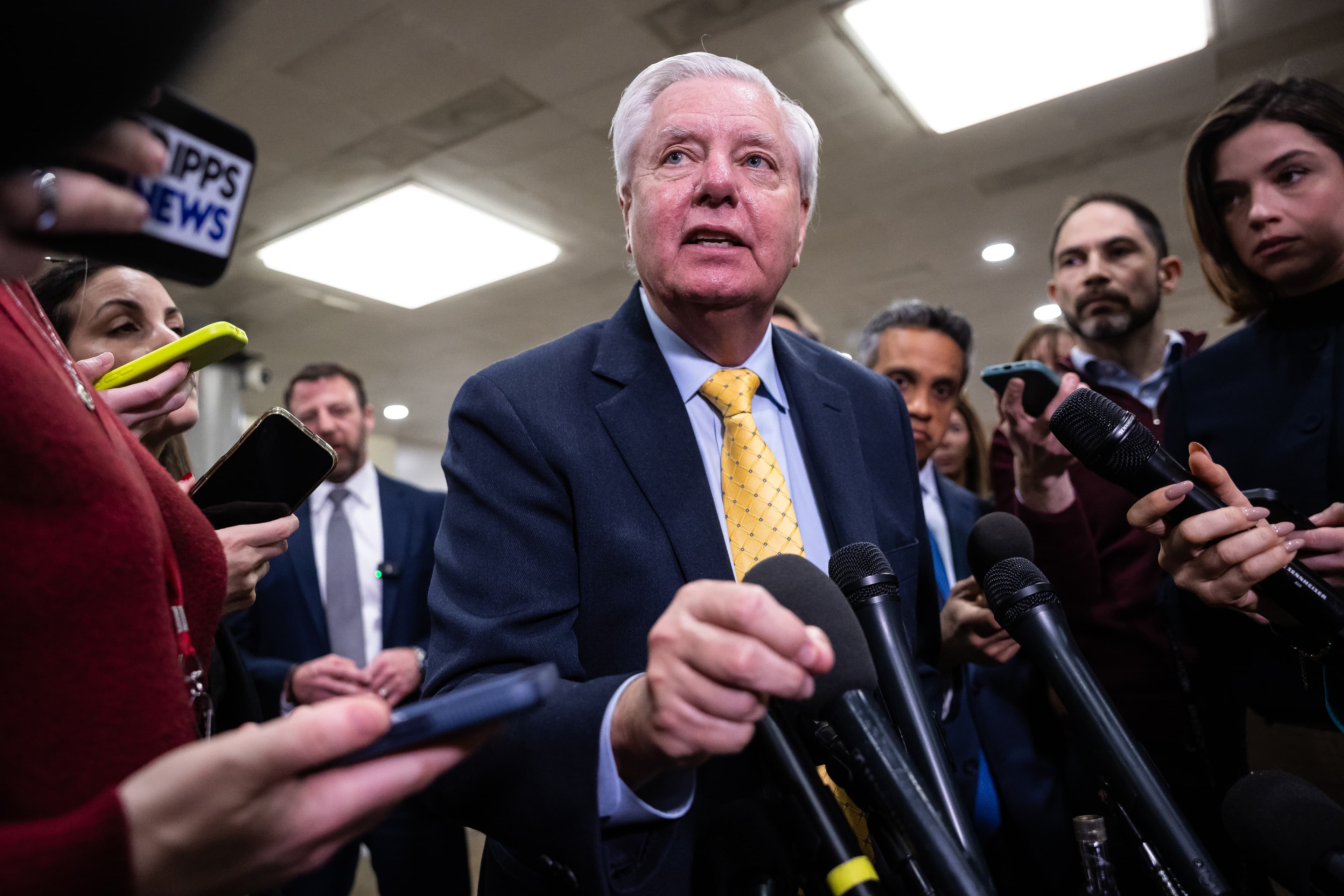
Senator Lindsey Graham is spending over $18 million to fend off a primary challenge from businessman Mark Lynch. Lynch is self-funding his campaign with $5 million and is positioning himself as a more conservative alternative to Graham.
Mentioned in this story
The far right is trying to defeat Sen. Lindsey Graham. He’s burning serious cash to make sure that doesn’t happen.
Spending from his campaign and allied outside groups ahead of Tuesday’s primary has already topped $18 million, according to an AdImpact analysis — an eye-popping sum in the relatively small state, and a sign that Graham is taking seriously the primary challenge from businessman Mark Lynch as he seeks to avoid a runoff election.
Graham allies including a pro-cryptocurrency organization, an outside group closely aligned with GOP Senate leadership, and a super PAC that has not yet been required to make its donor list public have combined to dump millions into the race on Graham’s behalf.
Lynch has held his own, mostly self-funding his campaign with $5 million of his retirement savings. He is running hard to Graham’s right, setting up a proxy test of whether the “America First” GOP base views President Donald Trump’s recent interventionist turn with some skepticism even as they continue to support the president. Core to his message is an attack on the senator’s long history in Washington, including his past support of amnesty for undocumented immigrants — and his stridently interventionist foreign policy, including his vocal support for Trump’s war in Iran. Lynch’s campaign ads feature clips of Graham from his 2016 presidential bid calling Trump a “bigot” and praising former President Joe Biden.
Lynch’s campaign has also attracted the support of some of the president’s most prominent MAGA Republican critics, like former Rep. Marjorie Taylor Greene (R-Ga.), who says the GOP has moved away from Trump’s “America First” platform.
The few public polls of the primary show Graham either narrowly topping or just under the 50 percent threshold he’d need to avoid a two-week runoff. In addition to Lynch, four other Republicans will appear on the ballot, which could further dilute Graham’s share of the vote.
The big spending against a little-known primary opponent has drawn some attention in the closing days of the primary.
Lindsey Graham is spending over $18 million to secure his position ahead of the primary.
Businessman Mark Lynch is challenging Lindsey Graham in the primary election.
Mark Lynch is self-funding his campaign and positioning himself as a more conservative alternative, attacking Graham's past support for amnesty and interventionist foreign policy.
Mark Lynch has received support from notable MAGA Republican critics, including former Rep. Marjorie Taylor Greene.
Chaos in Belfast: Masked men storm house, claiming to 'liberate' it

House approves $70 billion for ICE and Border Patrol through Trump's term

Young men in Myanmar are being forcibly conscripted into the military amid civil war.
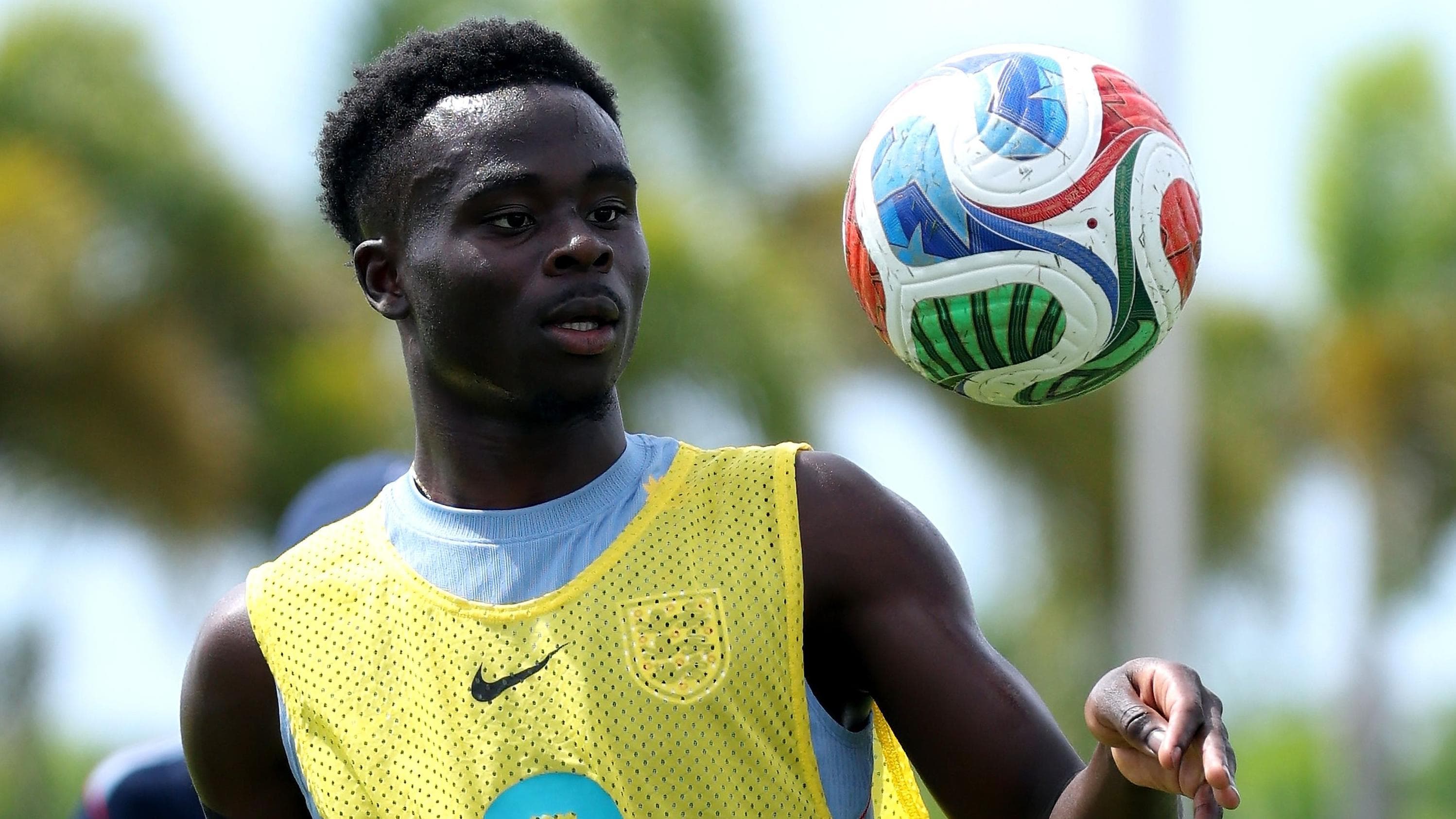
England's Tuchel carefully manages Saka's fitness ahead of the World Cup.

Canada confirms Gordie Howe Bridge opening despite Trump's threats

Australia's High Court to Decide on Damages for Indefinite Detention Case
See every story in News — including breaking news and analysis.
“Lindsey is well-funded. You might as well make sure you’ve got all the i's dotted and all the t's crossed to make sure that you win without a runoff,” said Tyson Grinstead, chair of the Richland County GOP and a former Graham campaign adviser. “For Lindsey, I think it's not outside the norm, especially in Lindsey dollars.”
The matchup between the longtime senator and the Upstate South Carolina businessman is shaping up to be a test of what “America First” means and who can claim that mantle in the Republican Party: close allies of the president like Graham, or those who are the staunchest adherents to MAGA’s original values, like Lynch.
Anti-interventionism was a core tenant of Trump’s meteoric rise that helped him squash more hawkish Republicans, including Graham, to win the White House in 2016. But now, more than 100 days into a conflict with Iran, the president has aligned himself with Graham’s hardline approach to foreign policy — a complete reversal of his perennial campaign promise to keep the U.S. out of foreign wars.
Trump has backed Graham’s reelection bid, but several anti-interventionist Republicans have come out in support of Lynch in the closing days of the campaign, painting Graham as an avatar of establishment support for U.S. military intervention.
Greene, a former Trump acolyte who broke with the president over voting to release the Jeffrey Epstein files and the war in Iran, posted a long message supporting Lynch and slamming Graham as an “America Last warmonger.” Joe Kent, who left his Trump administration post in March because of the Iran war, posted a similar endorsement message a few days prior.
“All the double dealing, all the lies, all the selling out the country to foreign powers — now [Graham] faces the humiliation of being forced into a runoff,” Steve Bannon, Trump’s former chief strategist, told POLITICO.
Graham is still seen as a heavy favorite to hold the seat. He has been sent back to the Senate three times since he first won in 2002, warding off a primary challenge from the right each time. He’s a fixture of both Palmetto State and national Republican politics, and has successfully rekindled a close alliance with Trump amidst their long-running on-again, off-again relationship.
Regardless of whether he wins outright or has to keep running for two weeks, Graham is still expected to defeat Lynch. But the viability of Lynch’s challenge so far reveals yet another fissure between a faction of MAGA and the Republican establishment that has been remade in Trump’s image.
“I take everything seriously when it comes to representing the people of South Carolina, including my primary,” Graham said in a statement to POLITICO.
The senator has long been a prolific fundraiser. He amassed the single biggest war chest of any Republican running this cycle and had just over $4 million cash on hand as of late May, despite the likelihood that he will not face a competitive general election. And he’s no stranger to spending big to ward off a primary challenge. In 2014, Graham spent $8.5 million to overcome a crowded primary field that became a test to prove his conservative credentials. And he spent nearly $100 million in 2020, successfully dispatching Democrat Jaime Harrison in the general election by 10 points in the deep-red state, even as Harrison outspent him.
But more important than money in deep-red South Carolina, he has firm backing from the president, who has stuck with Graham even as cracks emerge in his home state support — and in spite of their occasional splits.
Trump swooped in to boost Graham with a tele-rally on the eve of Election Day.
“He's outstanding. He's been at my side for a long time. We fought each other initially a long time ago,” Trump said Monday. “But after that fight was over, we were best of friends, and he's helped me as much as anybody in the Senate.”
In encouraging Republicans to vote for Graham, Trump also tacitly acknowledged the challenge Lynch poses. “We don't want any surprises, we don't want any bad things to happen. Elections, you never know, so we have to be very careful,” he said.
Lynch’s campaign declined to make him available for an interview. His spokesperson and adviser Noel Fritsch said that if the campaign can push Graham into a runoff, it would be “a huge shock to the system” in South Carolina because Graham has won easily in the past.
Lynch’s platform is centered around spending money domestically rather than overseas, and he has spent significant time on the stump and on far-right media outlets hammering Graham’s record as more “Washington-first” than “America First.” He’s blasted Graham for his support of Trump’s war in Iran, in particular.
While Lynch casts himself as a strong supporter of Trump and his MAGA movement, Fritsch brushed aside concerns that the president’s endorsement of Graham will be insurmountable in the Republican primary.
“Everybody that we're talking to is like, ‘what's going on with his endorsements?’ There's a couple of folks out there who are kind of like, ‘I'll do whatever Trump says,’ but most of the folks are just like, ‘What is going on? This is not the Trump that we knew or voted for over and over again,’ Which, by the way, is what Mr. Mark Lynch did.”
Lynch’s campaign faces an uphill battle against a well-funded incumbent with deep ties to the Republican Party in Columbia and Washington. Graham’s campaign has spent $13 million alone on advertising, several million of which have been in negative ads hitting Lynch over his complicated past with drug use and arrest on charges of cocaine trafficking in 1984.
“Mark's been very open about the fact that in the early 80s … he had some issues with substance abuse, specifically cocaine. He's been a teetotaling, stone-cold sober, Southern Baptist guy for over four decades since then,” Fritsch said.
Observers and allies say that others have tried this kind of primary challenge with Graham before — and it hasn’t worked.
“Lindsey has only lost one county in any primary race in his career for the Senate, and that was — gosh, that was 2008,” Grinstead, the Richland GOP chair, said.
“The same people who are always against Lindsey are against Lindsey this time,” he added. “I'm not seeing a lot of new folks who are on the conservative side of the grassroots establishment starting to leave Lindsey.”
Andrew Howard and William Steakin contributed to this report.