
Rand Paul’s son apologizes for antisemitic and anti-gay rant after accosting lawmaker
The Guardian World

The Australian government has cut a $760m research commercialization program to fund other science initiatives, leading to accusations of misallocation. This decision has sparked anger among researchers who feel it undermines the government's stated priorities.
Mentioned in this story
The federal government has been accused of “robbing Peter to pay Paul” over the budget axing of a $760m research commercialisation program in order to fund other science initiatives.
The budget includes a $387.4m boost to “support the financial sustainability” of the beleaguered national science agency CSIRO, as well as $273m for the National Measurement Institute.
But the government plans to pay for these measures by “returning uncommitted funding from the Australia’s Economic Accelerator program, which is expected to decrease payments by $759.9m over the five years to 2029–30”.
The axing of the program, which was established in 2023 to “support the translation of research into real‑world economic and social benefits”, has angered researchers who say the decision undermines the government’s own priorities.
In a statement on the AEA website, it said funding for new projects “will not continue beyond the 2025–26 financial year”, with current grants unchanged.
Prof Melanie Davern, director of the Australian Urban Observatory at RMIT University, learned on Monday that she had wasted months preparing an AEA grant proposal for a funding round that closed in March.
Davern expressed frustration at the axing of program funding “applied research that would have major social, economic, environmental benefits”.
“There is nothing [else] available that will support this,” she said.
Davern’s proposal, relating to AI in urban planning, involved a business case and four industry partners, including an ASX-listed developer. “It took us at least three months, if not more time, to prepare this,” she said. “I still haven’t actually been notified officially by the government [about the AEA’s axing].”
At Davern’s university alone there were about 85 applications in the same round, and she pointed to the time and effort wasted by researchers and university staff across Australia.
“The big problem here is that there is not enough investment going in,” she said. “Obviously, yes, CSIRO needs support. But this is like robbing Peter to pay Paul.”
Investment in research and development (R&D) in Australia as a proportion of GDP is about 1.7%, well below the OECD average of 2.7%.
The government cut the program to fund other science initiatives, including a $387.4m boost for CSIRO and $273m for the National Measurement Institute.
The Australia’s Economic Accelerator program was established in 2023 to support the translation of research into real-world economic and social benefits.
Researchers are concerned that the cuts will undermine the government's priorities and limit funding for new projects beyond the 2025–26 financial year.
The funding cuts are intended to provide a financial boost to CSIRO, but critics argue that they compromise long-term research support.

Ingrid Horrocks wins NZ's richest literary prize for her debut book, All Her Lives!
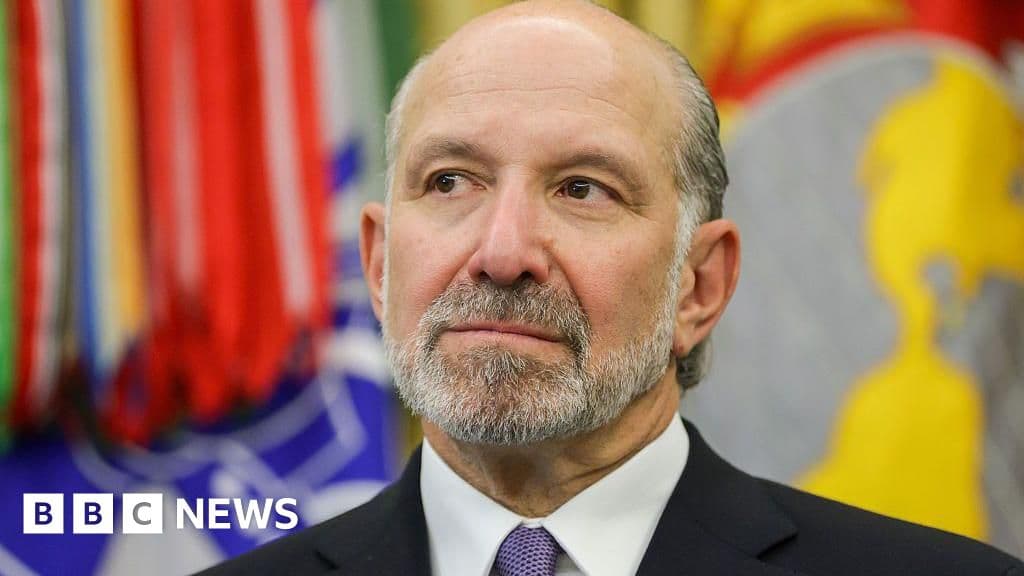
Commerce Secretary Lutnick details Epstein interactions in testimony

Denise Powell secures victory in Nebraska's 2nd district Democratic primary
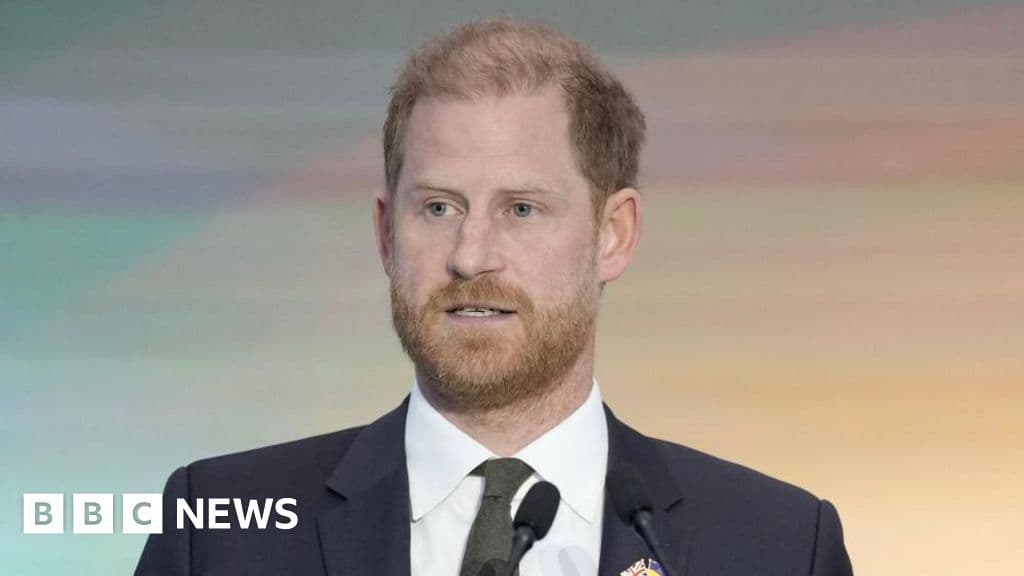
Prince Harry highlights alarming rise in antisemitism in the UK

Cindy Burbank won the Nebraska Democratic primary but plans to drop out to support independent candidate Dan Osborn in the general election against Republican Pete Ricketts.
See every story in News — including breaking news and analysis.
Universities Australia said the sector was “bearing the brunt of increased regulation and costs at a time when investment in teaching and research is not keeping up”.
“We welcome the focus on R&D in the budget, but it can’t simply come from moving funding from one pot to another,” the chief executive, Luke Sheehy, said in a statement.
“The decision to axe Australia’s Economic Accelerator, in particular, is deeply disappointing and sends the wrong signal at exactly the wrong time.
“The AEA was designed to help turn Australian research into Australian companies, Australian industries and Australian jobs. You cannot talk about building a Future Made in Australia while cutting one of the country’s key research commercialisation programs.
“We do welcome the government’s continued investment in the CSIRO, but our university researchers also deserve funding stability and certainty, and this budget rips $800m away from them.”
Prof Chennupati Jagadish, president of the Australian Academy of Science, described the repurposing of the AEA to fund other science research measures as “disappointing”.
While the AAS welcomed other budget measures such as money to establish a National Resilience and Science Council, Jagadish said “the absence of a material increase in the government’s investment in science means … more is needed”.
Ryan Winn, Science & Technology Australia’s chief executive, also welcomed the establishment of the National Resilience and Science Council, but said the budget “gives with one hand but takes with the other”.
“There is an overwhelming sense of uncertainty in the research and development industry as funding for non-medical research grants see a significant reduction,” he said in a statement.
“The government also wants a Future Made in Australia. But increasingly our workforce doesn’t see a future here.”