
Barack Obama says US is ‘worse off’ than before war with Iran
Obama claims the US is 'worse off' after 15 weeks of war with Iran.
The Guardian World1 min read

A study has raised concerns about kidney cancer rates near a PFAS factory in Lancashire, where PFOA was emitted until 2012. While most cancer rates were normal, two areas showed unexpectedly high kidney cancer rates.
Mentioned in this story
Concerns have been raised about the conclusions drawn by a government-funded study that looked at rates of kidney cancer in the vicinity of a factory using forever chemicals near Blackpool.
Pfoa, which is a known carcinogenic forever chemical that was globally banned in 2020, was emitted from the AGC Chemicals Europe factory in Thornton-Cleveleys, a town north of Blackpool, between the 1950s and 2012. During this period, approximately 49 tonnes of Pfoa were emitted into the air. The factory, which AGC Chemicals Europe bought in 1999, stopped using Pfoa in 2012.
Pfas, short for per- and polyfluoroalkyl substances, are commonly known as forever chemicals because they do not break down in the environment. Pfoa was used by AGC Chemicals Europe to make PTFE, another type of forever chemical used to make the non-stick coatings of cookware.
As part of continuing investigations in Blackpool, experts from Lancashire county council, the UK Health Security Agency, NHS partners, the National Disease Registration Service, Wyre council and the Environment Agency formed a health cell and carried out a screening of cancer rates between 2003 and 2022 in several small geographic areas within a 5km radius of the factory.
The screening did not find higher than expected rates for most cancers, but it found that two areas, one south-east of the factory and one north of Blackpool, had “higher than expected” rates of kidney cancer. International research has linked Pfoa exposure to kidney cancer.
The multi-agency study then examined the findings in further detail but found no evidence of a statistically significant excess of kidney cancer cases and no evidence of a cancer cluster or an environmental association. Based on this, the report concluded: “No further cluster investigation is warranted at this stage.”
However, Dr David Megson, a forensic environmental scientist at Manchester Metropolitan University who was not involved in the study, described this conclusion as being “very contradictory” and said it “seems to downplay the findings rather than assess it objectively”.
Having reviewed the full study, he said it had clearly identified a higher than expected number of kidney cancer cases in close proximity to a factory that “released chemicals that are known human carcinogens, with links specifically to kidney cancer. This to me is a major source of concern.”
The study found unexpectedly high kidney cancer rates in two areas near the factory, one south-east of it and another north of Blackpool.
PFOA is a carcinogenic forever chemical that was banned globally in 2020, previously emitted from the AGC Chemicals Europe factory, raising health concerns in nearby communities.
A health cell involving multiple agencies is investigating cancer rates and has conducted screenings from 2003 to 2022 in areas surrounding the factory.
The factory emitted approximately 49 tonnes of PFOA into the air from the 1950s until it ceased using the chemical in 2012.
Obama claims the US is 'worse off' after 15 weeks of war with Iran.

Meloni refutes Trump's claim she begged for a photo at G7 summit
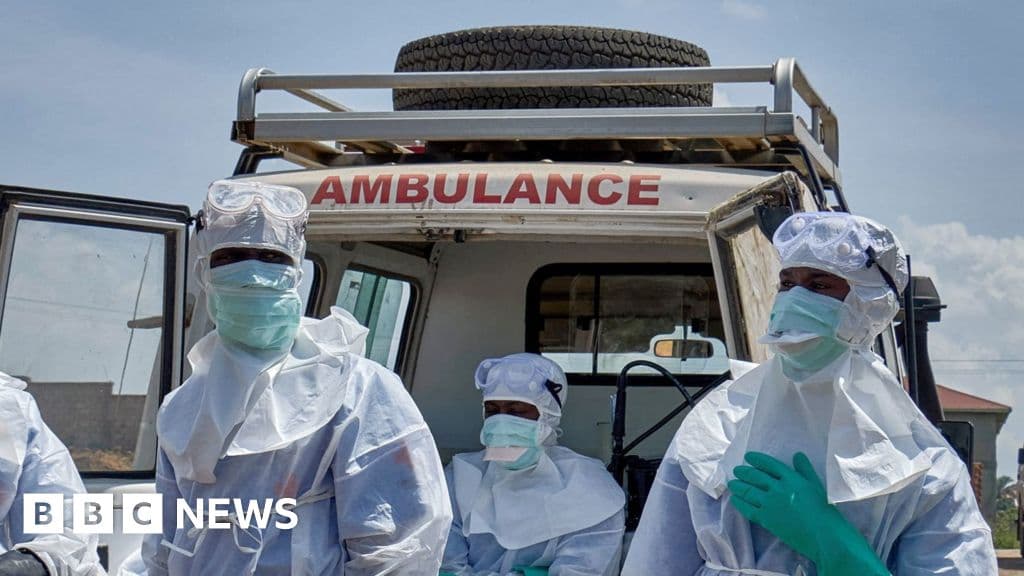
Six-year-old Ebola patient abducted in DR Congo found safe and stable

Discover the key figures in Andy Burnham's inner circle as he aims for Labour leadership.

Andy Burnham's by-election win raises his profile as a potential Labour leader with specific economic policies.

Israel's Foreign Minister cuts ties with EU's Kaja Kallas after apartheid comments
See every story in News — including breaking news and analysis.
The report states that the elevated kidney cancer rates in the two geographic areas could be the result of random variation because of the small sample size, but Megson said there was “plenty of other evidence that indicates that this is not the case”.
He added: “There are also a large number of limitations acknowledged in their report. I’d like those to be properly considered before concluding there has not been an impact.
“If a portion of land is designated as contaminated, it means there is a significant possibility of significant harm. Personally, I fear that this data is giving us strong evidence that the significant possibility has been realised, and that significant harm has already been caused.”
After environmental testing conducted by the Environment Agency, residents have been advised not to eat fruit, vegetables or eggs produced within 1km of the factory. An allotment on the factory border has been closed and classed as officially contaminated land after testing found elevated Pfoa in the soil and produce.
Dr Dan Middleton, a senior lecturer in environmental cancer epidemiology at the Centre for Public Health, Queen’s University Belfast, also said he would be cautious about interpreting the findings as meaning that no further investigation was needed, “particularly given that kidney cancer is one of the cancers most consistently linked to Pfoa exposure”.
He added: “The observed findings should not simply be dismissed, and further evidence, particularly around historical exposures, would help place these results in their proper context.”
Dr Tony Fletcher, an epidemiologist and global Pfas expert at the London School of Hygiene & Tropical Medicine, said the report showed a small excess in kidney cancer that in most cases was not statistically significant, but that this was “entirely consistent with a small increase in risk due to [Pfoa] exposure”.
The experts have called for more research, including Pfoa blood testing. Middleton said this was the “missing link” in the study.
The law firm Leigh Day is investigating a potential legal claim against AGC Chemicals Europe on behalf of residents in Thornton-Cleveleys. As part of this, it is planning to offer blood testing to residents.
Sarah Moore, a partner at Leigh Day, said the firm would be working with its expert team to “fully understand these results over the coming months, as we offer members of the community Pfas blood tests if they wish to obtain a fuller picture about their personal exposure levels”.
The multi-agency health group said: “In line with national guidance, the health cell has concluded that there is no evidence of a kidney cancer cluster and no indication of a link to environmental contamination, and that no further investigation is required at this stage.”
AGC Chemicals Europe did not respond to a request for comment. A company spokesperson previously told the BBC that all its chemical processes were “rigorously monitored and controlled and compliant with current UK and EU environmental laws and regulations” and that it took its responsibilities to protect environmental health “extremely seriously”.