

Faithful line streets as Pope Leo to bless Sagrada Família on centenary of Gaudí’s death
Pope Leo XIV will bless the Sagrada Família, marking Gaudí’s centenary and the tower's completion.
The Guardian World1 min read

Starting July 1, significant changes to student loans will take effect, including the end of a Biden-era repayment plan and the introduction of two new Republican repayment plans. Borrowers should assess how these changes may affect their individual situations.
Jenn Liv for NPR
On July 1, a host of new student loan changes from last year's One Big Beautiful Bill Act will kick in, including the end of a short-lived Biden-era repayment plan, the start of two Republican-designed repayment plans and strict new borrowing limits for some students.
There's a lot to parse, and not every change will impact every borrower. So we've designed this story to make it easy to find the guidance that does apply to you, or to the borrower in your life.
To get started, click on the student loan status that best describes your situation below:
The changes include the end of a Biden-era repayment plan and the introduction of two Republican-designed repayment plans, along with new borrowing limits for some students.
The end of the Biden-era repayment plan may require borrowers to transition to new repayment options, which could impact their monthly payments and overall loan management.
The new borrowing limits vary by student type and program, and specific details can be found by assessing individual borrower situations.
The new Republican repayment plans will impact borrowers who qualify under the specific criteria set by these plans, which may differ from previous options.
Pope Leo XIV will bless the Sagrada Família, marking Gaudí’s centenary and the tower's completion.
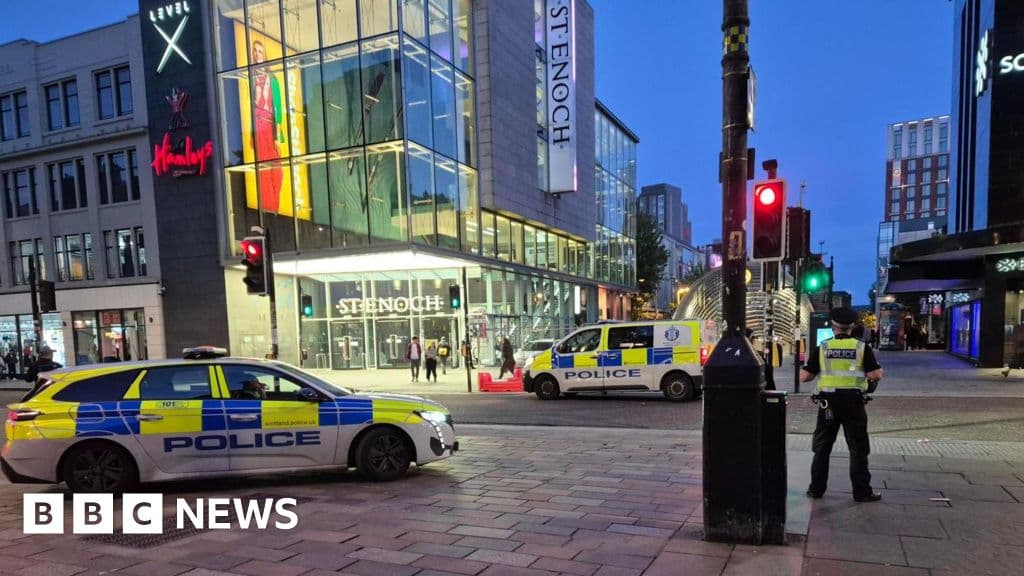
Three men arrested in Glasgow after violence and racist assaults following a Belfast knife attack.

Julian Alvarez is the center of a fierce transfer battle in La Liga, with a €150 million bid from Real Madrid.
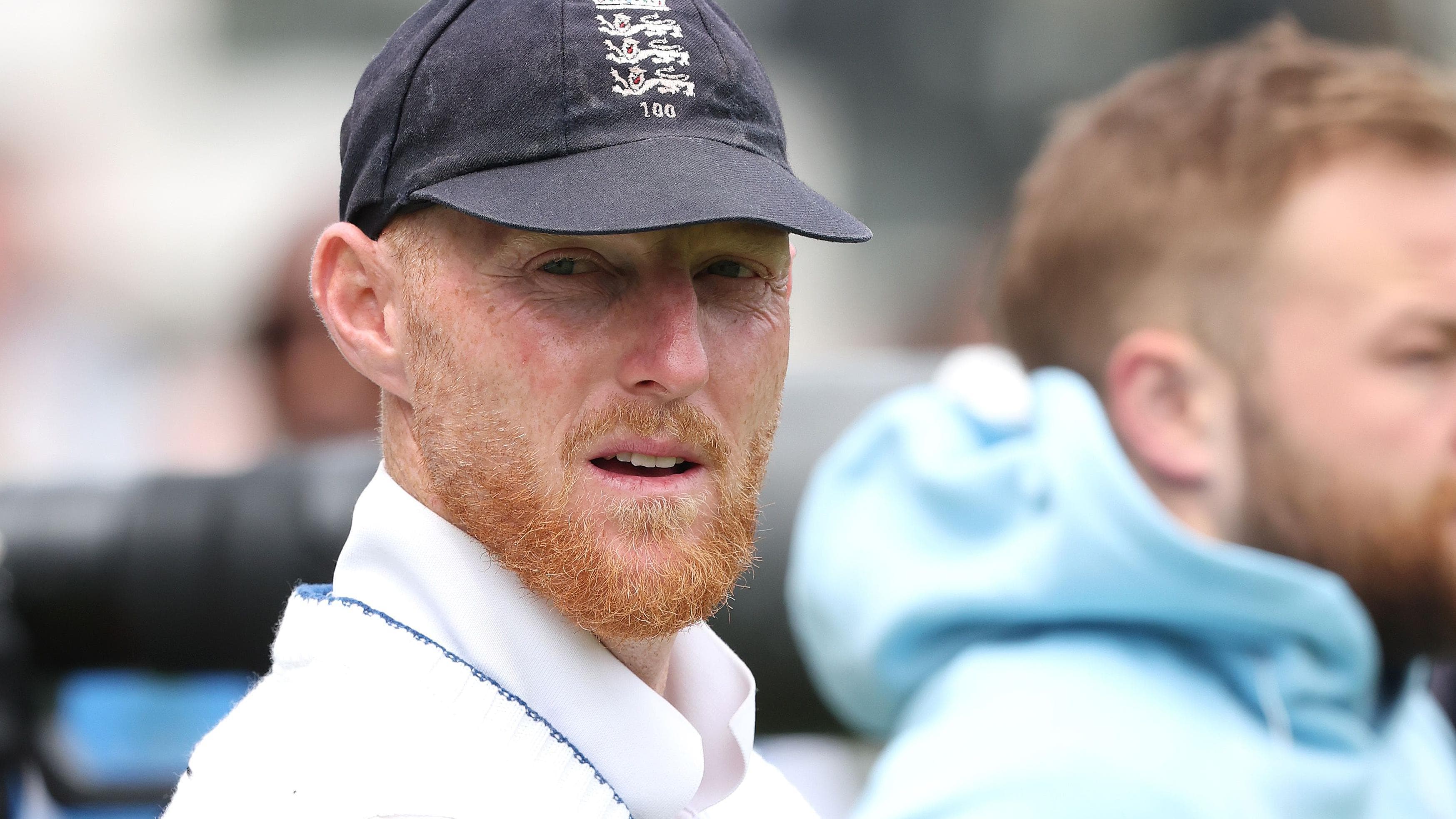
Michael Vaughan argues that Ben Stokes should not be removed as England Test captain despite breaking curfew after a victory celebration. Stokes and teammate Gus Atkinson are under investigation following an incident involving a security staff member.

US inflation jumps to 4.2% in May, the highest since 2023, driven by energy prices.

Iran considers pulling out of peace talks after US airstrikes escalate conflict.
See every story in News — including breaking news and analysis.
After a few contentious years of paused payments and a legal battle that made it all the way to the U.S. Supreme Court, the Biden-era Saving on a Valuable Education (SAVE) plan is officially ending.
If you're one of the more than 7 million borrowers still enrolled in SAVE — the most flexible and generous income-driven repayment plan — you may have already gotten a notice from the U.S. Department of Education warning you that you'll have to switch plans soon. Well, you'll likely be getting another note from your loan servicer, starting a roughly 90-day clock.
If you don't act, the department says it will enroll you in one of the least flexible repayment plans.
Financial aid experts have told NPR that this effort, beginning July 1, to push millions of borrowers into repayment and into new plans that will cost more than SAVE, could exacerbate an alarming rise in student loan defaults – especially considering that many borrowers enrolled in SAVE precisely because their low incomes qualified them for a $0 monthly payment.
What are your repayment plan options? You've got lots. Keep reading.
Whoever you are, whatever your story, whether you enrolled in the SAVE plan or not, you're in good company: About 43 million Americans hold about $1.7 trillion in federal student loan debt.
As long as your loans were issued before July 1, and you have no plans to borrow any more money, you'll have quite a few repayment options, including one brand new plan. They are:
Jenn Liv for NPR
The plans above do not take a borrower's income into account when calculating a monthly payment. So-called income-driven repayment plans do — and come with a few other perks:
How it works: ICR bases monthly payments on a larger share of a borrower's discretionary income — 20%. Borrowers also have to make payments over a relatively long period of time — 25 years — before they can qualify for forgiveness.
The upside: Up to now, for Parent PLUS borrowers, this was often the only income-driven repayment plan they could qualify for.
The downside: It will generally cost more each month than its fellow income-driven plans.
A note for borrowers: This is arguably the least generous member of this plan family. It's also being phased out by 2028, so, if you do enroll, you'll have to change plans again in two years.
We recommend using the department's Loan Simulator — or maybe this one, developed in partnership with The Institute of Student Loan Advisors, a nonprofit — to see which plan makes the most sense for you.
So, you've already got some loans, and you're planning to take out more. The good news/bad news is you won't have a lot of repayment options to choose from.
Any borrower who takes out a loan on or after July 1 will be limited to the two new repayment plans created in the One Big Beautiful Bill Act: The Repayment Assistance Plan (RAP) or the…
Hello, fresh face! Welcome to your higher education adventure. Let's be honest, you're probably not thinking much about your repayment options yet. You're headed to school, and we wish you well.
As you get on your way, here are a few things to keep in mind: Lending limits haven't changed for undergraduate borrowers. Dependent/independent undergrads are still limited to borrowing:
In total, dependent/independent undergrads can borrow up to $31,000/$57,500.
When it does come time for repayment, you'll likely have just two options to choose from: Either the Repayment Assistance Plan or the Tiered Standard Plan.
Many of you probably have undergraduate loan debt, though hopefully not too much. And for the moment, you're probably not thinking about repayment since you're headed back to school. We wish you well!
Jenn Liv for NPR
Still, there are a few things to keep in mind: As of July 1, lending limits change dramatically. Until now, grad students could borrow up to the cost of their program. Your program costs $40,000 a year? You could borrow $40,000 every year. Soon, though, you'll be limited to $20,500 a year and a total of $100,000. That's a big difference.
Only a small group of so-called "professional" degrees will be exempted from these lower limits and qualify instead for $50,000 a year in loans, or $200,000 in all. These degrees fall into 11 categories: chiropractic, clinical psychology, dentistry, law, medicine, optometry, osteopathic medicine, pharmacy, podiatry, theology and veterinary medicine.
You can learn more about these grad school loan caps at this link, including why they have many advocates worrying about an eventual shortage of nurses and other healthcare providers.
This is complicated. The Education Department is making some exceptions for grad school borrowers who are in the middle of their higher education adventures. You may be exempted from the new loan limits if:
If you do qualify to be exempted from the new limits, the department's website says you can lean on the old loan limits — i.e., borrow up to the cost of your program — for either three academic years or the difference between how long your program is supposed to last and how long you've already been enrolled, whichever number is smaller.
One of the biggest changes going into effect on July 1 is an expansion of the traditional Pell Grant for low-income students to include what's known as short-term workforce training.
A Pell Grant is essentially free money from the federal government – unlike a loan, it does not need to be paid back. For 2026-27, the largest grant a student in a traditional program can qualify for is $7,395. Awards for short-term training will likely be prorated for the program's length.
This expansion of Pell is meant to help workers learn new skills to become, say, a certified nursing assistant or a welder. For the first time, students will be able to get federal help paying for these training programs, which last between eight and 15 weeks.
The first, most important step you need to take to qualify is to fill out the Free Application for Federal Student Aid (FAFSA). You can't get a Pell Grant without it.
One huge caveat: This expansion is so new that many current training programs may not qualify. And because it comes with some pretty strict federal guardrails, some never will.
It will take states and the federal government some time to figure it all out, so you'll need to be patient. And while you wait, fill out the FAFSA!
Greetings (aspiring) public servants.
The good news for you is that the program known as Public Service Loan Forgiveness (PSLF) still exists. It's a policy quid pro quo: If you pledge to work full-time (at least 30 hours a week) in public service — as a nurse or police officer or school teacher, etc. — for 10 years while making 120 monthly payments toward your student loans through a qualifying repayment plan, then whatever debt is left will be forgiven by the U.S. government.
Which plans qualify for PSLF?
We recommend using the department's Loan Simulator to see which plan makes the most sense for you, i.e., which plan has you paying the least over the next decade.
The other question you may have is: Wait! Didn't I see stories about how the Trump administration is changing the PSLF rules, maybe making it harder to qualify?
Good memory! Yes. Here's one of those stories.
Effective July 1, the department says it can deny loan forgiveness to workers whose government or nonprofit employers engage in activities with a "substantial illegal purpose." The job of defining "substantial illegal purpose" belongs to the education secretary. Last year, the department offered this short list: "terrorism, child trafficking, and transgender procedures that are doing irreversible harm to children."
In late 2025, several large cities, including Boston and Chicago, sued over the rule change, worried that the administration might try to use a city government's politics to exclude its public workers from PSLF. The fight over this rule is very much still playing out, so stay tuned.
The Parent PLUS program will see a few key changes take effect July 1. Here's what to know:
Edited by: Nicole Cohen and Nirvi Shah


