
Voting officials fear DHS may actually be a threat to elections this year
Voting officials worry DHS may threaten election integrity this year.
NPR Topics: News1 min read

The US-Iran deal involves the release of $24 billion in frozen Iranian assets in four installments, contingent on Iran's cooperation regarding the Strait of Hormuz and nuclear talks. Details of the agreement remain vague and are yet to be fully negotiated.
Mentioned in this story
An estimated total of $24bn (£17.9bn) in frozen Iranian assets are due to be released in four instalments as part of the US-Iran deal, a source has told Israeli newspaper Hareetz.
The assets will reportedly only be released if Iran allows for the toll-free reopening of the strait of Hormuz and agrees on certain “understandings” in relation to the nuclear talks set to begin.
A Pakistani source said the money could be transferred to Iran under a pretext of economic assistance such as to help fund mine clearing operations in the strait of Hormuz (in order to make it a more palatable sell to the US public and sceptical lawmakers).

People walk along Enghelab Square in the downtown part of the Iranian capital of Tehran. Photograph: Maryam Rahmanian/Shutterstock
Iran’s Mehr news agency reported the US would release $12bn in frozen assets to Iran before the start of negotiations.
It quoted a 14-point memorandum of understanding between the two countries, which it said stipulated “the release of 24 billion dollars in frozen Iranian assets during the 60day negotiation period” that begins after the MoU is signed. The official text of the deal has not been made public yet and both the US and Iran are giving different versions of what has been agreed to.
The US vice president, JD Vance, denied on Monday that Iran will receive “billions of dollars of assets” as part of the deal. Vance told CBS Mornings that while the US is “open to a lot of things that are on the table,” the $24 billion figure “just doesn’t appear anywhere in any of the texts that we’ve talked about with the Iranians.”
“What we have said is that we’re willing to talk about unfreezing assets, but a much, much bigger deal is unsanctioning their economy — so long as they make the long-term commitments on the nuclear program,” Vance said.
The Guardian’s senior international correspondent, Julian Borger, gives his take on the viability of the framework peace deal, which is only the prelude of what is likely to be a fraught period of negotiations including on Iran’s much contested nuclear programme:
The total amount of frozen Iranian assets to be released is $24 billion.
Iran must allow the toll-free reopening of the Strait of Hormuz and agree on certain understandings related to upcoming nuclear talks.
The funds may be transferred under the pretext of economic assistance, such as funding mine clearing operations in the Strait of Hormuz.
The deal's success hinges on Iran's commitments regarding nuclear discussions, which are still in the negotiation phase.
Voting officials worry DHS may threaten election integrity this year.
Kemp faces a political test in Georgia runoffs as Trump endorses Collins

Can a transparent fish unlock secrets of the brain? A research center thinks so.

Key Insights on This Week's US Primary Elections
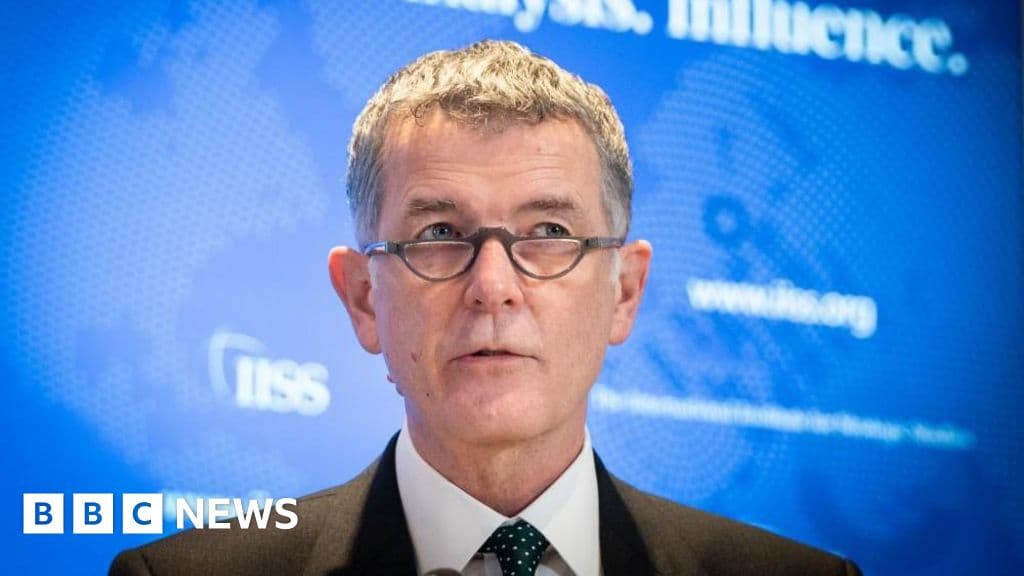
Former MI6 chief claims Putin is intimidating the UK with sabotage and cyber attacks.

Bank of Japan raises interest rates to a 31-year high amid inflation pressures from the Iran war.
See every story in News — including breaking news and analysis.
Hello and welcome to the Guardian’s continuing coverage of the US-Israel war on Iran ahead of the expected signing of the framework peace deal in a couple of days.
America’s memorandum of understanding (MOU) with Iran is “a very general document”, the US vice-president, JD Vance, has said, adding that specifics of the deal will be worked out during further negotiations.
“The MOU … is about a page and half so it is a very general document,” Vance said on CNN on Monday night, as he did the rounds of US networks to talk up the deal. “On a number of issues, we are going to have to figure this stuff out during the technical negotiation phase.”
Vance’s comments came as many Republicans on Capitol Hill said they needed more information about the agreement, with some expressing skepticism as they ask the White House for details.
“I just don’t know enough about it,” the Senate majority leader, John Thune, told reporters in the Capitol. “Even the people who follow this stuff closely up here don’t know that much about it.”
The agreement announced Sunday to end the war on Iran, set for a ceremonial signing Friday in Geneva, is centred around reopening the strait of Hormuz and lifting the US naval blockade in the region, along with financial incentives for Iran if it meets certain benchmarks.
Vance also said nuclear inspectors will return to Iran as part of the deal with Washington to end the war.
“In fact, one of the core parts of the agreement is that the IAEA [International Atomic Energy Agency] and the United States are going to help Iran destroy the highly enriched stockpile, and that’s something that’s spelled out very clearly” in the memorandum of understanding the US and Iran had already agreed to, NBC News quoted Vance as saying.

Flag of the International Atomic Energy Agency outside the entrance of the Vienna International Center in Vienna. Photograph: Lisa Leutner/AP
What the deal specifies about the future of Iran’s nuclear program has not yet been made clear, as the details are still to be revealed publicly and both sides have given different accounts of what has been agreed so far.
Donald Trump has repeated that “Iran will never have a nuclear weapon” while officials from Pakistan, which mediated the deal, reportedly said talks on the nuclear issue would continue over the next 60 days under the agreement.
Trump has said the US could resume attacks on Iran if it failed to reach a nuclear deal. Here are some other key developments:
Explore more on these topics