
One killed as Israel hits south Lebanon, issues forced displacement orders
One killed in Israeli air raids on southern Lebanon despite ceasefire efforts.
Al Jazeera English1 min read

African musicians are navigating the risks and rewards of AI in music, highlighted by Fave's remix of an unauthorized AI-generated track. The continent's weak intellectual property laws raise concerns about AI's impact on authentic artistry.
Mentioned in this story
Last July, the Nigerian singer-songwriter Fave found herself caught up in a viral moment: an unauthorised version of a track featuring an AI choir had been released, quickly becoming an internet sensation. To get ahead of the situation, she recorded her own remix that integrated the AI-assisted song and added it to her discography.
“In my view, [that] was smart and very business aware,” Oyinkansola Fawehinmi, a Lagos-based entertainment lawyer, observed a few months later. “She essentially reclaimed the ‘AI version’ and released it as her own official expression.”
Many of Africa’s music markets are seen as particularly vulnerable to the threat of AI-generated music plagiarising the work of real-life artists, due to comparatively weak legal frameworks around intellectual property protection.
There are similar fears over the wider deepfake market. On Monday, South Africa withdrew the draft of its national AI policy after revelations, ironically, of AI-generated citations within it.
AI was the focus of the Atlantic Music Expo held this month in Cape Verde, one of the few African states with a dedicated AI policy. Benito Lopes, the expo’s director since 2024, said the discussions were meant to give performers “more knowledge to explore [AI] the best way without losing their human identity and their creativity”.
For the country’s culture minister, Augusto Jorge de Albuquerque Veiga, who has a goal of making Cape Verde “a hub of world culture, especially in music”, the priority is ensuring local artists get the financial support to eke out a living in today’s world.
“You have to work with it, not to be eaten by it,” Veiga told the Guardian. “I think that AI will never cover what’s authentic … AI is the present already, so we have to discuss this and find ways to work with AI for the country, for the culture and for the future.”

The crowd during a set by Patche di Rima at the Atlantic Music Expo. Photograph: Ricci Shryock/The Guardian
Fave faced a viral moment when an unauthorized AI version of her track was released, prompting her to create a remix that integrated the AI song.
African music markets are vulnerable to AI-generated music due to weak legal frameworks around intellectual property protection.
South Africa withdrew its draft national AI policy after discovering AI-generated citations within the document.
The Atlantic Music Expo focused on educating performers about AI, aiming to help them explore its potential without compromising their creativity and human identity.
One killed in Israeli air raids on southern Lebanon despite ceasefire efforts.

Brazil faces Morocco in a crucial World Cup match this Saturday at 6pm local time.

Exciting news for birdwatchers: a western reef heron has been spotted in North Wales, marking its first appearance in the UK!
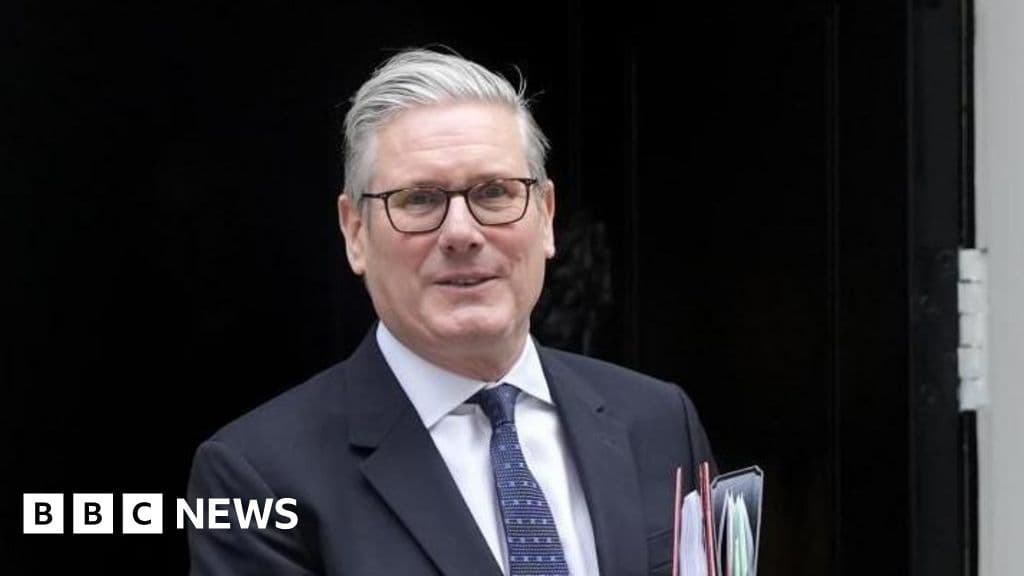
Keir Starmer discusses defense spending in a unique interview format.

USA triumphs over Paraguay 4-1 in World Cup opener at SoFi Stadium!

Pulisic reassures fans after being substituted in USA's 4-1 win over Paraguay.
See every story in News — including breaking news and analysis.
Given that the culture ministry’s budget, at $6m, is less than 1% of the national budget, Veiga has been lobbying to get allocations to the sector from Cape Verde’s tourism tax and has created diaspora bonds targeting the large diaspora spread across places such as Boston and Lisbon.
The expo, which precedes the Kriol jazz festival, has long sought to be a bridge between Africa, Europe and the Americas but also emphasises the place of live music and human interaction in an era of synthetic sounds.
The veteran Bissau-Guinean singer Patche di Rima, who performed on the last day, said: “I am glad to be here … an artist without media and networking is nothing.”
Most delegates highlighted how AI-driven tools for mixing, mastering and data-driven marketing offered a way for indie artists with shoestring budgets to compete globally. Entrepreneurs working in the sector were keen to stress that AI was not a replacement for talent.

Patche di Rima performs on stage. Photograph: Ricci Shryock/The Guardian
José Moura, a co-founder of Sona, an AI startup that helps artists use text prompts to polish songs, said the technology could empower artists in the global south to extend their reach without compromising the uniqueness of the music.
“Homogenisation happens when the tool doesn’t know where you’re from,” he said. “Unlike conventional AI that trains on global averages, Sona is built on local music, governed by local artists, so when it amplifies your sound, it amplifies exactly what makes it yours. It’s the opposite of erasure … artists decide what gets preserved before the AI touches anything.”
Sambaiana, a seven-woman ensemble from Brazil, gave their first performance outside their home country at the expo. For the group – a rarity in the male-dominated samba genre – it was a chance to plug in to a new but familiar world.
“We feel honoured to represent the Brazilian music style,” said Ju Moraes, the lead singer. “We recognise ourselves here, the energy, the people, the culture and even the architectures are very similar to Bahia.”
Rayra Mayara, a vocalist who also plays the four-stringed cavaquinho, said technology was no match for the emotion of being on stage. “We are seven women and no technology can substitute the feeling we give when we play, sing and talk about our daily lives,” she said. “AI can complement the production process but it is not as a substitute to the human.”