News
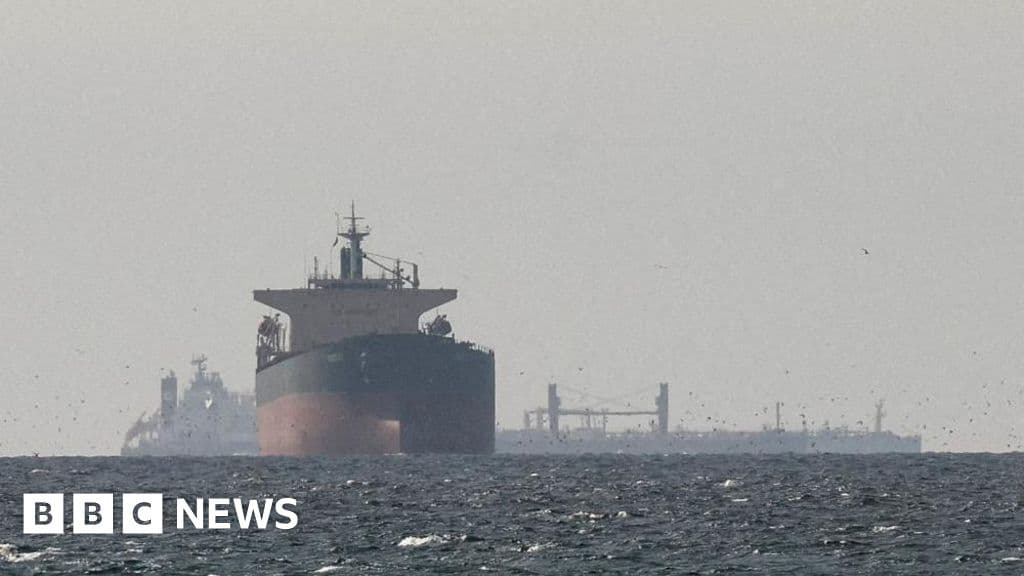
Trump hints Iran talks could resume this week as US maritime blockade continues
Trump suggests Iran talks could restart this week as US blockade continues.
BBC News1 min read

The war in Sudan, ongoing since April 15, 2023, has resulted in tens of thousands of deaths and widespread destruction. A call for a ceasefire and a new political process is essential to ensure safety and basic services for the Sudanese people.
The Sudan war erupted on the morning of April 15, 2023, more than 1,000 days ago. The conflict has sown destruction across the country, killing tens of thousands of people and robbing millions of their livelihoods and their homes.
Sudan, for me and for millions of Sudanese people, is not a story to analyse; it is our past, present and future on this planet. Simply put, this is our life. Seeing our country decimated, ignored, pulled apart and brutalised in front of our eyes has fundamentally altered us.
Three years into this nightmare, what we need is a ceasefire that not only stops the fighting but also guarantees safety, protection and access to basic services for all Sudanese people. A political process should then be launched that encompasses all political actors and empowers the Sudanese people to participate in a new governance system.
The war in Sudan came on the tail of 30 years of a brutal regime that employed various tactics to maintain control over the country, including ethnic violence and genocide in Darfur, the Nuba Mountains and other parts of the country.
By 2019, the regime had exhausted its strategies, and the Sudanese people had proved their collective power; millions took to the streets to protest against Omar al-Bashir’s rule. Women, men, youth and elders – we were all fighting with one hand and one mind. The uprising was a massive revolt that essentially deposed a crumbling dictatorship.
What followed was a botched transition that failed to deliver on people’s hopes for a number of reasons. Opposition parties that came into the spotlight were unable to maintain unity after the regime collapse. Civil society, degraded by decades of brutal polarisation, lacked agency. The grassroots groups leading the revolt possessed a clear vision, but they lacked recognition as political bodies with leadership.
Multiple external players’ interests further splintered civilian political fronts and damaged the potential for a unified vision. What made the situation even worse was that the country was in its most unstable economic and security situation. Criminal activity was rampant in the national capital, instilling widespread fear in the population.
Soon, the Rapid Support Forces (RSF) – the successor of the Janjaweed militia, which al-Bashir used in Darfur – came to see itself as the heir of the regime. Its power was derived not just from its position within the country but also its role as a mercenary force in the Yemen War and its strong economic transactional relationship with the United Arab Emirates.
Despite the RSF’s genocidal background, all of Sudan’s neighbours remained silent, fearing that speaking out would damage their interests. Many international actors went so far as to push for a narrative that the RSF could be the replacement of al-Bashir’s regime and deliver stability. This proposition was rejected by the Sudanese people.
From 2019 until the outbreak of the 2023 war, the Sudanese people waged a peaceful campaign against this heinous plan despite facing significant repression during their protests. Female protesters were raped on the street, and hundreds were killed, tortured and jailed.
The resistance of the people could not stop the war.
Today, three years into this conflict, it is more than clear the RSF has nothing to offer Sudan except a litany of damage and horrors that continue to instil hatred and rejection within the Sudanese population. The widespread destruction of the country’s infrastructure, including schools, universities, hospitals and government buildings, as well as rampant looting, systemic sexual violence and mass atrocities against civilians, all point to a fundamental disconnect between the RSF militia, the Sudanese people and the concept of governance.
On the other side, the Sudanese armed forces (SAF) continue to hold on to the state despite their lack of vision, failure to learn from past mistakes and widespread corruption. The barely functioning state system is able to provide just limited public services and maintain a fragile economy that struggles to meet the needs of its citizens. Can the army sustain it? I don’t think they can do so under the circumstances.
The Sudanese population on the ground, in refugee camps and in diaspora communities demand basic stability, peace and the right to return to their towns and villages. Their ambitions at this point are not focusing on who controls the government; they want to regain some sense of normality, catch their breath and regain their agency. Challenges related to governance are essentially a matter of privilege at this point.
Therefore, the focus now should be on the cessation of hostilities, which encompasses more than just a ceasefire. It includes what we, as Sudanese, seek: no rape; no looting; no arbitrary detention; protection for displaced communities; safety for civilian infrastructure, including hospitals, schools and markets; and a basic functioning economy.
Negotiations should advance in stages. The first one should involve military actors. An effective mediation team is crucial. It must concentrate on security sector arrangements involving all parties.
In these negotiations, we must avoid the RSF-SAF dichotomy. They are not the only actors although they do represent the visible face of the war. The conflict has many layers and involves countless actors with diverse motivations. There are more than 10 armed groups fighting this war on both sides; each has its own ambitions and interests, and many represent communities within Sudan. Undoubtedly, political “civilian groups” are actively participating in this war through soft power and affiliation.
The key to Sudanese peace is in the hands of the United Nations Security Council members, who have the capacity to end the United Arab Emirates’s role as the main military supplier and the core driver of the conflict. It is also critical to further diminish the influence of all other countries that are fuelling the war in Sudan.
This is the only way to have room for actual, real and meaningful direct negotiations between the warring parties mediated by acceptable arbiters, including the UN and the African Union. More importantly, it is vital to establish a monitoring mechanism that ensures the effective implementation of the cessation of hostilities.
For any future governance arrangements, clear procedures must be followed to ensure that the Sudanese people have a voice and an opportunity to actively and constructively engage in shaping their state.
All political factions should participate in a reconciliation and repatriation process simultaneously. Elections for local councils and parliaments should be the next step. These polls should be open to displaced individuals and refugees.
Thereafter, the local parliaments should elect the national parliament, which should designate a post-war government for a four-year term and task it with formulating a constitution, launching reconstruction and preparing for national elections by the end of the fourth year.
In parallel, justice and accountability processes should be established as part of efforts to sustain peace and stability.
Any agenda that avoids the real issues and alienates the people of Sudan will only make the bloodshed and suffering worse. The Gulf countries, the UAE in particular, should respect the will of the people of Sudan. Violence is a dead end for everyone and will continue to be.
Unless Security Council members take responsibility and move decisively to end the conflict, war crimes and genocidal actions will persist, and militarism and violence will spread across borders in the Horn of Africa and Sahel regions, leading to more global disasters, deaths and displacements.
The views expressed in this article are the author’s own and do not necessarily reflect Al Jazeera’s editorial stance.
The war in Sudan erupted due to a culmination of 30 years of brutal regime tactics, including ethnic violence and genocide.
The conflict has killed tens of thousands of people since it began over 1,000 days ago.
The immediate needs include a ceasefire that guarantees safety, protection, and access to basic services for all Sudanese people.
A political process is proposed to involve all political actors and empower the Sudanese people in establishing a new governance system.
Trump suggests Iran talks could restart this week as US blockade continues.

Boy thrown from Tate Modern's 10th floor sees health decline post-surgery

California man shot by ICE agents faces assault charges after incident

Eric Swalwell resigns amid fifth sexual misconduct allegation
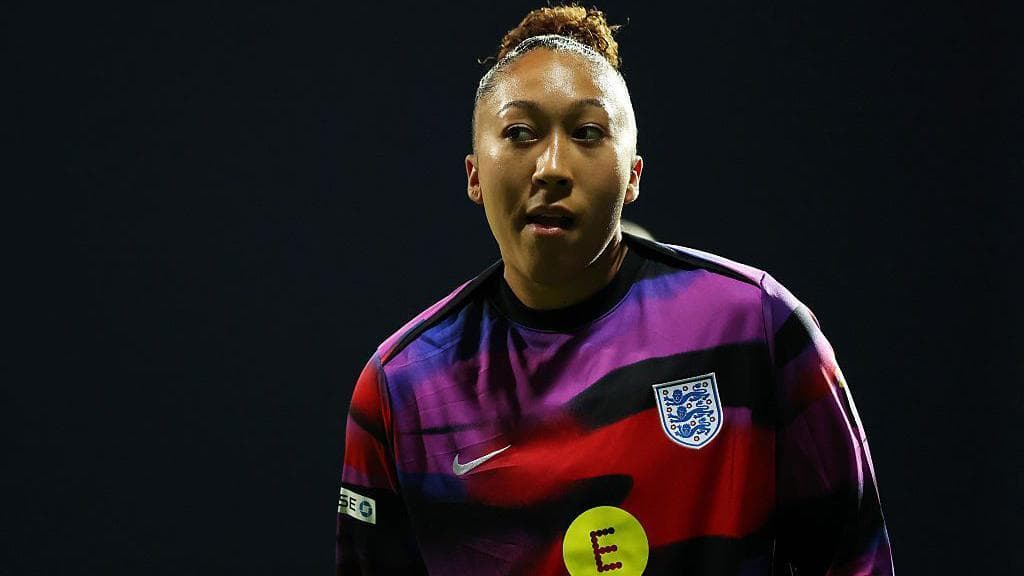
England's 1-0 win over Spain highlights Lauren James' potential.

Former UCLA gynecologist James Heaps pleads guilty to 13 sexual abuse charges and sentenced to 11 years.
See every story in News — including breaking news and analysis.