
Ransom note claimed Nancy Guthrie died after abduction
Ransom note claims Nancy Guthrie died after her abduction; investigation ongoing.
BBC News1 min read
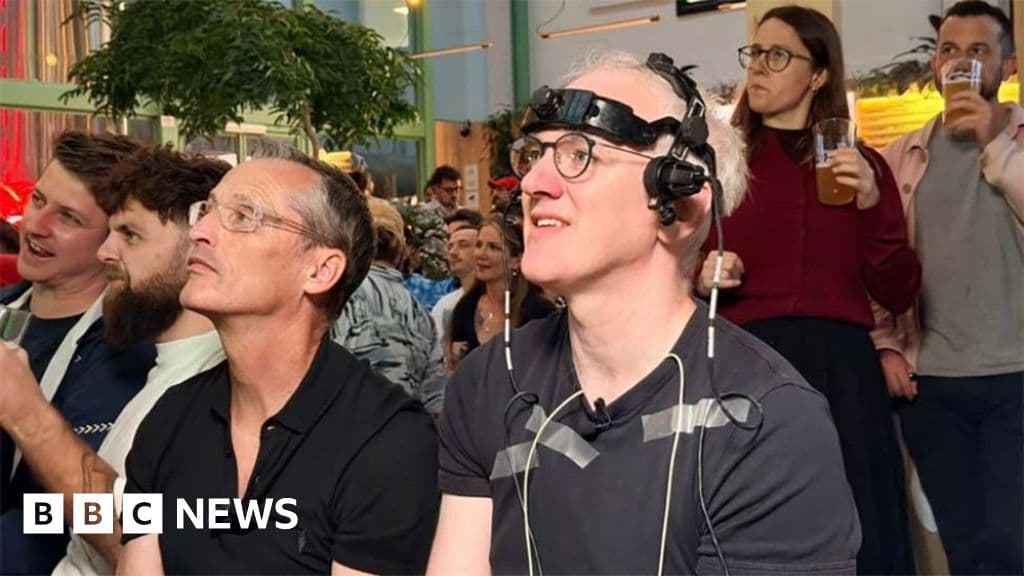
Watching England in the World Cup can evoke strong emotions, impacting your physical health. An experiment involving scientists from the University of South Wales explores these health effects during the matches.
Mentioned in this story
Supporting England is an emotional rollercoaster.
There's the nervous anticipation as the national anthems rings out around the stadium, the thrill of Kane smacking the ball in the goal, and the ecstasy of victory.
And there's that sinking feeling too when we let a lead slip, the dread of a penalty shoot-out and the despair of losing to Italy and then Spain in the last two Euros finals. You can feel your heart race and your hands get clammy as you experience every kick of the ball.
Clearly, watching football influences the body - but is it good or bad for our health?
To find out I persuaded two scientists from the University of South Wales to put national pride to one side and join me for a little experiment during England's opening World Cup match.
They packed up their lab into the boot of a car, and we met in the Wiper and True Taproom in Bristol. I do love the researcher's homeland, but we all agreed that "scientifically" we should avoid doing the experiment in a Welsh pub and hopped across the border.
We arrive early and camp out at the back of a row of benches with a good view of the projector screen. Then the expensive scientific kit comes out.
"None of this is beer-proof let alone waterproof," says Prof Damian Bailey, with only the briefest flicker of somebody regretting their life choices.
Damian and his PhD student Danny Walmsley spend about 15 minutes wiring me up as I slowly morph into some kind of partially robotic lifeform.
My left arm and hand are enveloped in a mass of probes, wires, gizmos and cuffs.
It gets stranger still as a pair of ultrasound probes are fixed to my head, complete with splodges of slimy gel above the ears - to measure the blood flow to my brain.
I gently chew on an absorbent stick – which makes cardboard taste appealing – to get a saliva sample which can be tested for 2,000 different proteins including stress hormones like cortisol – although I am worried I've contaminated the sample with a pre-match pepperoni pizza.
As kick-off approaches I start breathing into a device that looks like a child's spinning top to record how quickly I'm breathing and how much carbon dioxide I'm breathing out.
By this point I'm starting to look like an extra in a low-budget Star Wars parody – and we are definitely the pre-match entertainment in a pub which is now heaving.
But the gear should allow us to monitor how my body changes – second by second - over the course of the Croatia match.
And as the referee gets the game under way, I am buzzing.
"I think tonight is going to be a real humdinger and that's great for us," says Bailey.
"I want to see a stress response, excitement, emotional anxiety, fear, shouting, forgetting to breathe, perhaps breathing too much, all of the above."
The readings in the opening moments show my heart rate is around 54 beats per minute, and my blood pressure 115 over 75.
Watching England in the World Cup can lead to increased heart rate and emotional stress, impacting overall health.
Supporting England brings a mix of excitement, anxiety, and despair, especially during critical moments like penalty shoot-outs.
The experiment was conducted by scientists from the University of South Wales.
The experiment aimed to measure physiological responses such as heart rate and stress levels while watching the match.
Ransom note claims Nancy Guthrie died after her abduction; investigation ongoing.

Lost memoir of Hiroshima survivor Kiyoshi Tanimoto found in US archive, to be published this summer.

Urgent: 1,000 LGBT veterans may miss out on compensation!
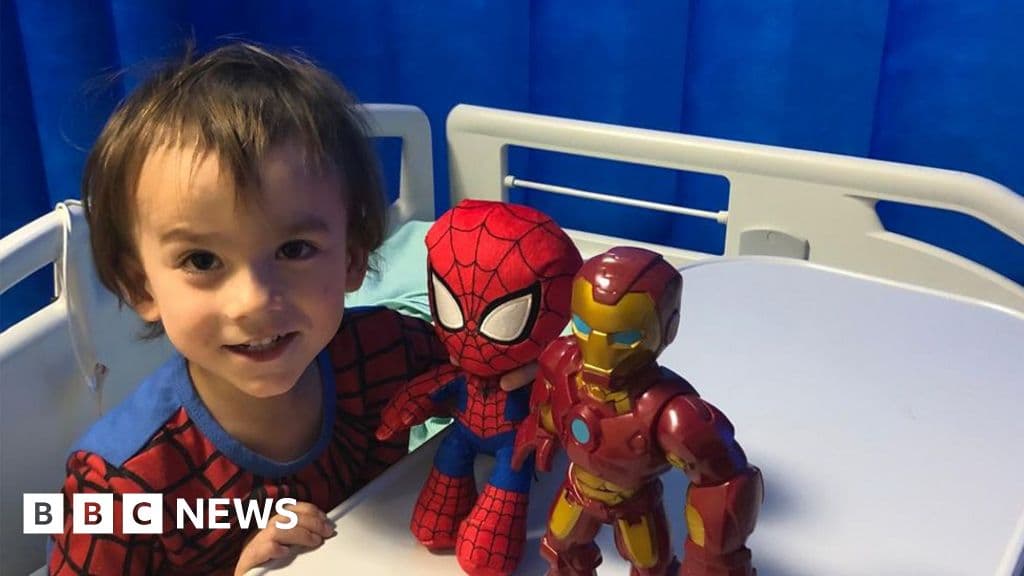
The NHS introduces Teplizumab, the first drug to delay type 1 diabetes onset, offering hope to many.

Over 100 Romanian hospitals switched to pen and paper to combat a major cyber-attack threatening patient safety.

Firefighters in LA struggle to extinguish a massive warehouse fire after six days.
See every story in News — including breaking news and analysis.
"Everything is relaxed, despite the fact there are about 500 people staring at you," Bailey jests.
He was right to predict a humdinger – it was a six-goal thriller with highs and lows.
We had early drama. A Kane penalty… a guaranteed goal surely… but no, it's saved… wait… the Croatia keeper had strayed off his line and the referee orders a retake… Kane places the ball down again… shoots… GOAL!!!
I, and the rest of the crowd, are cheering with joy. But then comes the disappointment as Croatia equalise, before we take the lead again only to squander it and go in at half time with the match evenly poised at 2-2. It's an emotional rollercoaster - and the perfect conditions for the experiment.
At half-time we assess how our fellow England fans' bodies are coping.
Ollie, 23, says his heart is going "50 times a second" and he might "keel over and die" from the stress, while Tim, 38, says he needs more England goals because "currently it's pretty bad for my health".
Beth, 27, is more chilled: "I see my friends, I have a shout at the TV, I have a beer".
Unlike most of the crowd here, we're doing the experiment sober in case the depressant effect of alcohol influences the results.
The second half is far calmer. England are dominant and tension turns to jubilation as we win 4-2.
Damian and I head outside to discuss the results in the unofficial "post-match analysis beer tent".
"Your physiology is performing beautifully," he tells me. "We see a stress response whenever something exciting happens".
The first goal of the match - Kane's penalty – is a good example.
My heart rate cruised through most of the match in the low to mid-50 beats per minute but "literally within half a second" of Kane scoring my heart rate rose to 69 beats per minute.
Blood pressure went up too and there was less carbon dioxide in the air I was breathing out suggesting I was "hyperventilating a little" says Bailey and that led to a "reduction in blood flow into the brain".
And my saliva tests show levels of the stress hormone cortisol went from a chilled out 4.19 nmol/L before the match to a slightly stressed 5.15 nmol/L at the final whistle.
Altogether this shows a classic stress response in the body. When we talk about stress we often think about "bad stress" from work or exams or juggling-a-billion-things-at-once.
But Bailey says you can have good stress too. From an evolutionary perspective "stress is what keeps us alive" by activating our flight-or-fight response.
Bailey says my readings are like a "mild form of exercise" - just without burning any calories.
"You are elevating things that I would interpret as good for you, and you're recovering very quickly".
So there you have it, watching England is good for my health, however, there is a but. The same won't be true for everyone.
I have a relatively low stress response that "is almost Special Forces... you really are a cool customer I must say", says Bailey.
"You keep yourself physically active, you keep yourself in good shape."
If the science says I'm fit with nerves of steel, then I can hardly argue can I?
But the same won't be true for everyone as some people are "really sensitive" to stress, says Bailey, and their heart rate could shoot up by 50 to 60 beats per minute.
If you already have a heart or brain condition then the stress could "in extreme situations" trigger a heart attack as the blood vessels tighten, pressure goes up and the blood becomes thick "like honey", he says.
In some people, changes in breathing can alter blood flow to the brain, causing them to faint from the stress.
So I'll leave it to you to decide if watching England is good for you. But as far as my body's concerned… bring on the next game!
Additional reporting and video journalism by Jamie Moreland.