
South Sudan’s Jonglei: Who burned homes and silenced hospitals?
In Jonglei, South Sudan, a hospital was bombed and homes burned amid military clashes.
Al Jazeera English1 min read
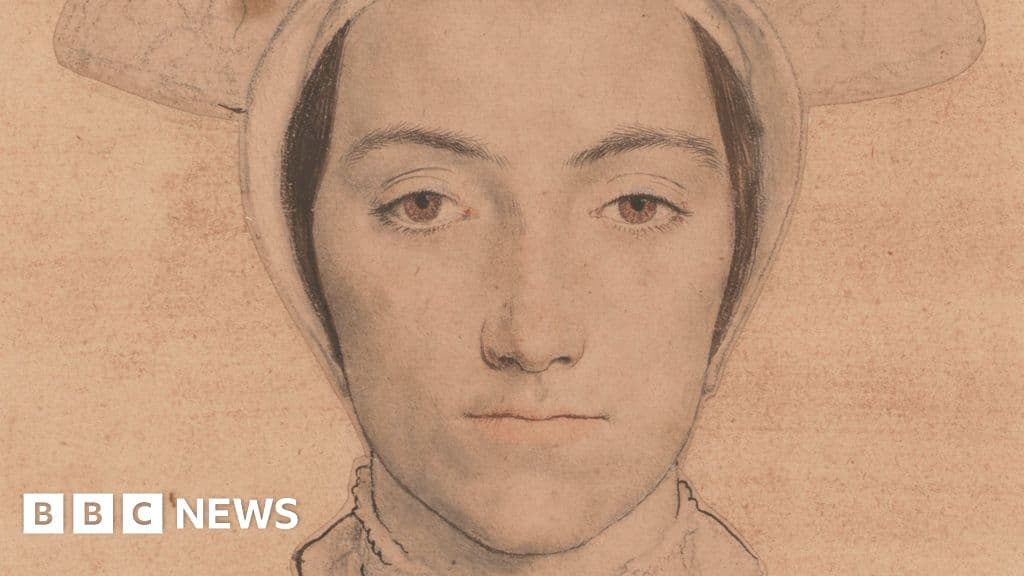
A computer science team claims to have discovered a new sketch of Anne Boleyn using facial recognition on Tudor portraits. This finding reignites debate about her true appearance, which has puzzled historians for centuries.
Mentioned in this story
Anne Boleyn won the heart of King Henry VIII, gave birth to one of the country's most well-known monarchs, and lost her head in 1536 - but her appearance has continued to challenge art historians and online sleuths.
Now a computer science team believes they have discovered a previously unknown sketch of Boleyn by using facial recognition on a famous collection of Tudor portraits.
Boleyn became Henry VIII's second wife in 1533, but her reign was short-lived: approximately three years. She was accused of adultery, incest and treason and was executed.
All the painted portraits that exist of her were made after her lifetime, creating a mystery around what she actually looked like and making her appearance the subject of fascination and debate for centuries.
The research team, led by the University of Bradford, says the new discovery is "exciting" and the methodology could be replicated to do more art detective work. But there is scepticism from within the art history community over the findings.
"We don't have a lifetime painted portrait of her that's absolutely secure, a wonderful painting that we can use as a reference point," says Dr Charlotte Bolland, a senior curator for research and 16th-Century collections at the National Portrait Gallery - who is independent from the new study.
"Her reign wasn't necessarily long enough for an established iconography… and there is this tantalising suggestion that perhaps some of her images might have been deliberately destroyed."
Although there are no known surviving paintings made in her lifetime, there are a handful of lifelike, yet contested, depictions left. Including this preparatory sketch with her name on it.
It exists within a precious collection of drawings of Tudor court members by the masterful artist Hans Holbein the Younger, now held by the Royal Collection Trust.
Many modern art historians, such as Dr Bendor Grosvenor, accept the label on this drawing is correct and that it is a surviving contemporary likeness of her.
But there is a counter argument, which claims it was mislabelled.
Despite these opposing theories, what is widely believed, based on written evidence, is that the collection of Holbein drawings does indeed contain a portrait of Anne Boleyn - somewhere.
Enter facial recognition: can it resolve the debate, pulling out the true image from the collection, with no human bias and by ignoring existing labels?
It is a technology that isn't without controversy and is already used in things like unlocking your phone, passport control, and some police investigations - via photographs and footage.
"What we are looking at is a bunch of drawings, and then we are comparing these drawings through a machine-learned algorithm," Prof Hassan Ugail of visual computing at the University of Bradford explains.
A computer system took all the digital copies of drawings in the Holbein collection and compared each one to the next in turn, looking for and comparing key facial features to see if it could fish out the correct sketch of the doomed Tudor queen.
A computer science team believes they have found a previously unknown sketch of Anne Boleyn using facial recognition technology.
All existing portraits of Anne Boleyn were created after her death, leading to uncertainty about her actual appearance.
The research team was led by the University of Bradford.
There is skepticism within the art history community about the findings of the research team.
In Jonglei, South Sudan, a hospital was bombed and homes burned amid military clashes.

Sri Lanka faces alarming rise in cybercrime as scam networks relocate from Asia.

US fuel prices could take months to normalize after US-Iran deal, despite recent oil price drops.
Exploring Hungary's financial incentives for couples to boost birth rates amid fertility challenges.

Former ICE leader Todd Lyons hired by Navigators Security and Defense for national security consulting
Allegations about MAFS Australia contestants spark serious concerns from watchdogs.
See every story in News — including breaking news and analysis.
The Royal Collection Trust, who hold the collection, was not involved with, and does not endorse the findings, but does welcome the study of its artworks.
Prof Ugail believes the technique can be replicated across other artworks.
"The result has shocked us completely," explains Karen Davies, lead author of the research.
That's because, based on their interpretation of the computer system's analysis, they believe it has found a sketch of Boleyn that has been hiding in plain sight as an "unidentified woman" for hundreds of years.
But art historian Grosvenor believes the research is "a load of rubbish" and says it is "suspicious" that 500 years of art history is being questioned via what he calls a "flawed methodology".
"I don't get worked up about it," Prof Ugail responded. "The results are results, isn't it?"
Since August 2024, Davies has been working as a cleaner to fund her true passion: historical research.
She has never believed that the labelled sketch by Holbein actually shows Boleyn because, over the years, questions have arisen regarding certain details such as: the sitter's informal dress, the name being inscribed in an 18th Century hand (long after Boleyn's death), and the light-coloured hair and full chin, when there are references to her having dark hair and a thin neck.
One day, when Davies was cleaning a client's house, she told them about her passion project. They put her in touch with Prof Ugail.
"If evidence can be tested, then it should be tested," she says.
But if there is no agreed lifelike likeness of Boleyn, surely that is a massive hole in this research?
"What we've done here is we've compared these drawings to Anne Boleyn's first cousins and to her daughter Elizabeth to look for the family similarity and geometry and they cluster," Davies explains. "And we've used drawings that we absolutely know are non-relations and they don't cluster."
The algorithm rates how alike two faces are, a higher percentage "clustering" means more facial resemblance. When these numbers are interpreted, they can suggest whether someone is the same person or related to another person.
In layman's terms, just as you may draw parallels between you and a parent and say "I have their eyes and nose", what Prof Ugail and Davies believe the computer system has found within the Holbein sketches are some family facial similarities between certain portraits - so they could then build a visual family tree.
The research is peer reviewed, which means it has gone through a number of rigorous checks before publication.
But the findings are now facing scrutiny from the art history world.
"I think, academically, I would describe it as a load of old phooey," says Grosvenor, who believes a lot of art historical colleagues are too nervous to speak out.
He is surprised the research has passed peer review, questioning the researchers' methodology and their interpretation of the computer system's findings. He also says works of art cannot be treated in the same way as modern photographs.
He still believes the Holbein sketch titled Anne Boleyn is genuine, putting forward this argument: it was identified by someone who knew her, even if the visible written label was inscribed long after her death; the "blonde hair" was under a darker topcoat that rubbed off; and the informal dress was only worn by those of high status.
He says this all points to an intimate drawing of Boleyn, most likely captured during a pregnancy.
So long after her death, the mystery of what Boleyn looked like and her story continue to capture imaginations.
"The incredible emotional tragedy of her life is this story that people want to revisit," says Bolland.
"There is this curiosity and I think that drives ongoing research - people throwing different methodologies to try and answer a question that has been thought about for hundreds of years."