
Bridget Phillipson orders review of hidden childcare charges hitting parents
Bridget Phillipson orders review of hidden childcare charges affecting parents.
The Guardian World1 min read

Iran and the U.S. are referencing historical battles as they discuss a potential deal to end their ongoing conflict. Iranian officials emphasize a narrative of an underdog victory in response to Trump's comments about a largely negotiated agreement.
Mentioned in this story
Tehran, Iran – Iran and the United States have evoked historical and geographical references to the MENA region as the world awaits the announcement of a possible deal to end the conflict between the two countries.
Iranian officials have revived key moments in the nation’s history to drive forward a message of a David-versus-Goliath battle between the two sides, with the underdog ultimately victorious.
This comes as US President Donald Trump announced that a deal with Iran had been “largely negotiated”, with Tehran also indicating there could be an agreement soon. Both sides have been keen to portray any deal to end their 66-day conflict as a victory.
Iran’s Foreign Ministry spokesman Esmaeil Baghaei drew parallels to the march of the Romans against the Persians in the third century, with the invading party ultimately being forced to “come to terms” with the latter.
Baghaei also posted an image of Roman Emperor Valerian after he was captured by Persia’s King Shapur I in the year 260. It is an illustration repeatedly drawn on by Iranian authorities in recent months to evoke nationalist sentiments and promote the idea that the country is again bravely standing up to another invading force.
Sunday also happened to mark the anniversary of a more recent conflict, when Iran – under a new revolutionary government still in place today – fought an eight-year war with its neighbour, Iraq, from 1980 to 1988.
Every year, the Islamic Republic celebrates the 1982 recapture of Khorramshahr, a city with an Arabic-speaking majority in the western Iranian province of Khuzestan.
Khorramshahr marked a turning point for the Iranian side in a protracted war that killed hundreds of thousands from both sides, with that battle being one of the bloodiest.
It has been used in government discourse and messaging during the latest war with the US and Israel to symbolise the country’s long history of resistance and determination to maintain the sovereignty of its lands.

Iran is drawing parallels to the Roman-Persian conflicts, highlighting the theme of an underdog ultimately achieving victory.
Trump announced that a deal with Iran had been 'largely negotiated' and indicated that an agreement could be reached soon.
The conflict between Iran and the U.S. has been ongoing for 66 days as of the latest discussions.
Iran is optimistic about the potential agreement, portraying it as a victory in their historical narrative against a more powerful adversary.
Bridget Phillipson orders review of hidden childcare charges affecting parents.

Ebola outbreak in DR Congo sees over 867 suspected cases and 204 deaths, risking international spread amid conflict.

Thomas Massie warns Trump has alienated voters ahead of midterms after primary defeat.

Gunman who opened fire near White House was known to Secret Service
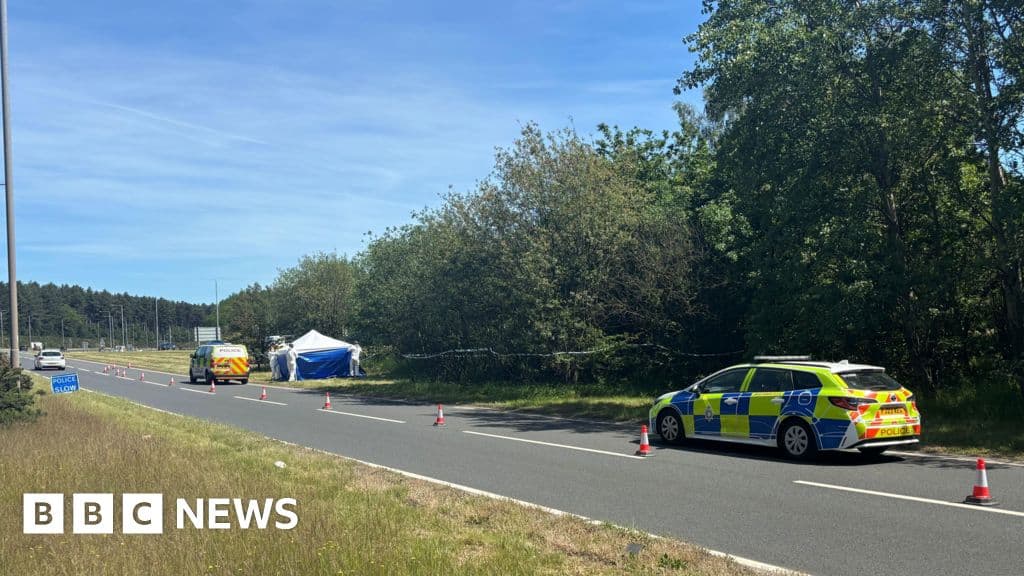
Police probe skeletal remains found near A617 in Nottinghamshire

Israeli strikes hit Lebanon a day after 11 killed in raid.
See every story in News — including breaking news and analysis.
Iraqi troops stand guard over shipping at the dockside in occupied Khorramshahr, Iran, October 7, 1980 [AP Photo]
Ahmad Vahidi, the commander-in-chief of Iran’s Islamic Revolutionary Guard Corps (IRGC), used the battle to signal that Tehran would continue to fight the US and Israel in the region.
“The liberation of Khorramshahr is a lasting model for victory in future Khorramshahr, and the liberation of Quds sharif [Jerusalem], and the destruction of the evil Zionist regime by the axis of resistance and the fighters of the Islamic world,” he said, in reference to Israel.
Masoud Pezeshkian, Iran’s relatively moderate president, linked the event to the current standoff.
“Iran’s Khorramshahr today is the Persian Gulf and the Strait of Hormuz,” he wrote on X. “Resistance, sacrifice and fighting off aggression are rooted in the culture of this land.”
Mohammad Mokhber, an adviser to Iran’s slain Supreme Leader Ayatollah Ali Khamenei, said both former Iraqi leader Saddam Hussein and US President Donald Trump failed to fully recognise Iran’s power when starting a war.
“The first was buried in the trenches of Khorramshahr, while the second has been afflicted with a political crisis in a quagmire created by the Zionist regime,” he wrote on X.
Kazem Gharibabadi, a member of Iran’s negotiating team and its deputy foreign minister for international affairs, linked the issue of Khorramshahr with the United Nations Charter and the country’s current concerns.
“Any nation that falls victim to aggression and occupation has an intrinsic right for legitimate defence to safeguard its territory, independence and integrity,” he said.
Gharibabadi added that Tehran is currently following the same logic of “peace-seeking paired with power, diplomacy paired with integrity and decisive defence”.
First Vice President Mohammad Reza Aref said the recapture of the city in 1982 showed that the new government could defeat aggression on its own terms.
Tehran now aims to “overcome our savage enemy” through holding its ground, he wrote on X.
The latest barrage of messaging from leaders in Tehran came after Trump appeared to suggest that he wanted to take control of Iran.
On his Truth Social account on Saturday, the US president posted a photo of the US flag covering the map of Iran, with the question: “United States of the Middle East?”
In response, the X accounts of multiple Iranian embassies abroad posted a US map covered with the flag of the Islamic Republic, with the question: “United States of Iran?”
The Trump administration has emphasised that it wants a long-term suspension of uranium enrichment in Iran and the extraction of high-enriched nuclear material from the country.
It also wants the Strait of Hormuz – through which one-fifth of the world’s oil shipments normally pass, but which Iran has blockaded – reopened fully without any tolls from Iran, officials have said.
Israeli officials have remained largely silent about a US deal with Tehran, but have reportedly been pushing to resume the war.