
Marius Borg Høiby rape conviction renews focus in Norway on consent in digital age
Marius Borg Høiby's rape conviction renews focus on consent in Norway's digital age.
The Guardian World1 min read

Labour faced a disastrous election night, with calls for leader Keir Starmer to resign. Reform UK surged, claiming 45% of declared council seats and taking control of its first London council.
Mentioned in this story
The polls had been terrible, the predictions dire and even one of his predecessors as Labour leader, Ed Miliband, had reportedly told Keir Starmer he should set a timetable for his resignation if the results were as bad as they looked.
But for the prime minister, as polling stations closed in Wales, Scotland and many parts of England, there would be no consideration of such a course. “To all the Labour members and volunteers who have supported local campaigns across the country: thank you,” he posted on X late on Thursday. “Together we will build a stronger and fairer Britain.”
Well, maybe. As the long night went on, result after result in overlit leisure centres across England suggested this was going to be every bit as dire a set of results for Labour – and its leader – as feared. Miliband’s spokesperson may have disputed, if not quite emphatically, reports that he had urged Starmer to consider his position, but before 2am the first Labour MP was saying so openly.
It had been a “terrible” night for Labour, said an angry Jonathan Brash, the Hartlepool MP, for which he blamed “political cowardice” at the top. “I’ve seen canvassers working night and day in this election and it’s all been for naught, and the reason has absolutely nothing to do with them … I think the very best thing the prime minister could do now is address the nation tomorrow and set out a timetable for his departure.”
As the night progressed, the scale of the task facing Labour and the other parties to check the surge of Reform UK became increasingly apparent. By the early hours, the BBC’s election analyst John Curtice noted, Reform had claimed 45% of all council seats that had been declared so far. On Friday morning it captured control of Havering, its first London council, and a gleeful Farage appeared in the bright morning sunshine to declare its town hall “under new management”, to roars from his supporters.

Labour had a terrible night, while Reform UK surged, claiming 45% of declared council seats.
Ed Miliband reportedly advised Starmer to set a resignation timetable due to the dire election predictions for Labour.
Farage declared the town hall 'under new management' after Reform UK captured control of Havering council.
Labour MPs expressed anger, with one stating it was a 'terrible' night and calling for Starmer to address the nation about his departure.
Marius Borg Høiby's rape conviction renews focus on consent in Norway's digital age.
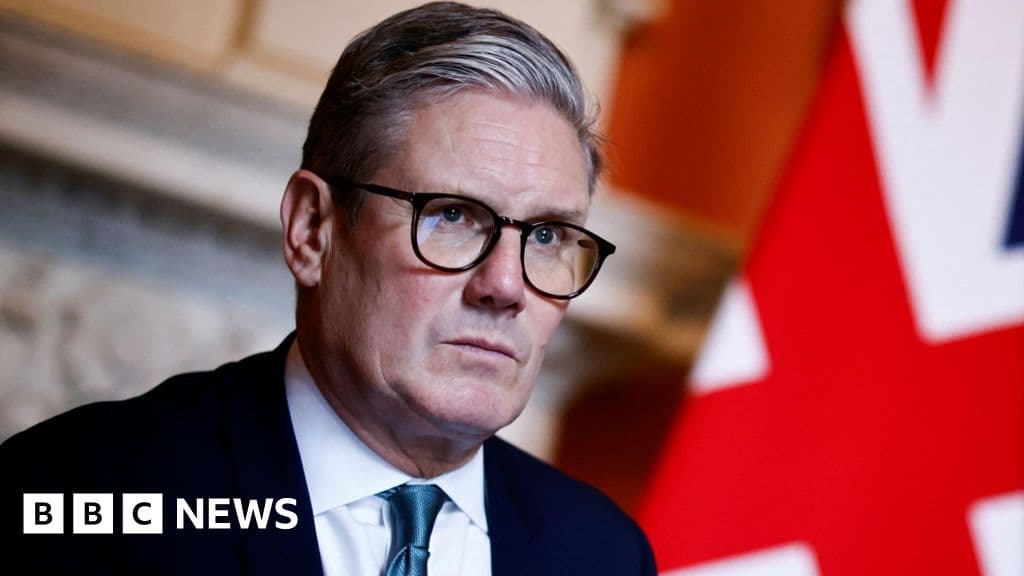
Keir Starmer resigns after being ousted by his party, marking a dramatic fall from grace.

UK Parliament to discuss Israeli influence on politics after petition gains over 118,000 signatures.

Europe faces extreme heat as Typhoon Mekkhala strengthens in the Pacific.

Western Europe is experiencing a severe heatwave, with temperatures expected to reach 44C. France has issued red alerts for half the country, while Belgium faces disrupted rail services and Spain and Germany have canceled sports events.
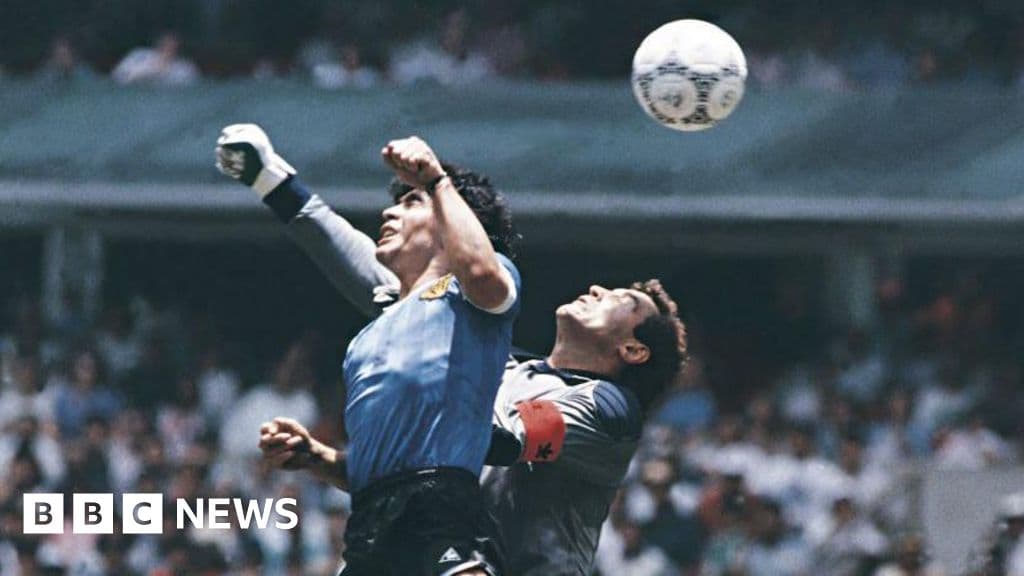
40 years later, the impact of Maradona's 'Hand of God' goal is still felt.
See every story in News — including breaking news and analysis.
Nigel Farage with Reform councillors outside Havering town hall on Friday morning. Photograph: Dan Kitwood/Getty Images
Not everyone may agree with Farage’s assertion that “there is no more left-right. It is gone, it is out of the window, it’s finished,” but it was hard to argue with his assessment that the night’s results represented “a truly historic shift in British politics”.
The Reform leader was less forthcoming when asked by reporters about his own funding, after Guardian revelations that that he was given £5m by the Thailand-based crypto billionaire Christopher Harborne shortly before announcing he would stand in the 2024 general election “Yeah, yeah, we’ll talk about that any other time you like,” he said, moving swiftly on to another questioner.
Four hours later, the party took control of Essex county council from the Conservatives – the party leader Kemi Badenoch’s local authority – gaining 52 councillors. Suffolk and Newcastle-under-Lyme followed, also claimed from the Conservatives, then Sunderland, from Labour.
In the Scottish parliament and, particularly, the Welsh Senedd, Reform was hoping to make an equally dramatic advance. As counting progressed in the two nations on Friday, early results indicated that while the Scottish National party was set to comfortably win an unprecedented fifth successive parliamentary term, Farage’s party had made significant inroads for the first time. In Wales, Plaid Cymru appeared likely to replace Labour and lead the Senedd for the first time since devolution 27 years ago, with Reform not far behind on seat numbers.
Reform was not the only party celebrating dramatic wins. There were whoops of delight and tears among Green party activists in Hackney, north London, where Zoë Garbett became the first directly elected mayor in the party’s history. “Across London and the country, people have made it clear that they are desperate for an alternative to this failing Labour government,” she said in her acceptance speech. “It’s not old parties versus new parties. This is about a system of fear versus a movement of hope.”

Zoë Garbett celebrates with the Green party leader, Zack Polanski. Photograph: Yui Mok/PA
The party’s leader in England and Wales, Zack Polanski, called it a historic victory. “Two-party politics is not just dying. It is dead and it is buried,” he said. “It is very clear that the new politics is the Green party versus Reform.”
The Liberal Democrat leader, Ed Davey, was also bullish after the party gained control of Portsmouth and Stockport, while in south-west London the party now holds 51 out of 55 seats on Sutton council and all 54 seats in Richmond.

Ed Davey celebrates the Liberal Democrats’ win in Portsmouth. Photograph: Chris Gorman/Getty Images
Davey said Labour and the Conservatives were facing “extinction-level losses” because voters were “rightly fed up with the appalling mess they have made of the country”. He said the Lib Dems were “the only party strong enough to stand up to the populist extremes and protect our country from chaos”.
At least Labour was not the only party having a terrible night, with the Conservatives losing more than 180 seats by lunchtime on Friday. There was some consolation for Badenoch, however, as the Tories regained control of Westminster and Wandsworth, even if not everyone will have agreed with her interpretation that those small wins meant “the Conservatives are coming back” in London.

Kemi Badenoch outside Westminster city hall after a Conservative victory. Photograph: Carl Court/Getty Images
Perhaps inevitably, as gloomy result after gloomy result for Labour was announced throughout the morning, calls for Starmer to go continued – though mostly from unsurprising quarters.
Maryam Eslamdoust, the general secretary of the TSSA transport union, compared Starmer to Joe Biden in refusing to stand aside for a candidate who could defeat the right. The former Labour chair Ian Lavery said Starmer could “kill Labour” if he didn’t stand down as leader.
While stopping short of explicitly calling for Starmer’s head, the leader of the Unite union, Sharon Graham, said it could be “the beginning of the end for the party itself” if Labour did not “shift decisively towards the working class”. “It is change or die. Now or never,” she said.
For Starmer, though, there would be no change on his insistence early in the day that though these were clearly “very tough” results, there would be no stepping down. “The voters have sent a message about the pace of change, how they want their lives improved. I was elected to meet those challenges. And I’m not going to walk away from those challenges and plunge the country into chaos,” he said.
By early afternoon, with the party having lost half of the English council seats it was defending, the scale of the Labour electoral calamity in Scotland and Wales was also becoming apparent. With only a handful of results across Scotland declared, the leader of the Scottish Labour party, Anas Sarwar, conceded the party had comprehensively lost and said it was because of a “national wave” of dissatisfaction.

The Plaid Cymru leader, Rhun ap Iorwerth, shakes the hand of a supporter n Llandudno. Photograph: Matthew Horwood/Getty Images
In Wales, Labour said it expected to take only about 10 of the 96 seats in the expanded Senedd, an astonishing collapse for the party that has led the country for almost three decades. The sitting first minister, Eluned Morgan, lost her seat in the wipeout.
As Welsh constituencies continued to declare, Reform was closely tracking behind Plaid Cymru, which Curtice predicted was likely to be the biggest party, even if it fell short of a majority.
As the Welsh nationalist party eyed the prospect of government at last after more than 100 years of campaigning, one experienced party worker noted wryly: “Politics is a game of perseverance.”