TL;DR
Former UK defence secretary John Healey advocated for the UK to join the Defence, Security and Resilience Bank to boost defence funding. Treasury sources suggest alternative funding discussions are ongoing, including with Poland.
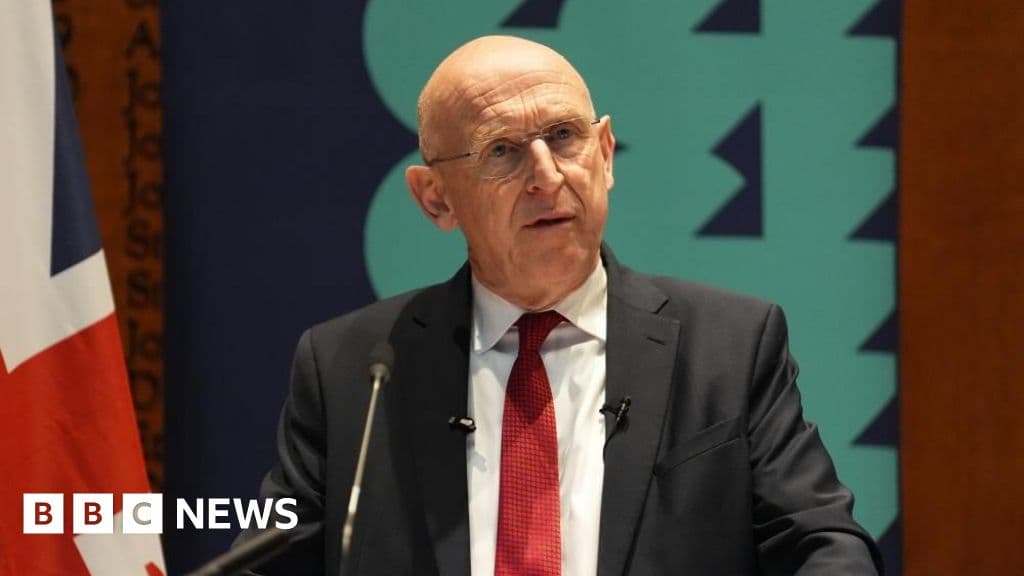
Former defence secretary John Healey was privately pushing for the UK to join an international investment bank to raise more money for defence spending, BBC News has been told.
Allies of Healey claim the Treasury tried to shut down negotiations for the UK to join the Defence, Security and Resilience Bank (DSRB), an idea spearheaded by Canada.
In his resignation letter Healey said there were "credible ways" to fund extra defence spending, including "working multi-nationally".
Treasury sources indicated to the BBC the chancellor had been looking at ways to fund defence with countries aside from the Canadian suggestion, including discussions with Poland about a "Multi-Lateral Defence Mechanism".
The DSRB, which aims to help member countries fund defence projects at low costs, is expected to be officially launched at a Nato summit next month.
Countries wishing to join will be asked to contribute an upfront investment of around £870m.
Canadian prime minister Mark Carney, who has been pushing the idea on the global stage, is said to be keen for the UK to join the project.
Ministers have been mulling it for months but the chancellor is thought to have been unwilling to pay.
Healey resigned as defence secretary on Wednesday, saying the amount of money attached to the government's upcoming Defence Investment Plan fell "well short" of what was needed.
Sir Keir Starmer told the BBC on Friday he had made "hard-edged" choices on defence spending, including asking government departments to make cuts to help pay for it. The Defence Investment Plan has yet to be announced.
Healey said Number 10 and the Treasury were prepared to give around £10bn in additional money in this plan, around £18bn less than what military chiefs have reportedly asked for.
It is understood Healey believed joining the DSRB could have helped bridge a funding gap as well as supporting British businesses in the defence sector.
A group of defence-focused Labour MPs have been lobbying ministers to look more closely at the DSRB for months.
One advocate of the UK joining the bank said it was likely that the up-front cost would have to be paid for by borrowing.
Earlier this week Chancellor Rachel Reeves indicated she was not in favour of borrowing more money to increase defence spending.
The Canadian High Commissioner to the UK told Politico Gordon Brown, who is advising the prime minister on global finance, has held direct talks with Carney about the DSRB.
Supporters hope it will lead to direct low-cost lending to governments as well as credit guarantees for commercial banks that give loans to defence companies.
But some in Whitehall have raised concerns the model being offered would be more likely to benefit smaller economies with lower credit ratings.
The Treasury has been contacted for comment.