
Weather tracker: Saharan heat to send temperatures soaring across Europe
Saharan heatwave set to send temperatures soaring across Europe this week.
The Guardian World1 min read

Cuba has condemned new sanctions imposed by President Trump, labeling them as 'collective punishment' of the Cuban people. The Cuban Foreign Minister criticized the measures as violations of the UN Charter and extraterritorial in nature.
Mentioned in this story
The Cuban government has firmly rejected new sanctions levied by United States President Donald Trump, calling them “unilateral coercive measures” intended to impose “collective punishment on the Cuban people”.
In a post on social media on Friday, Cuban Foreign Minister Bruno Rodriguez said that “these measures are extraterritorial in nature and violate the United Nations Charter”, while further asserting that the US “has no right whatsoever to impose measures against Cuba or against third countries or entities”.
“While the US government represses its own people in the streets, it seeks to punish ours, who are heroically resisting the US imperialism’s attacks,” the foreign minister said.
The Cuban minister’s remarks came hours after the White House signalled a further hardening of its policy towards the Caribbean island.
Earlier on Friday, Trump issued an executive order to expand sanctions on the Cuban government, according to two White House officials who spoke to the Reuters news agency. The move serves as an effort by Washington to ramp up pressure on Havana following the abduction of Venezuela’s President Nicolas Maduro in January by US forces and Trump’s recent warning that “Cuba is next”.
The new US sanctions focus on individuals and groups that help the Cuban government’s security forces, according to Reuters.
The measures also target those involved in corruption, serious human rights abuses, or anyone working as an official or supporter of the Cuban government.
It remains unclear exactly which individuals or entities are affected by the new restrictions. However, a White House statement said, without evidence, that the Caribbean island serves as a “safe haven for transnational terrorist groups” such as the Lebanese armed group Hezbollah.
The Trump administration has recently threatened Cuba with military attacks in addition to greater economic pressure.
Earlier this year, Trump issued an executive order declaring a national emergency to address what the White House described as an “unusual and extraordinary threat” posed by the Cuban government.
Trump’s measures established a framework to impose additional tariffs on any country that provides oil to Cuba, either directly or indirectly, and have recreated an effective fuel blockade on the island, shattering its already weakened economy and imposing huge burdens on everyday Cubans.
Frequent power blackouts have increased as the nation’s electrical grid struggles due to the severe fuel shortage.
The new sanctions include an executive order aimed at expanding existing measures against the Cuban government.
Cuba's Foreign Minister condemned the sanctions as 'unilateral coercive measures' and a form of collective punishment against the Cuban people.
He stated that the US is repressing its own people while attempting to punish Cubans who resist US imperialism.
Saharan heatwave set to send temperatures soaring across Europe this week.

Marius Borg Høiby, son of Norway's Crown Princess, sentenced to 4 years for rape.

Dublin-born Roberto Lopes gets World Cup chance with Cape Verde!

Mike Ashley's Frasers Group makes a bid for Accent Group in Australia
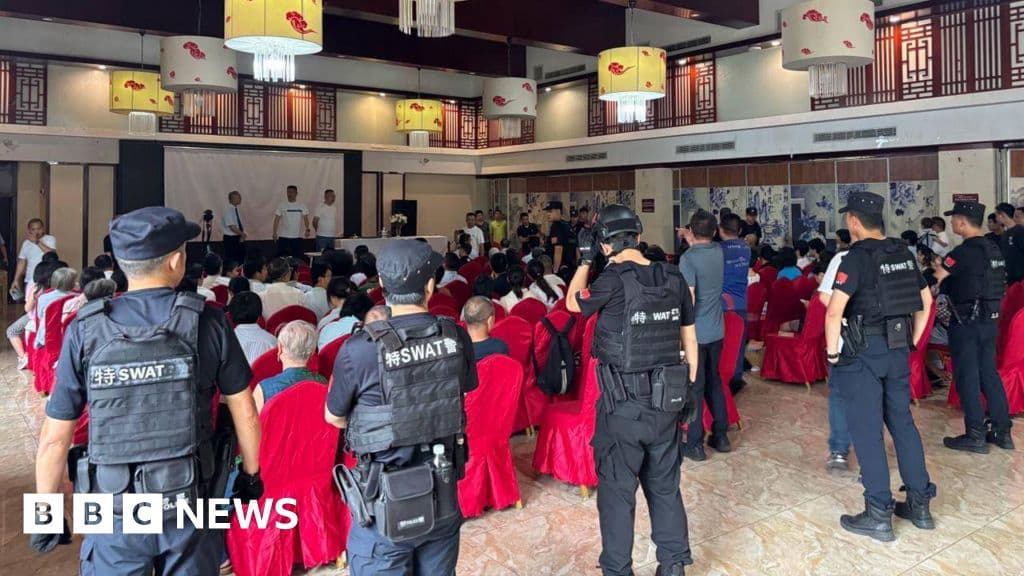
China detains two leaders of the Early Rain Covenant Church during service.

US and Iran have reached a tentative deal to end the conflict and resume shipping through the Strait of Hormuz.
See every story in News — including breaking news and analysis.
Earlier this week, the US Senate blocked a resolution designed to stop Trump from initiating military action against Cuba without first receiving approval from Congress. The Republican-controlled Senate voted 51 to 47 – largely following party lines – against the resolution.