
Renowned British artist David Hockney dies aged 88
Renowned British artist David Hockney has passed away at 88, leaving a legacy in contemporary art.
Al Jazeera English1 min read

Alphabet plans to raise up to $80bn to fund its AI infrastructure investments, including a $10bn share sale to Berkshire Hathaway. This move raises questions about the economics of the AI boom.
Mentioned in this story
Google’s parent company Alphabet has said it plans to raise up to $80bn (£59bn) in equity to fund its vast artificial intelligence infrastructure investments, raising further questions over the economics of the AI boom.
The move, one of the largest equity fundraisings ever globally, includes a $10bn share sale to the US investment group Berkshire Hathaway, which was led until last year by the retired investment guru Warren Buffett for 60 years.
Alphabet, behind the Gemini system which has been increasing its share of the AI chatbot market, said it would use the money to expand its “world-class AI compute infrastructure to meet its unprecedented customer demand”.
The Californian company said: “AI is driving an expansionary moment for Alphabet. The company is experiencing strong demand for its AI solutions and services from enterprises and consumers, at levels that are exceeding the company’s available supply.
“By scaling its investments, the company seeks to expand its foundational infrastructure to support the significant growth opportunity ahead.”
However, such a huge fundraising is also a warning to the markets that, for all the many billions of dollars thrown at AI infrastructure, meaningful returns to investors have so far been limited.
Jim Reid, a market strategist at Deutsche Bank, said Alphabet was reminding investors of the “unprecedented scale of the AI spending boom”, adding: “Funding of the AI [capital expenditure] boom is becoming an increasingly key topic for markets.”
The decision to tap Berkshire Hathaway is eye-catching too. Under Buffett, known as the Sage of Omaha, Berkshire often stepped in to provide funding for companies that needed cash, such as the famous $5bn investment into Goldman Sachs at the height of the financial crisis. Berkshire has been investing in Alphabet since last summer.
In its filing, Alphabet explained that half the $80bn will be dedicated to “scale AI infrastructure and global compute”, with $40bn set aside to cover “an administrative change to how it meets tax obligations associated with vesting of employee equity awards”.
Alphabet is raising funds to expand its AI compute infrastructure in response to strong demand for its AI solutions and services.
The $10 billion share sale to Berkshire Hathaway is part of Alphabet's larger $80 billion fundraising effort, marking one of the largest equity fundraisings globally.
The investments aim to enhance Alphabet's foundational infrastructure, allowing the company to better meet the unprecedented customer demand for its AI services.
Alphabet's significant fundraising efforts highlight the booming demand and economic potential of the AI market, raising questions about its sustainability.
Renowned British artist David Hockney has passed away at 88, leaving a legacy in contemporary art.
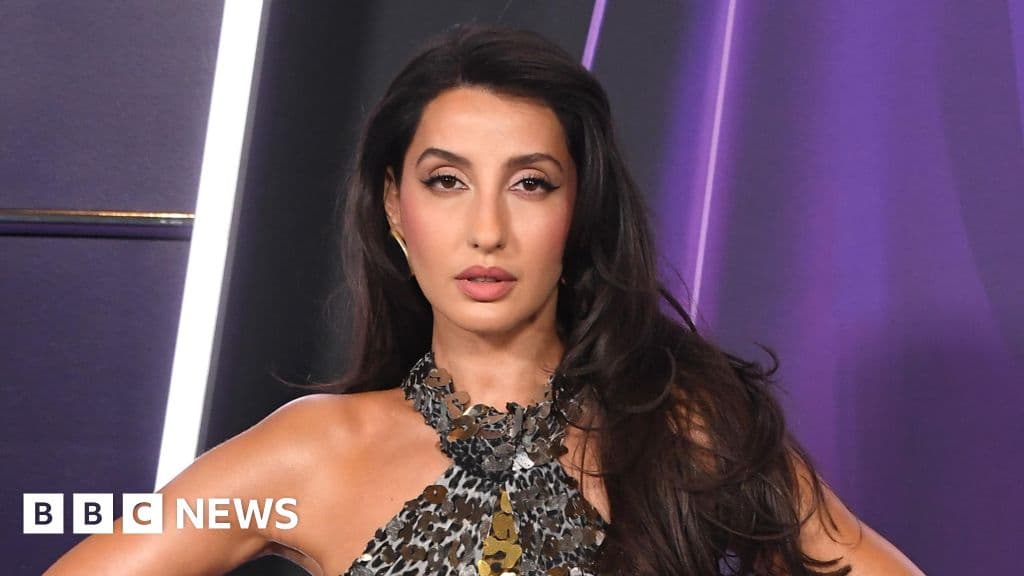
Nora Fatehi brings a message of unity with her song 'Siir Siir' at Canada's World Cup opening ceremony.

Protests against the military draft by ultra-Orthodox Jews have escalated in Israel, leading to violence and injuries among demonstrators and police. The ongoing unrest reflects deep political divisions over conscription and its implications for religious study.

One injured in Israeli air raids on southern Lebanon despite ceasefire

Women detained at Delaney Hall in NJ launch hunger strike for better conditions and rights.
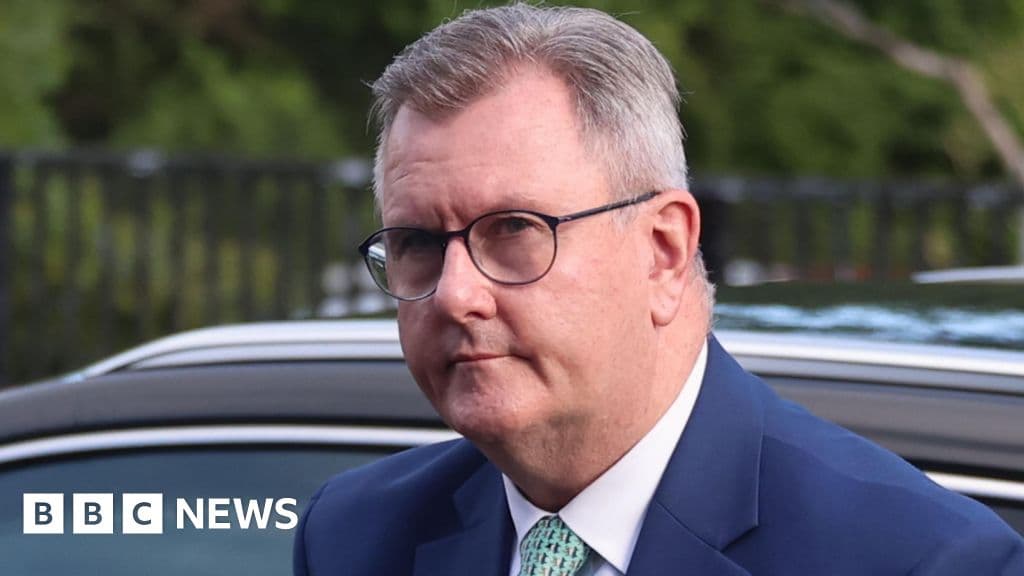
Donaldson denies meeting with sex abuse accuser amid trial
See every story in News — including breaking news and analysis.
The fundraising includes a $30bn initial raise alongside the $10bn from Berkshire, and a $40bn flexible drip-feed mechanism that can be used gradually over time, not earmarked for AI investment.
Matt Britzman, a senior equity analyst at Hargreaves Lansdown, said Alphabet’s fundraising was a “clear sign that the AI arms race is moving into a more capital-hungry phase”.
“It’s certainly a huge chunk of money to be raising, but the devil’s in the details on this. The full $80bn is less than 2% of Alphabet’s mammoth $4.6tn market cap … But, however it’s structured, one thing is abundantly clear. Long gone are the days when the tech giants were capital-light free cash flow machines.”
He added: “Alphabet is certainly spending from a position of strength, not distress. Demand for AI compute is running ahead of supply, Google Cloud growth has accelerated sharply, backlog has surged, and Search is proving far more resilient than many feared. That gives the investment case more substance than some AI spending stories, where the path to returns is harder to see.”
Alphabet had said previously that capital expenditure was expected to reach $180bn to $190bn this year, with another significant step up in 2027.
Britzman said Alphabet was at the “front of the race” in AI, “but investors will demand continued proof that this buildout leads to durable revenue growth, not just bigger datacentres”.
Alphabet is tapping investors for funding before some of its main AI rivals attempt to join the stock market.
Anthropic, which makes the Claude chatbot, popular with software engineers and other business clients, said on Monday it had filed confidentially for an initial public offering on the US stock market.
After a meteoric rise this year, Anthropic is now valued at $965bn after raising $65bn in funding, meaning it has leapfrogged OpenAI to become the world’s most valuable startup.
OpenAI and Elon Musk’s SpaceX, which includes the xAI artificial intelligence startup, are also slated to go public this year.