Globalytic
WorldPoliticsConflictsTechScienceHealth

Globalytic

Independent world coverage — geopolitics, conflicts, science, and health — with AI-assisted editing and verification.

Sections

  • World
  • Politics
  • Conflicts
  • Tech
  • Science
  • Health
  • All news
  • Search

Resources

  • About
  • RSS Feed
  • Search

Summaries and analysis may be AI-assisted. Content is for informational purposes only.

Not professional advice.

© 2026 Globalytic. All rights reserved.

  1. Home
  2. /News
  3. /Fuel prices stop rising after 43 days of increases, RAC says
Load next article
News

Fuel prices stop rising after 43 days of increases, RAC says

BBC News5h ago3 min readOriginal source →
Fuel prices stop rising after 43 days of increases, RAC says

TL;DR

Fuel prices have halted their 43-day rise, attributed to a temporary ceasefire in the Gulf that has lowered crude oil prices. Despite this, petrol and diesel remain significantly higher than pre-war levels.

Key points

  • Fuel prices have stopped rising after 43 days.
  • Petrol is now over 158p per litre, diesel at 192p.
  • Prices remain higher than before the war started.
  • Ceasefire in the Gulf has lowered crude oil prices.
  • Strait of Hormuz closure impacted global fuel prices.

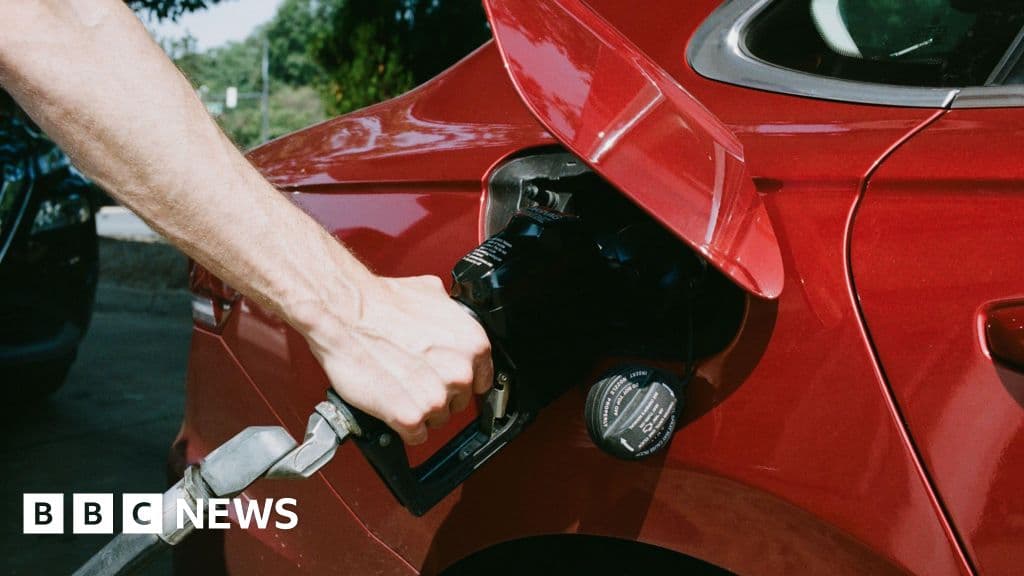
The price of petrol and diesel has stopped rising after 43 days of increases, according to the latest figures from motoring organisation the RAC.

The temporary ceasefire in the Gulf has brought the price of crude oil down from its recent peaks, and with it the cost of fuel on wholesale markets.

However, prices still remain sharply higher than before the war started. Petrol is now selling for just over 158p a litre on average, up from 133p in late February, while diesel has risen from 142p a litre to 192p, the RAC said.

The motoring group said prices could start to come down over the next couple of weeks.

The outbreak of the US-Israeli war with Iran led to the effective closure of the Strait of Hormuz, a key waterway that usually carries about 20% of the world's oil and liquefied natural gas, and this has sent global fuel prices soaring.

Crude oil is a key ingredient in petrol and diesel, meaning higher wholesale costs make filling up a car more expensive.

The recent increases means the cost of filling up a family car with petrol has risen by £14, while a tank of diesel costs £27 more.

But fuel prices remain below the levels reached in summer 2022 following Russia's invasion of Ukraine, when petrol reached 191.5p and diesel hit 199p a litre.

Diesel has gone up more than petrol because it is harder to refine. The UK has to import around half of what it uses from abroad, and demand is very high globally.

"Wholesale fuel costs are now significantly lower than they were at the start of the month, so forecourt prices should begin to come down," said the RAC's head of policy, Simon Williams.

"As things stand, we'd expect petrol and diesel to drop by several pence a litre in the next week or so," he added.

"It will be very interesting to see if this plays out as the data indicates. We hope it does as drivers could do with some relief at the pumps."

Rival motoring group the AA said the chances of motorists seeing a cut in fuel prices would depend on where they lived due to what it called "the pump-price postcode lottery".

"If you live in a town with competitive retailers, you may see some movement. If you live somewhere where they all watch each other to see who budges first, you won't," said Edmund King, the AA's president.

In the past, the motor fuels sector has been accused of putting up prices quickly when the cost of oil rises, but only reducing them slowly when it falls back.

In late 2022, the Competition and Markets Authority said it had found some evidence of so-called "rocket and feather" pricing.

Since then, the CMA has carried out regular monitoring of forecourt prices, and said last month this scrutiny would be intensified in response to surging energy costs.

A new government scheme lets drivers compare the cost of fuel offered by petrol stations across the UK.
Q&A

What caused the recent halt in fuel price increases?

The halt in fuel price increases is due to a temporary ceasefire in the Gulf, which has reduced crude oil prices.

How much have petrol and diesel prices increased since February?

Since February, petrol prices have risen from 133p to over 158p per litre, while diesel prices have increased from 142p to 192p per litre.

What impact did the US-Israeli war with Iran have on fuel prices?

The US-Israeli war with Iran led to the closure of the Strait of Hormuz, causing global fuel prices to soar due to the disruption of oil and gas supplies.

Related Articles

Justice Department says Biden DOJ weaponized law to go after anti-abortion activists
News

Justice Department says Biden DOJ weaponized law to go after anti-abortion activists

The Justice Department's report claims the Biden administration misused a federal law to target anti-abortion activists. This report is the first from a taskforce investigating alleged misconduct by the Biden administration.

NPR Topics: News·12m ago·1 min read
Are we heading for ‘super El Niño’ – and what could we expect?
News

Are we heading for ‘super El Niño’ – and what could we expect?

Experts warn of a potential super El Niño this summer, with extreme weather ahead.

The Guardian World·21m ago·1 min read
House Democrats call for commission led by JD Vance to oust Trump
News

House Democrats call for commission led by JD Vance to oust Trump

House Democrats call for a commission led by JD Vance to assess Trump's fitness for office.

The Guardian World·24m ago·1 min read
How war in Gulf reveals the ‘cut corners’ on British defence
Politics

How war in Gulf reveals the ‘cut corners’ on British defence

The Gulf war reveals critical issues in UK military readiness and defense spending.

The Guardian World·24m ago·1 min read
The process of justice must be observed in ICC Prosecutor Karim Khan’s case
News

The process of justice must be observed in ICC Prosecutor Karim Khan’s case

Investigation into ICC Prosecutor Karim Khan concludes with no misconduct found.

Al Jazeera English·25m ago·1 min read
Fed nominee Warsh’s financial disclosures point to assets well over $100m
News

Fed nominee Warsh’s financial disclosures point to assets well over $100m

Kevin Warsh's financial disclosures reveal assets exceeding $100 million, raising eyebrows ahead of his Fed confirmation hearing.

Al Jazeera English·25m ago·1 min read

More from News

View all →

See every story in News — including breaking news and analysis.

Advertisement

Placeholder