
Weather tracker: Extreme heat in Europe as typhoon strengthens off Philippines
Europe faces extreme heat as Typhoon Mekkhala strengthens in the Pacific.
The Guardian World1 min read

Keir Starmer's leadership has faced challenges, including economic issues and election setbacks, despite claiming to focus on stability and workers' rights. His tenure has seen significant policy changes, particularly in employment rights, but ultimately ends with Labour's declining fortunes.
Mentioned in this story
Keir Starmer pitched himself as a leader for “stability and moderation” who would rebuild Britain, after Labour’s landslide victory in the 2024 general election.
But after two years which have seen unforced errors, economic headwinds, scandals and, most recently, a disastrous set of devolved, mayoral and local election results the UK is set to have its sixth prime minister in seven years.
With the era of Starmer over, what are the major policy successes – and failures – of his time in office?
Labour’s employment rights bill was hailed by Starmer as “the biggest upgrade to workers’ rights in a generation” when it came into law in December. While Labour backed down from its plan to give all workers the right to claim unfair dismissal from their first day in a job, the bill paved the way for significant new rights for workers on sick pay, parental leave and zero-hours contracts.

Starmer leaving Downing Street for the last prime minister’s questions of 2025. Photograph: Tolga Akmen/EPA
Paul Nowak, the general secretary of the TUC, said the move was “historic” and gave workers “vital rights”, while the Conservatives and business groups said it would be costly to businesses and could lead to a hiring reticence.
One of the biggest moves made by this government – and one that has gone almost under the radar – is that from April this year, millions of low-paid workers in the UK got a 4.1% pay rise, when Starmer’s government increased the national living wage from £12.21 to £12.71 an hour for over-21s, increasing the earnings of about 2.4 million workers by £900 a year.
Plenty of workers are also renters, and Starmerites would point to the Renters’ Rights Act as a significant boost for the almost privately or socially. As a result of the act, landlords need a legal reason to evict tenants, tenancies are no longer fixed-term, and landlords have to follow a formal process to evict tenants.
Keir Starmer's major success includes the introduction of the employment rights bill, which significantly upgraded workers' rights in areas like sick pay and parental leave.
Starmer faced failures including unforced errors, economic challenges, and poor results in devolved, mayoral, and local elections.
Under Starmer's leadership, Labour initially aimed for stability but ultimately experienced a decline, leading to expectations of a sixth prime minister in seven years.
The employment rights bill introduced by Starmer provided significant new rights for workers, although it fell short of granting unfair dismissal claims from the first day of employment.
Europe faces extreme heat as Typhoon Mekkhala strengthens in the Pacific.

Western Europe is experiencing a severe heatwave, with temperatures expected to reach 44C. France has issued red alerts for half the country, while Belgium faces disrupted rail services and Spain and Germany have canceled sports events.
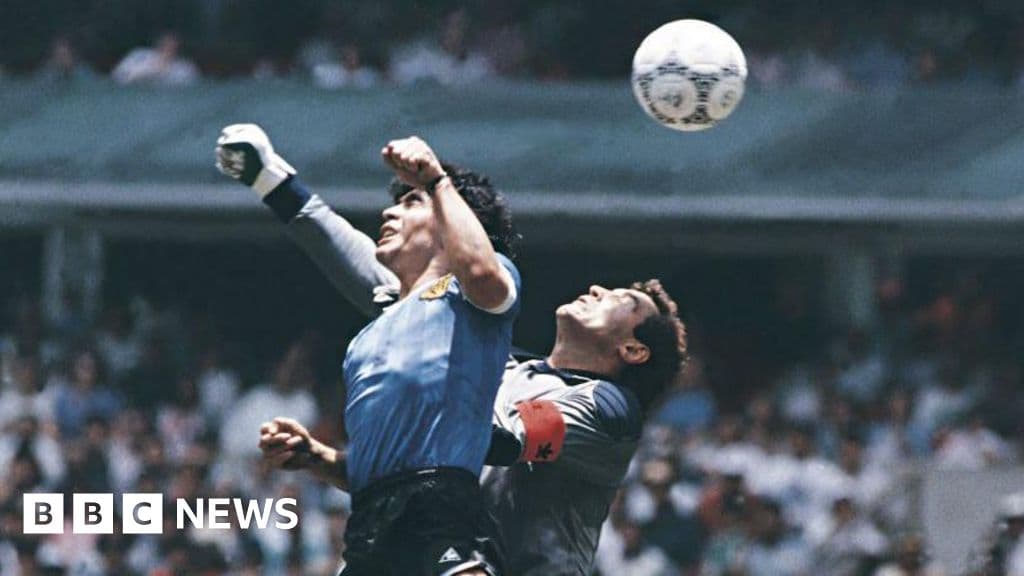
40 years later, the impact of Maradona's 'Hand of God' goal is still felt.

E-waste workers in India risk their health daily without safety gear.

Football rallies behind Doku after childbirth criticism from Pierron

50 years after re-legalization, is the death penalty effective in the US?
See every story in News — including breaking news and analysis.
Starmer has often seemed at his most comfortable on the international stage. After spending much of his early period in power courting Donald Trump, he boasted last May that the UK had secured a “breakthrough” trade deal slashing some tariffs on cars, aluminium and steel and saving thousands of British jobs.

The prime minister spent much of his early period in power courting Donald Trump. Photograph: Carl Court/AP
That deal has looked shaky in recent months as Trump has belittled and berated Starmer for not supporting initial US-Israel strikes on Iran, but that decision seemed in keeping with the wishes of much of the electorate, and allowed Starmer to criticise the more gung-ho approach of his rivals.
On Ukraine, Starmer was steadfast and sought to join the EU’s £78bn recovery loan scheme for the country. On Europe in general, he sought closer relations, becoming increasingly vocal about his desire for a “Brexit-reset”.
He said that leaving the EU was “damaging” and insisted ““Britain must be at the heart of a stronger Europe on defence, on security, on energy, and on our economy.” The next EU-UK summit this summer was expected to be a key moment in his premiership, as were plans in a new EU-UK reset bill for powers to allow the UK to adopt EU single market rules without a normal parliamentary vote.
Starmer trumpeted the government’s decision to scrap the two-child benefit cap in March, saying he was “really proud” to lift “half a million children out of poverty” – though critics would likely point out this came after sustained pressure from Labour MPs who pushed the prime minister into a U-turn.
His government also announced the opening of 1,000 new Best Start family hubs in England, and fully rolled out the Conservative policy of 30 hours of free, government-funded childcare per week for eligible working parents of children between nine months and school age, saving families roughly £7,500–£8,000 a year per child.

Starmer said he was ‘really proud’ to scrap the two-child benefit cap. Photograph: Danny Lawson/PA
It has also started a national rollout of free breakfast clubs for all primary school pupils, which Starmer called “a lifeline for parents” and an investment “in the next generation to give them the best start in life”. Ministers have also launched a supervised tooth-brushing scheme for three-to-five-year-olds and has promised to create 100,000 extra dental appointments for children.
Starmer has also – via his education secretary, Briget Phillipson – grasped the nettle of a crisis in special educational needs and disabilities (Send). A schools white paper was given a cautious welcome by education leaders and Labour MPs, after a lobbying blitz described as a “masterclass” in working with backbenchers (unlike failed welfare changes).
In May last year, Starmer promised that new immigration measures would mean net migration would fall “significantly” over the next four years. And so far it has – though there has been little focus from the government on this point. Over the last 12 months, according to this BBC tracker, net migration is 48% down, asylum claims are down 12% and small boat arrivals are down 41%.

The number of arrivals on small boats has fallen over the past 12 months. Photograph: Dan Kitwood/Getty Images
This could bring its own problems, of course. This year, net migration could fall below zero for the first time since 1993, with the National Institute of Economic and Social Research warning this would knock 3.6% off the UK’s annual national income by 2040.
Whether Starmer can hail the economy’s performance as a triumph of his two years as prime minister is a moot point (see below). But borrowing costs hit a three-year low in April, before the effects of the Iran war and recent political chaos (which saw yields on 30-year government bonds soar to their highest since May 1998) began to take hold. And at the start of the year inflation had fallen and a further cut in interest rates was expected.

Starmer with the chancellor, Rachel Reeves, who changed the fiscal rules to unlock new capital investment for infrastructure. Photograph: Jacob King/Reuters
The government also launched a £7.3bn national wealth fund designed to unlock billions in private investment for UK infrastructure and green industry.
Starmer’s chancellor, Rachel Reeves, also changed the fiscal rules to unlock £113bn of new capital investment for infrastructure, which will fund the likes of building the new Sizewell C nuclear power station and East West Rail, as well as houses, schools and prisons.
One of Reeves’s first decisions as chancellor was to strip winter fuel allowance from the vast majority of pensioners – a call that went down as well a bag of Hantavirus with voters and Labour backbenchers.

Plans to strip the winter fuel allowance from most pensioners were scrapped after a backlash. Photograph: SOPA Images/LightRocket/Getty Images
As the centrepiece of Reeves’ tough-talking July statement, it was designed to demonstrate that the government was ready to take unpopular decisions. And the chancellor and her prime minister stuck with the unpopular decision for months.
It U-turned only after heavy losses in local elections last May, when the party lost two-thirds of the council seats it was defending. A year on, Labour MPs said, it was still being brought up on the doorstep during campaigning.

A U-turn on controversial changes to the welfare system, announced by the then work and pensions secretary, Liz Kendall, damaged Starmer. Photograph: Brook Mitchell/AFP/Getty Images
In March last year, Liz Kendall, the work and pensions secretary, unveiled controversial changes to the benefits system that she said would get more people into work and save £5bn by reducing disability payments. But opposition from Labour backbenchers was instant, and grew by the day. It was messy and bitter, and by July the government had again U-turned, and the prime minister had been badly damaged.

Changes to the employers’ rate of national insurance proved controversial. Photograph: Murray Clarke/Alamy
Labour’s 2024 manifesto promised not to increase national insurance (NI), VAT or the basic, higher, or additional rates of income tax. But, in her first budget, Reeves raised the employers’ rate of NI in an attempt to raise £24bn to fill a budgetary black hole. She claimed this was not a tax on working people, but the Office for Budget Responsibility (OBR) said it could result in job losses and lower growth.
Starmer and Reeves both said growth was the government’s top priority, but in 2025, the OBR also cut its prediction for how much the UK’s economy would swell in 2026 from 1.4% to to 1.1%. In April, the International Monetary Fund (IMF) said it expected the Iran conflict to hit Britain harder than any other advanced economy, and cut its estimate for UK growth in 2026 from 1.3% to to 0.8%.
Every prime minister makes U-turns, but by the start of this year Starmer had gained a reputation as the master. As well as about-turns on benefit cuts and winter fuel payments, he also backed down on proposed hikes in inheritance tax for farmers, increasing the threshold for taxing inherited farmland from a planned £1m to £2.5m.

Starmer has made a series of U-turns during his time in office. Photograph: House of Commons/Reuters
Having promised to restore global aid funding to 0.7% of gross national income “as soon as fiscal circumstances allow”, he instead cut development budgets even further to pump more money into defence. This took British aid spending to its lowest level in history.
And, having said there would not be a national inquiry into grooming gangs, Starmer then appointed Louise Casey to lead an “audit” into how wide the problem was – a decision that paved the way for the launch of just such an inquiry.
Starmer’s government also abandoned plans to delay local elections for 30 councils in England, after officials decided they were likely to lose a legal challenge brought by Nigel Farage, the leader of Reform UK.
Asked about the multiple U-turns, Starmer said: “I am a pragmatist. I am a common-sense merchant.”
Not exactly a policy failure, but certainly a vetting one. Starmer sacked Peter Mandelson as ambassador to the US in September, with the government saying the former Labour minister had not disclosed the extent and depth of his friendship with the convicted child sex offender Jeffrey Epstein when he was appointed. Observers pointed out that links between the two had been covered extensively in the press, notably by the Financial Times.

The prime minister’s decision to appoint Peter Mandelson as US ambassador has been a long-running scandal for the government. Photograph: Alamy
Now the Mandelson affair is the scab that will not heal. In February, it led to the resignation of Morgan McSweeney, Starmer’s chief of staff and closest aide. The government was also forced to release documents relating to the appointment via an arcane parliamentary procedure known as a humble address.
Then, in April, a Guardian investigation revealed that Mandelson had been given the role despite him failing to pass vetting procedures. The Foreign Office’s decision to overrule the decision of security officials then led to the departure of the high-ranking civil servant Olly Robbins.
In June further documents were released showing that Mandelson was receiving sensitive security briefings about the Foreign Office’s work before the developed vetting process was finished. They also revealed internal Labour criticism of Starmer, including by Mandelson himself, who said the prime minister tended to buckle under pressure and lacked verve.
More documents relating to Mandelson’s appointment are still to be released, potentially creating further headaches for Starmer’s successor.