
Martin Scorsese gets backlash after endorsing 'creatively freeing' AI
Martin Scorsese's AI Endorsement Sparks Industry Backlash
BBC News1 min read
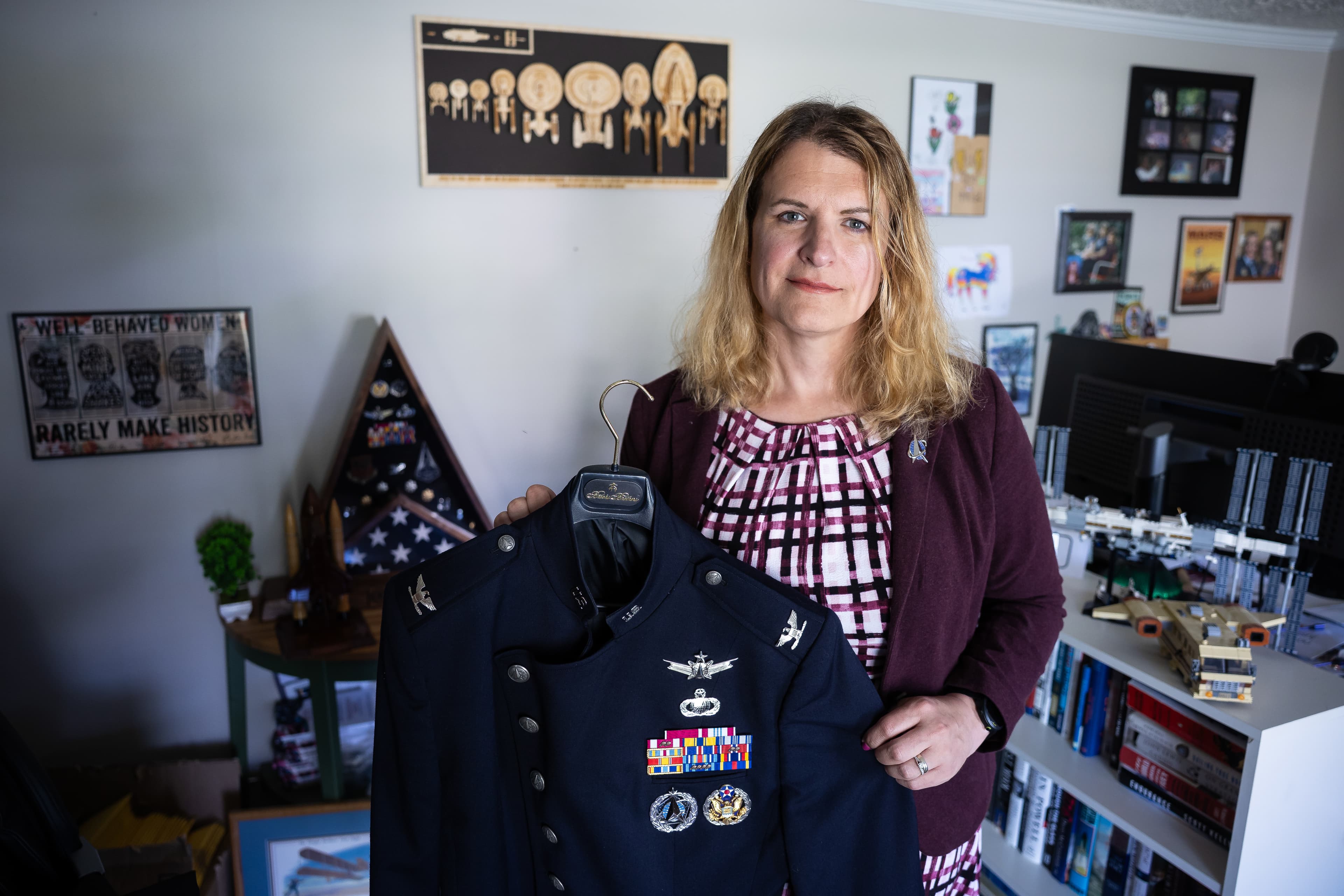
In Virginia, a redistricting battle could jeopardize Republican incumbents as Democrats aim for 10 out of 11 districts. Veteran Bree Fram, a former military leader forced into retirement, is challenging incumbent Rep. James Walkinshaw in a progressive bid.
Mentioned in this story
The latest battle in the 2026 redistricting wars will be decided Tuesday in Virginia, where a map favoring Democrats in 10 of 11 districts looks narrowly poised to spell doom for Republican incumbents — and tee up Democrats’ next big fight.
Welcome to primaries in the era of redistricting, where a Democrat-on-Democrat clash in a Washington, D.C.-adjacent district is opening a long-shot bid for one progressive candidate with a made-for-resistance background.
Veteran Bree Fram is seizing on the Virginia referendum to mount a race from the left against Rep. James Walkinshaw, a six-month incumbent who slid into the seat held by Rep. Gerry Connolly, his former boss, after Connolly died in May 2025.
Fram’s candidacy highlights an unintended consequence of Democrats’ retaliation against the redistricting wars President Donald Trump declared in an effort to retain the GOP House majority. And win or lose, it will inform the direction of a Democratic Party still seeking an exit from the political wilderness.
Fram, once the highest-ranking transgender person in the military, was forced into retirement last year when Trump declared via executive order that trans people are “not consistent with the humility and selflessness required” of service. Now, Fram and her campaign manager Sabrina Bruce, also a trans woman pushed out of the Space Force, are running their campaign like a military operation. And while they acknowledge the bid is a long shot, they think they have a chance — if Virginia voters approve redistricting in the state.
“Assuming that it does go through, there is a path to victory there, because when it comes to the landscape, when you're looking at this from a strategic sense, you can't go where your [opponent] is strongest. You have to go where they are weakest,” Bruce said.
And if redistricting fails, or the state Supreme Court blocks it? “The circumstances in that path to victory are much more out of our hands,” Bruce admitted.

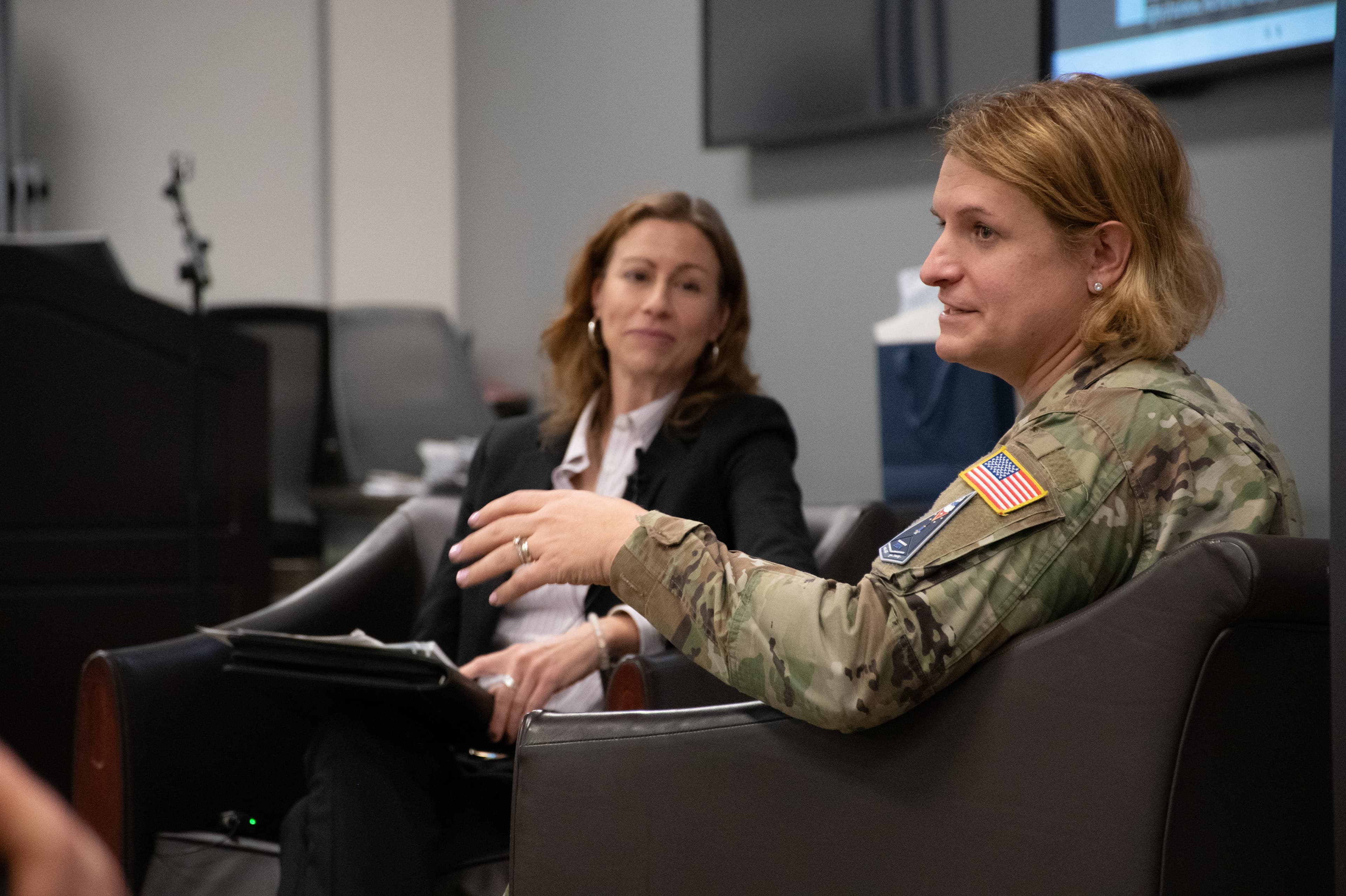
At first glance, Fram has a resume expected of congressional candidates. She’s a 23-year veteran — 18 in the Air Force and five in the Space Force — and is quick to mention the high marks she earned from the military’s best schools. She’s smart — an actual rocket scientist — and has written or edited three books, including one on leadership. She’s married, with two teenage children, and lives in a house in the sprawling Washington suburbs. She talks a lot about democracy, duty and service.
The Virginia redistricting battle could allow Democrats to secure 10 out of 11 districts, significantly impacting Republican incumbents and shaping future elections.
Bree Fram is a veteran and the highest-ranking transgender person in the military, running a progressive campaign against incumbent Rep. James Walkinshaw in Virginia's redistricting context.
Bree Fram was forced into retirement due to Trump's executive order banning transgender individuals from military service, which she cites as a pivotal moment in her political journey.
If Virginia voters approve the redistricting, it could solidify Democratic control in the state and influence the broader direction of the Democratic Party.
Martin Scorsese's AI Endorsement Sparks Industry Backlash

The debate on whether AI drones should have the authority to kill intensifies.

Exploring the rise of kidnappings and police extortion in Mexico.

Trump administration seeks to control science funding through new rules

Ukrainian drones hit St Petersburg as Putin's economic forum begins

Trump claims Iran won't pursue nuclear weapons; Khamenei involved in US talks.
See every story in News — including breaking news and analysis.
But the circumstances surrounding Fram’s underdog bid against Walkinshaw are anything but ordinary — and her candidacy highlights the perfect storm that Trump swept into the American political universe. It’s a path that wanders from the terrorist attacks of Sept. 11, 2001, to the redistricting wars of 2026. And its terminus will be instructive as the country looks toward the future.
Fram has the type of progressive platform that will play well in Washington’s deep-blue suburbs: no money from corporate PACs, universal health care, altering the capital gains tax. She wants to keep data centers — for which the region is the global capital — away from residential areas. She’s a harsh critic of DOGE, whose decimation of the federal workforce was uniquely painful for the bureaucrats who call Northern Virginia home. And she joins a number of Democratic politicians bolstered by their military service credentials, calling Trump’s consistently unpopular war in Iran “a reckless disaster.”
Fram also isn’t afraid to bash her own party. She said she was “disappointed” by some Democrats who sought to distance themselves from trans advocacy in the aftermath of 2024. And she’s called for a constitutional amendment restricting presidential pardon power — including the type of preemptive pardons Biden issued his inner circle before leaving office.
Walkinshaw is running as an establishment Democrat — and an extension of Connolly, who served in Congress for 16 years and is mentioned five times on the webpage laying out Walkinshaw’s policy priorities. He sits on the House Oversight Committee (which Connolly chaired) and Homeland Security Committee — two high-profile panels whose Democratic members have set themselves in opposition to Trump’s handling of the Jeffrey Epstein files and immigration crackdown. He is also co-chair and founder of the Federal Workforce Caucus, which advocates for federal workers.

Bruce and Fram knew it would be an uphill battle to defeat Walkinshaw, who ended 2025 with more than $340,000 cash on hand. Then, days before Fram announced her campaign on Jan. 20, the Virginia state Senate and House of Delegates passed the constitutional amendment setting the stage for the redistricting referendum.
Weeks later, Democratic Virginia Gov. Abigail Spanberger signed legislation drawing a new congressional map that would take effect if voters approve the measure. Fram’s home district in that map — the “new 11th” — includes a majority of voters from surrounding districts currently represented by Reps. Suhas Subramanyam (D), Don Beyer (D) and Ben Cline (R). Walkinshaw and every other Democrat in the Virginia delegation have endorsed the map.
“We were aware that the terrain and the battlefield had shifted slightly in our favor with redistricting,” Bruce said. “That chaos is a ladder, and when you have an opportunity to exploit that, to take advantage of it, it's clear that you can use that to win.”
The campaign is operating under the assumption that the referendum, which is polling very narrowly in Democrats’ favor, will pass. So far, that’s involved a “listening tour” of the new 11th — inspired by a commander’s first order of business when they take over a new base or squadron: Speaking to all the people who work for them to understand their needs.
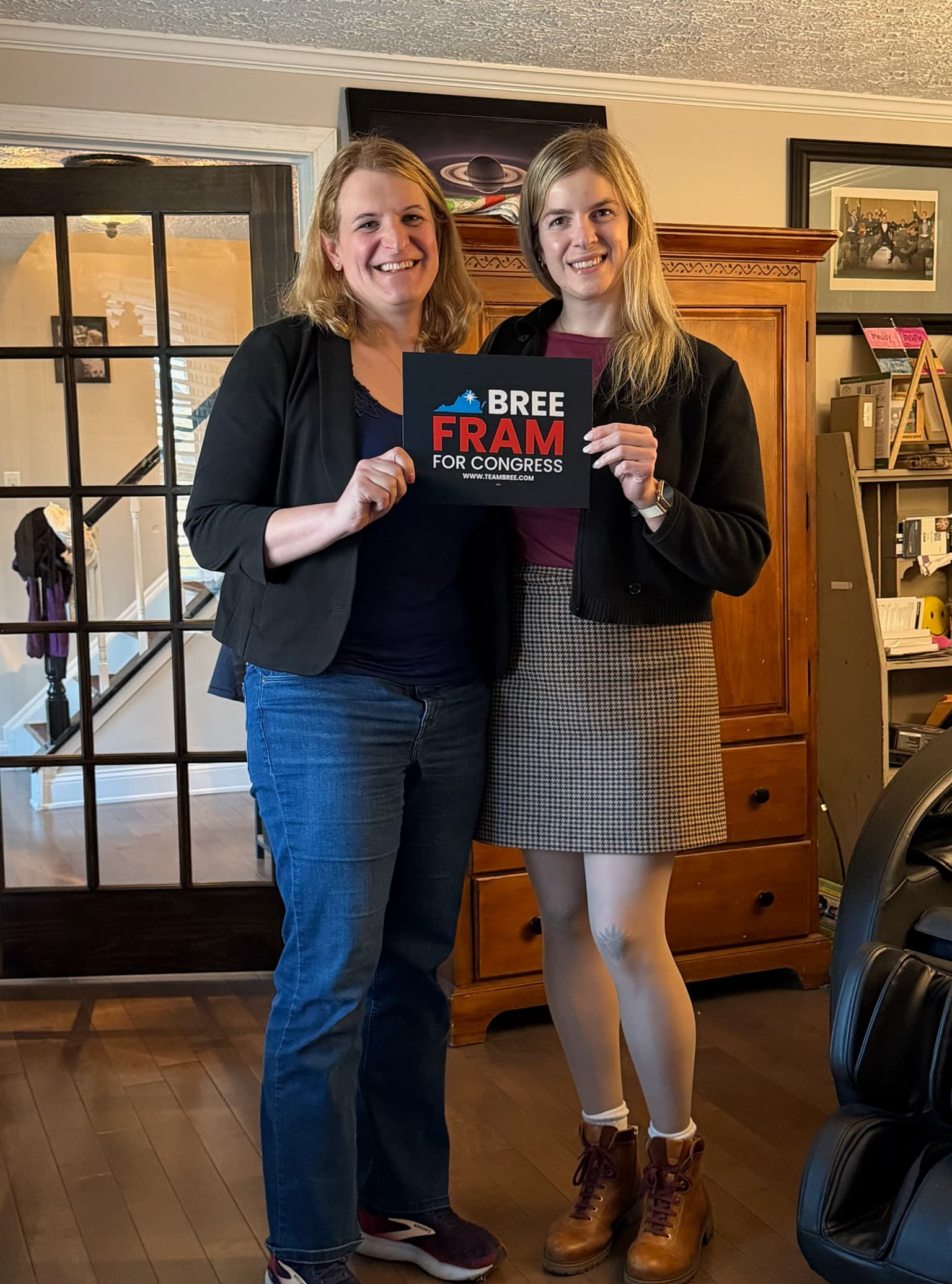
But Fram is still the underdog.
An internal poll commissioned by Fram’s campaign and shared with POLITICO shows Walkinshaw with a major lead. In a head-to-head contest between the two, 43 percent of Democratic primary voters in Virginia’s new 11th district said they would support Walkinshaw, and only 9 percent said they would vote for Fram — while 48 percent said they weren’t sure. In the same poll, after being presented with information about both candidates, Fram cuts into the gap, if only slightly: Walkinshaw carries 42 percent, and Fram garners 21 percent.
Then there’s the money.
Fram’s campaign raised just over $250,000 in the first quarter of 2026 and had about $135,000 cash on hand at the end of March, according to FEC filings. Her campaign has received donations from every state and D.C., and every county in the new 11th district. None of it came from PACs.
Walkinshaw raised more than $630,000 over the same period, nearly $210,000 of which came from PACs. His campaign reported nearly $800,000 cash on hand as of March 31. Donald Brownlee, Walkinshaw’s campaign manager, said in a statement that over the past year, they received more than 6,000 individual donations, averaging $25 each.
“The grassroots energy we saw in our special election last year remains strong and [Walkinshaw] is focused on helping deliver a win for the Yes campaign in next week’s redistricting referendum,” Brownlee said.
Despite their differences, Fram is focused on running a campaign that steers clear of trench warfare. Fram and Walkinshaw are on the same team, the campaign says.
“I think that there is a line between winning, and being happy with the way that you won,” Bruce said. “And for a campaign that is centered on hope, centered on building something that is better than what we have, I don't think we can stray too far from that and start attacking fellow Democrats. How are we going to get away from this malaise that Trump has put us in if we don't try to be better ourselves?”
To understand Fram’s motivation for running, her background is important. The fact that she is trans, Fram says, is “the 17th most interesting thing about” her. When she was promoted to Space Force colonel in 2024, Fram became the highest-ranked openly trans person in the entire military. But then came the Supreme Court’s emergency stay on Trump’s executive order ousting Fram and thousands of other trans service members.
“That was devastating, because that was the day I knew the Supreme Court had just fired me,” Fram said.
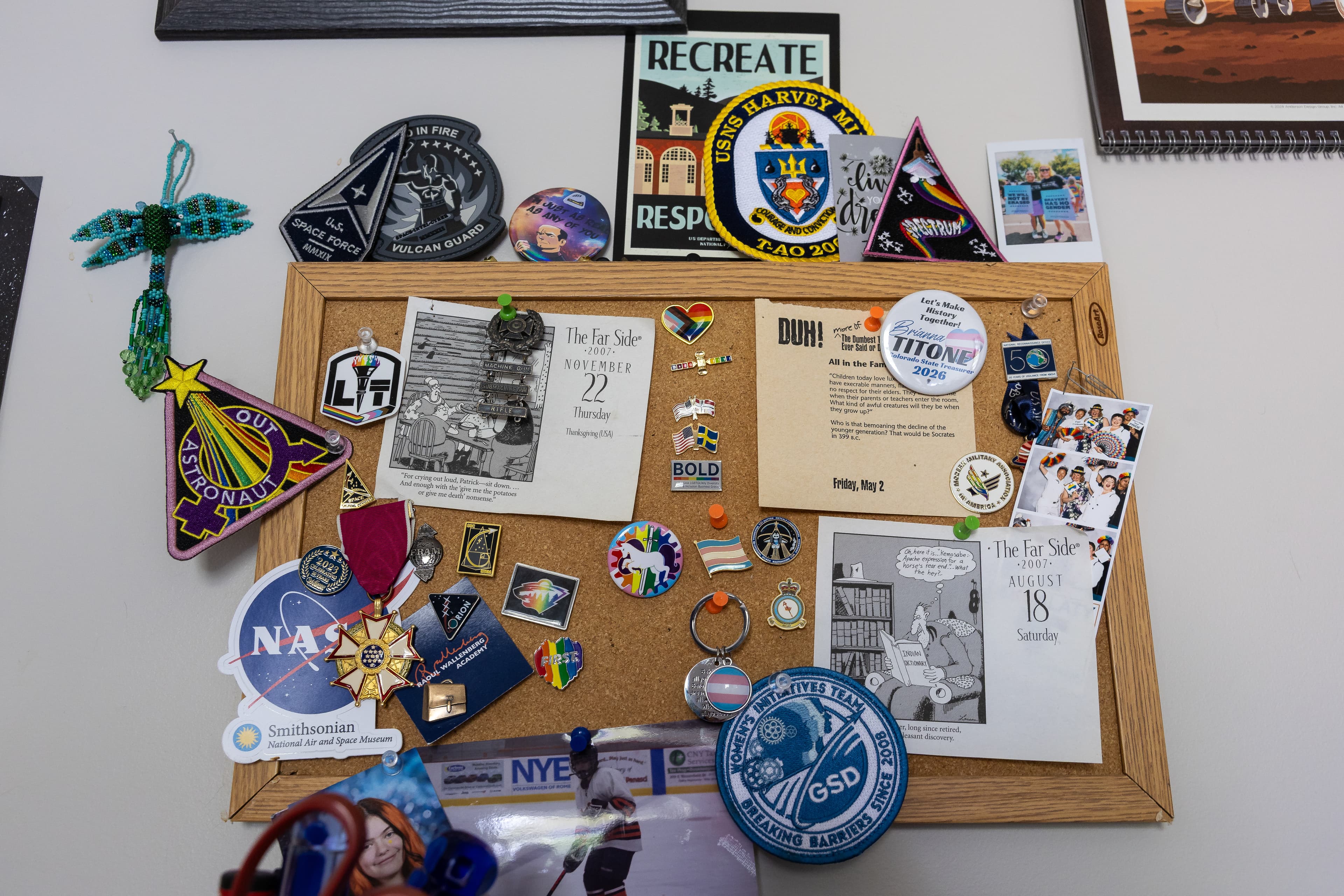
Fram’s journey to the military began decades earlier with an episode of “Star Trek: Next Generation.” A young Fram was drawn to the character Geordi La Forge, helmsman of the show’s Enterprise-D starship. “I saw Geordi and I’m like, ‘That's my job. I want to make the warp engines go. I want to help humanity expand into the stars,’” she said. Fram graduated from the University of Minnesota in 2001 with a degree in aerospace engineering and began looking for jobs at places like NASA and Boeing.
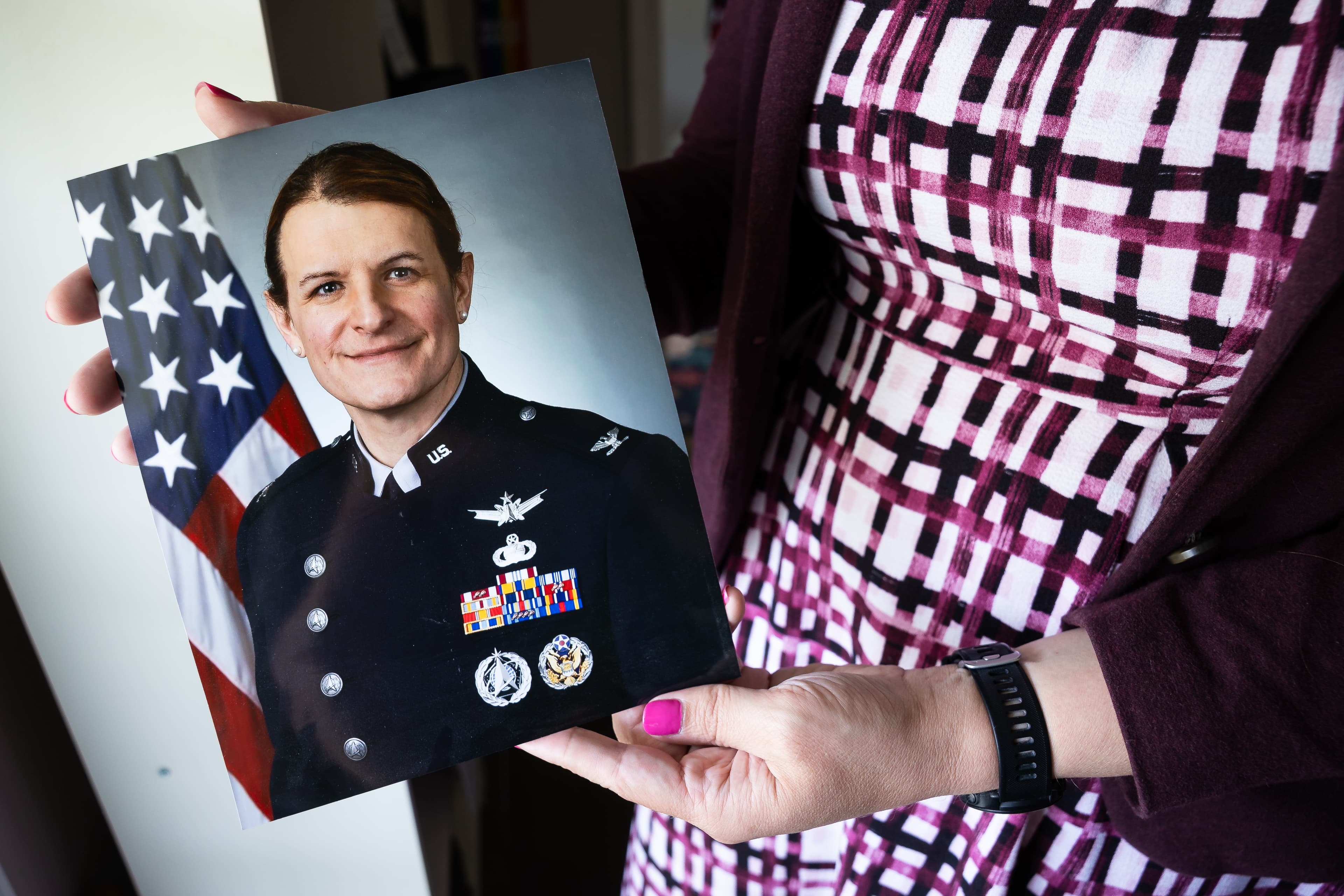
But the Sept. 11 attacks changed Fram’s trajectory. In the days after, Fram was driving from Minneapolis to Duluth to visit her girlfriend — now wife — when she saw an American flag draped from an overpass. She started to cry. “I walked into her apartment and said, ‘I'm going to join the Air Force,’” Fram recalled. By January 2003, Fram reported to officer training school, just as former President George W. Bush was beginning his second term and plotting the invasion of Iraq.
During her first 13 years in the Air Force, Fram told only two people in the military she was trans. In one close call around 2014, Fram recalled, she reported to work on a Saturday and accidentally brought a personal phone — which contained female-presenting photos of herself — into a classified zone. After quickly realizing and turning over the device to the security office, Fram waited in terror. “My wife thought that black helicopters were going to appear over our house,” she said. But five days later, security officers pulled Fram aside and asked if she could be blackmailed over the pictures. She said no, and they told her to pick up her phone on the way out.
On June 30, 2016, the Obama administration declared that “effective immediately, transgender Americans may serve openly, and they can no longer be discharged or otherwise separated from the military just for being transgender.” Fram was ready: She had drafted an email coming out to her colleagues and a Facebook post to come out to the world. She took a couple breaths. And then she hit send.
Fram scurried to the Pentagon gym, where she got on the elliptical and “went nowhere faster than I'd ever gone anywhere in my life,” she said. When she returned to her desk, her colleagues walked up to her one by one to shake her hand and say it was an honor to serve alongside her.
Four months later, Trump won his first presidential election.
On the 2016 campaign trail, Trump’s comments about trans people were fairly moderate. In April of that year, he said they should “use the bathroom they feel is appropriate.” Mostly, he avoided the topic altogether.
But in July 2017, the president said in a post on Twitter that, “After consultation with my Generals and military experts … the United States Government will not accept or allow … Transgender individuals to serve in any capacity in the U.S. military.” Fram wasn’t sure what to make of the missive — was a tweet an official order? — but she knew something had shifted.
That trans ban by tweet faced swift legal challenges, and in March 2018, the administration issued a revised policy that barred trans people from enlisting but allowed those already serving to remain if they received a diagnosis of “gender dysphoria” from a military doctor.
“It felt like being an endangered species at that point,” Fram said, “where the policies were just going to be so onerous and unpleasant that they thought we were just going to walk away, and eventually all of us would be gone.” She decided to stay and became one of the founding members of Trump’s Space Force.
When former President Joe Biden took office, he reversed the trans ban on Day One. Fram ascended the military’s ladder, climbing to the rank of colonel by the end of his term.
At the same time, Trump was stepping out of exile and back into the national political spotlight. His comeback campaign centered on anti-trans rhetoric, railing against “transgender for everybody” — a phrase he ambiguously attributed to Democrats. The GOP platform pledged to “End Left-wing Gender Insanity.” One of the Trump reelect’s most successful ads bashed Kamala Harris over the issue: “Kamala is for they/them, President Trump is for you,” the narrator of the ad said.
“The 2017 tweet was a lightning bolt out of a clear blue sky that no one saw coming,” Fram said. “But approaching 2024, we had $200 million spent in the last two months of the campaign demonizing trans people. This was like a hurricane you saw forming far away. You know it's coming toward you, and the question is just how bad is it going to be when it hits shore.”
As the prospect of Trump’s return to office became more of a reality, Fram was sitting on a beach in Maine when her mother asked her a jarring question: “What’s your plan to flee?”
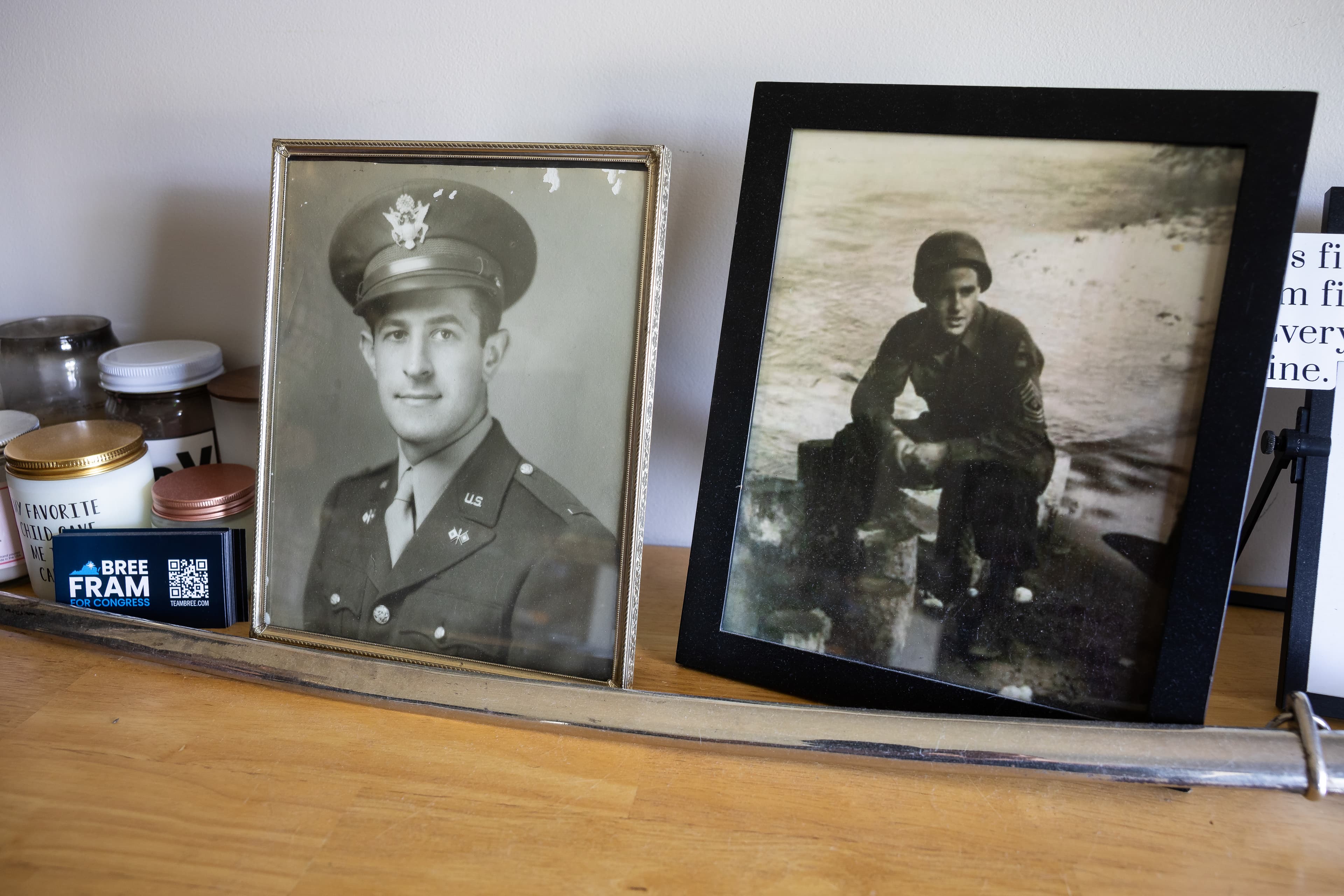
It hit home for Fram, whose grandfather and great grandfather according to family lore left Germany at the onset of the Holocaust on a midnight train to Paris.
“I plan to stay and fight,” Fram said she told her mother. “If the uniform gave me anything, it's the courage to stand up when it's appropriate to do so.”
When the Supreme Court issued the decision that precipitated her ouster, Fram had one final meeting with the joint staff, which she attended as a colonel due to the Space Force’s small size. After delivering an update on her work, Fram informed the admirals and generals of her “unexpected departure.”
“The person sitting next to me looked over and said, ‘Oh, why? What new assignment did you get? Where are you going?’” Fram said. “And I'm like, ‘Well, I don't meet this administration's standard for military excellence and readiness, so I'm going to be placed on administrative leave in two days.’ And it took a moment for what that meant to descend upon the people in the room.”
Just like the day she came out nearly a decade earlier, Fram said each person at the meeting shook her hand and told her “it’s an honor to have served with you.”
Fram was placed on administrative leave in early June 2025. A week before her retirement — authorized for Jan. 1, 2026, after a bureaucratic delay for approval — a three-star general summoned Fram to the Pentagon to deliver a message: the normal retirement celebrations would not be available. There would be no honor guard and no band. Others from her unit would not be allowed to attend. And she wouldn’t be able to wear her own uniform.
“Every pettiness, every cruelty as part of this process was inflicted on us,” Fram said.
Neither the Pentagon nor the White House responded to requests for comment by the time of publication.
Later that month, the Human Rights Campaign Foundation hosted a ceremonial retirement in Washington for five trans service members, including Fram. Their uniforms were displayed on mannequins.
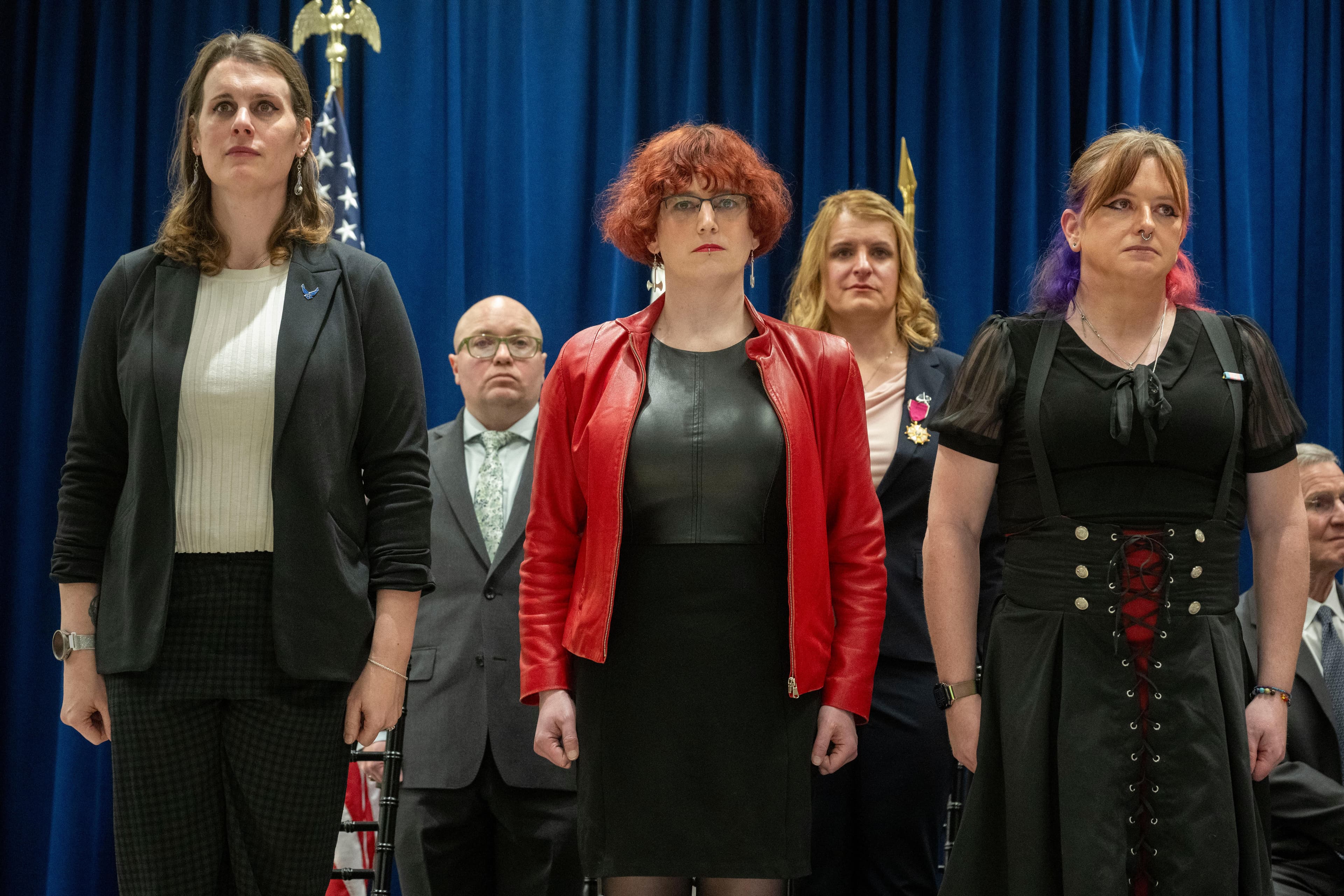
“Our uniforms are not coming off because we failed in our duty, but because we did it so well that what it represented could not be hidden away,” Fram said in that ceremony’s closing remarks. “We may be done with our military service. We are not done serving.”
On April 28, 2025, Connolly released a statement announcing that he would not seek reelection after nine terms in Congress, citing the return of esophageal cancer.
Just over a week later, on May 6 — the same day the Supreme Court ordered its emergency stay — Walkinshaw, who had served as Connolly’s chief of staff for 10 years, filed paperwork seeking the Democratic nomination to replace his former boss. Connolly endorsed him the same day and transferred $1.8 million to a PAC backing Walkinshaw, according to campaign finance records first reported by the Washington Examiner.
Connolly died on May 21, triggering a firehouse Democratic primary to replace him in the deep-blue district on June 28 ahead of a Sept. 9 special election. Even after his death, Connolly’s campaign sent emails to its listserv soliciting donations for Walkinshaw, and his X account told followers to vote early for him, the Examiner reported. Walkinshaw cruised to victory in the primary, notching nearly 60 percent of the vote.
In the background, Fram and Bruce — who had known each other since 2018 — were set on a collision course with Walkinshaw. As Walkinshaw was announcing his campaign, Bruce was driving to her Space Force reenlistment ceremony when the high court released the decision that would force her out of the service. She went on administrative leave the next week. Fram had already been eyeing a run for Virginia’s 11th District, but couldn’t retire quickly enough to jump into the special election.
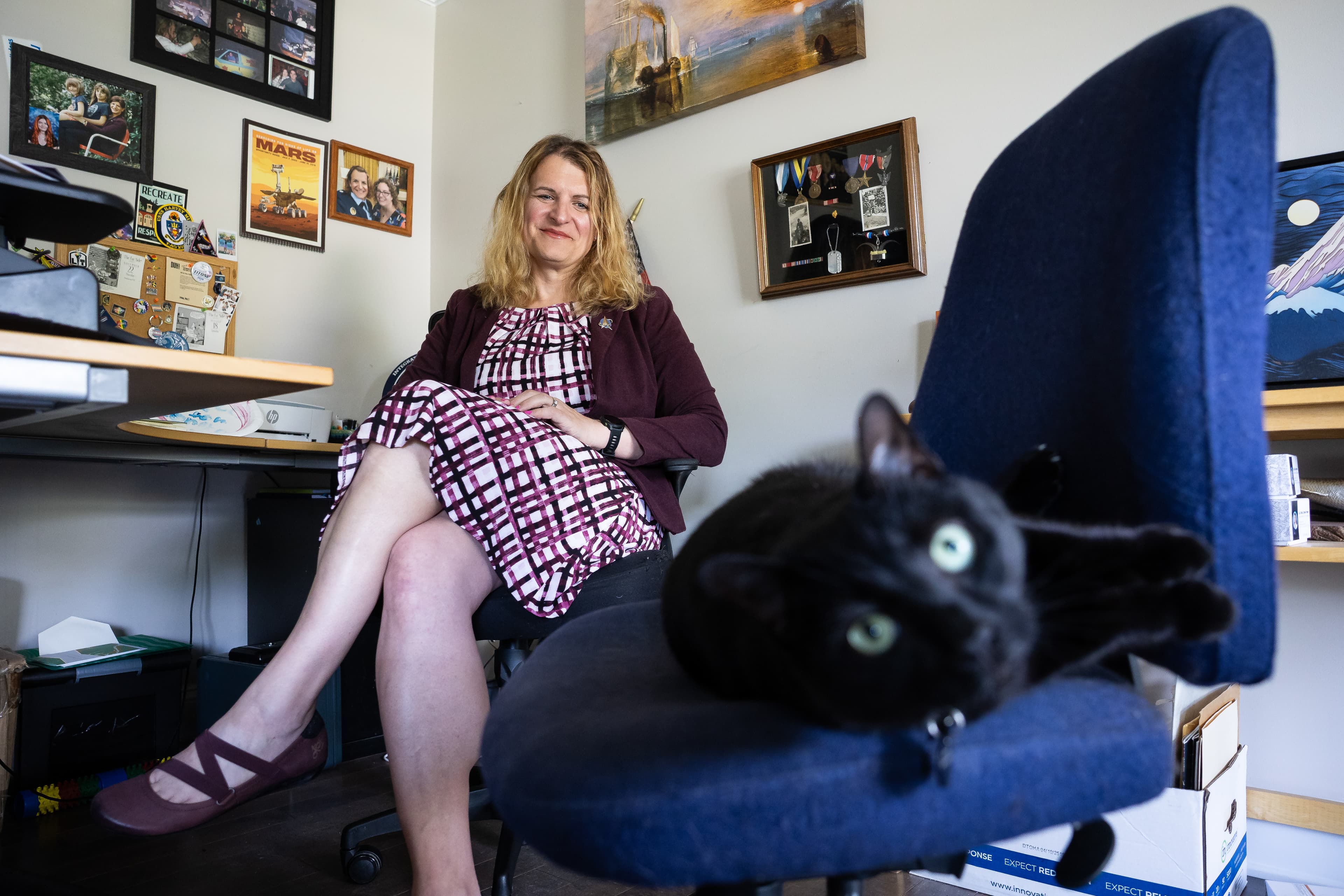
But by September, Fram and Bruce began to seriously discuss their next mission: a 2026 bid.
“If this administration thinks they can kick out a bunch of highly motivated badasses without expecting it to come back and bite them in the butt,” Fram said, “this is a way to show them wrong.”