
Los Angeles declares state of emergency as firefighters battle warehouse blaze
The Guardian World

A group of 11 women and children linked to IS have arrived in Melbourne after over seven years in Syrian camps. Australian federal police are expected to make arrests related to terrorism and slavery charges.
Mentioned in this story
A group of 11 women and children have landed in Melbourne after being detained for more than seven years in Syrian detention camps since the fall of Islamic State.
Some the women face possible criminal charges – including terrorism and slavery related offences – with the Australian federal police (AFP) expected to provide an update later on Thursday.
The plane believed to be carrying Kawsar Abbas, her eldest daughters Zahra and Zeinab, and eight children and grandchildren, landed in Melbourne at about 5.30pm Thursday, following a journey that began in Damascus on Wednesday.
Janai Safar and her child are also expected to land in Sydney on Thursday.
Guardian Australia has attempted to contact family members and legal representatives for all four women.
The return to Australia caps a remarkable saga for the women, all of whom spent more than a decade in the Middle East, firstly under Islamic State rule, and then in squalid detention camps after escaping the violent end of the so-called caliphate.
But the possibility of criminal charges, and an increasingly fraught political debate about whether they pose a threat, means their resettlement will not be straightforward.
For their children, some of whom were born in detention camps, the immediate future is expected to involve a range of supports, many of them coordinated by state governments, including medical, educational, psychological, and de-radicalisation programs.
On Wednesday morning, the government was alerted to the planned departure of the group, who left al-Roj and travelled to Damascus last month. They all hold Australian passports.
“As we have said many times – any members of this cohort who have committed crimes can expect to face the full force of the law,” the home affairs minister, Tony Burke, said later that day.
The AFP commissioner, Krissy Barrett, said adults in the group faced arrest and possible charges when they arrived in Australia.
She said that AFP officers had been investigating the women since 2015, and had also collected evidence from Syria as part of their operation.
The charges could include terrorism offences such as entering or remaining in declared areas, and “crimes against humanity” offences such as engaging in slave trading.
Abbas’ husband, Mohammad Ahmad, travelled to Syria in 2012, where he performed aid work with a registered charity, Global Humanitarian Aid Australia. He flitted between Turkey and Syria during this time.
The women may face criminal charges including terrorism and slavery-related offenses.
The group includes Kawsar Abbas, her daughters Zahra and Zeinab, and eight children and grandchildren.
The plane landed in Melbourne at approximately 5:30 PM on Thursday.
Janai Safar and her child are expected to land in Sydney on the same day.


Florida's governor Ron DeSantis is expanding New College of Florida by acquiring the Sarasota-Manatee campus of USF, tripling its size. The move has faced significant opposition from USF students, faculty, and local business leaders.

David Hockney's funeral was a private affair with just two attendees, fulfilling his wishes.
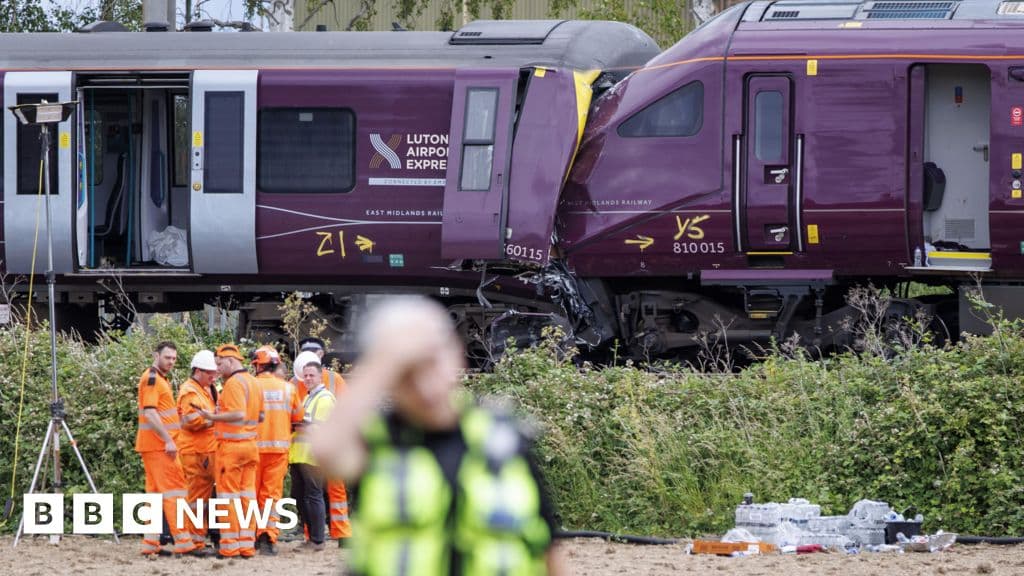
Disruption on London to Bedford train line to last until Thursday after fatal crash.

Four months after the Iran school bombing, the Pentagon remains silent on the investigation's findings.
See every story in News — including breaking news and analysis.
But he is suspected by the AFP of using the charity to support Islamic State. He denied supporting the terror group in a 2019 interview with the ABC from a prison in Syria.
In another interview with the ABC in 2023, he also denied allegations made by Yazidi women that he abused them when they were kept as slaves in his family home in Syria.
Abbas travelled to Turkey with her extended family in 2014, but Ahmad claimed the family was trapped in Syria later that year after heading to the country to attend a wedding.
The return of the cohort means there are now about 21 Australians in the detention camps, which local media report are being gradually evacuated and are set to close.
Mat Tinkler, the CEO of Save the Children Australia, said the fact that other women and children had returned, and that other western nations had also successfully reintegrated their citizens, meant the “temperature should be dialled right down” in relation to the cohort.
“We need to focus on what is going to happen to these women when they arrive, and we’ve heard from the AFP commissioner today about that, and we also need to focus on giving these children the space to recover, to survive, to thrive,” Tinkler told the ABC on Wednesday.
“Two-thirds of this cohort that we’re talking about in Syria are children.
“There’s been a lot of focus on the women and the choices they may have made but we need to focus on these children and give them a chance of resuming a normal life in Australia.”
The group began their second attempt to travel home to Australia last month after a much larger cohort was turned back by Syrian authorities in February.
The US has pushed countries – including Australia – to repatriate citizens who had travelled to the Middle East to join the IS caliphate, but the issue has dogged successive governments.
Under Albanese, Labor had supported bringing the families home as recently as 2022 but the politics surrounding the return of the group has dramatically shifted since the December shootings at Bondi beach.
Albanese has refused to help in any way, saying the adults had “made their bed” and should suffer the consequences of their actions.