
‘Right to protest genocide’ denied: Scotland’s Palestine Action supporters
Cathy Allen challenges her arrest for protesting Palestine Action in Scotland's High Court.
Al Jazeera English1 min read

The EU's highest court ruled Hungary's anti-LGBTQ+ law discriminatory and against democratic values. This decision poses a challenge for incoming Prime Minister Péter Magyar's government as it prepares to take office next month.
Mentioned in this story
The EU’s highest court has found Hungary’s anti-LGBTQ+ law to be discriminatory, stigmatising and in breach of basic democratic values, setting up an early test for the incoming prime minister Péter Magyar’s government when it takes power next month.
In a wide-ranging judgment, the European court of justice said the 2021 law that bans content about LGBTQ+ people from schools and primetime TV was at odds with a society based on pluralism and fundamental rights such as prohibition of discrimination and freedom of expression.
Magyar won a landslide election victory last week after promising to root out corruption and improve living standards, but he has so far been muted on whether he will roll back the anti-LGBTQ+ policies introduced by Viktor Orbán, who was defeated after 16 years in power.
He has vowed to “bring home” EU funds intended to help Hungary develop its economy, some of which were frozen over the anti-LGBTQ+ law. A larger part was suspended over risks to academic freedom, breaches of the right to asylum and concerns about corruption and lack of judicial independence.
The ruling marks the first time the ECJ has found a member state guilty of breaking EU law based exclusively on breaching the bloc’s fundamental values described in article 2 of its treaty. These include respect for human dignity, democracy, equality, the rule of law and respect for fundamental rights, including those of minorities.
As a result, the judgment paves the way for future cases against EU member states that systematically flout basic values on democracy and the rule of law.
Hungary passed the so-called child protection law in 2021, imposing restrictions on schools and media companies in depicting LGBTQ+ people. Previously likened to Russia’s notorious “gay propaganda” law, the Hungarian legislation means gay and transgender people or themes cannot feature in school educational material or in any TV show, film or advert shown before 10pm.
The court said in a statement that the Hungarian law was “contrary to the very identity of the union as a common legal order in a society in which pluralism prevails”, and that Hungary could not “validly rely on its national identity” as justification for a law that breached fundamental values.
The EU court found Hungary's anti-LGBTQ+ law discriminatory and in breach of fundamental democratic values.
The ruling presents an early challenge for Péter Magyar's government, which will need to address the anti-LGBTQ+ policies inherited from Viktor Orbán.
EU funds intended for Hungary's economic development were frozen due to the anti-LGBTQ+ law and other governance issues.
Yes, this ruling marks the first instance where the EU court found a member state guilty of violating EU law based solely on breaches of fundamental values.
Cathy Allen challenges her arrest for protesting Palestine Action in Scotland's High Court.

US and Iran signal a potential peace deal as fighting in Lebanon continues.

Doctors Without Borders reveals staff exploitation of refugees in Chad

Linkin Park to Headline Download Festival as First Female-Fronted Band
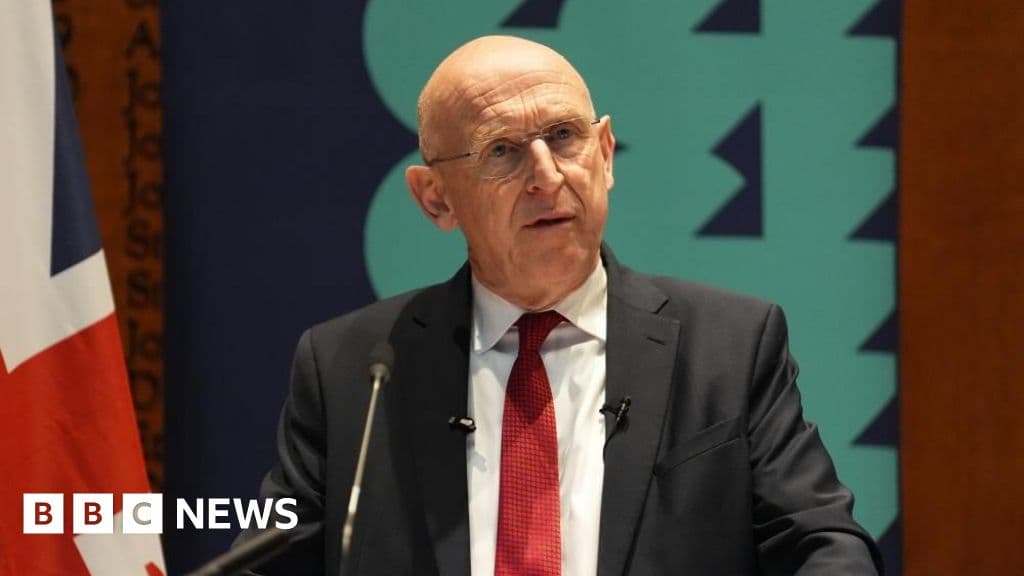
John Healey advocated for UK membership in a global defence bank to enhance funding.

An online safety charity warns that a social media ban for under-16s is unenforceable. Instead, the focus should be on restricting addictive features of social media platforms.
See every story in News — including breaking news and analysis.
It said it expected Hungary to comply without delay and it ordered Budapest to pay its costs and those incurred by the European Commission, which brought the case. The Hungarian government has been contacted for comment.
Tineke Strik, a Dutch Green MEP who oversees the European parliament’s work on the rule of law in Hungary, said it was now up to the incoming Hungarian government to ensure “the full restoration of the rights of this community is front and centre in its plans to reinstate the rule of law. Anything less than that would render those reforms non-credible.”
Eszter Polgári, of the Háttér Society in Hungary, described the judgment as “a milestone for protecting human rights in the European Union” and “a historic victory for LGBTQI people in Hungary”.
She said: “The [court] was firm: no state can outcast LGBTI people through stigmatising, and if needed, the [ECJ] steps up to protect these values.”
Katrin Hugendubel, the deputy director of ILGA Europe, an umbrella organisation of LGBTI rights groups, said: “Hungary cannot enter a post-Orbán era without repealing this legislation, including the Pride ban. If Péter Magyar truly aims to be pro-EU, he must place this at the top of his agenda for his first 100 days in office, as an essential part of his EU-facing reforms.”
An unusually large number of 16 EU member states including Austria, France, Germany and Spain, as well as the European parliament, joined the commission’s case against Hungary. These member states, mostly western and northern European states, had previously raised concerns about the anti LGBTQ+ legislation, sometimes in heated debates with Orbán.
Rejecting Hungary’s child protection argument, the court said the law “stigmatises and marginalises non-cisgender persons” by associating them with people convicted of paedophilia, an association “to encourage hateful conduct towards them”.
It found Hungary in breach of the right to human dignity by treating LGBTQ+ people as a threat to society and enacting discriminatory measures that were “manifest and particularly serious”, and it said the law violated freedom of expression of children and also the general public and service providers wishing to publish adverts or run awareness-raising campaigns.
It also found Hungary to have breached EU data protection laws by widening access to criminal records of people deemed to have committed offences against the sexual morality of children.