
Lasers in the sky: hi-tech missions track record snowpack loss in US west
High-tech Lidar missions reveal alarming snowpack loss in the Sierra Nevada.
The Guardian World1 min read

The EU has rejected Vladimir Putin's proposal to appoint former German chancellor Gerhard Schröder as a mediator in Ukraine peace talks. EU officials cited Schröder's ties to Russian energy projects and his lack of impartiality as reasons for the dismissal.
Mentioned in this story
The EU on Monday dismissed Vladimir Putin’s suggestion that the Kremlin-friendly former German chancellor Gerhard Schröder could serve as a European mediator in peace talks aimed at ending the war in Ukraine.
Over the weekend, the Russian leader put forward Schröder – a longtime ally – as a possible figure to help restart talks with Europe, saying he would “personally” favour the former German leader for the role.
Schröder, 82, previously held senior positions in Russian energy projects, including work on the Nord Stream gas pipelines and a seat on the board of Russian oil company Rosneft. He stepped down from the role several months after Moscow’s full-scale invasion of Ukraine under mounting pressure, but has never explicitly condemned Putin over the invasion.
Responding to the proposal, Kaja Kallas, the EU’s top diplomat, told journalists in Brussels before a meeting of foreign ministers: “First, if we give Russia the right to appoint a negotiator on our behalf, that would not be very wise.”
Kallas added that Schröder could not be considered an impartial mediator given his past work as a “high-level lobbyist for Russian state-owned companies”.
“It is clear why Putin wants him to be the person, so that actually he would be sitting on both sides of the table,” she said.
Putin’s surprise pitch comes as the Russian president suggested the conflict in Ukraine could be drawing to a close – a rare instance in which Putin appeared to hint at a possible timeline for ending the invasion.
But Putin’s top advisers have stressed that the Kremlin continues to demand that Ukraine withdraw its troops from the eastern Donbas region as a precondition for future negotiations.
The Russian president remains determined to seize the remaining parts of the region by force this year before any serious talks begin, people familiar with his thinking told the Guardian.
Ukraine has flatly rejected any suggestion it would unilaterally withdraw from its own territory, a position bolstered by recent battlefield dynamics in which Russian advances have largely ground to a halt.
The two armies are showing mounting signs of exhaustion and continuing to sustain heavy casualties, while trading strikes on each other’s energy infrastructure.
Against that backdrop, analysts say a diplomatic breakthrough is unlikely.
A US-brokered ceasefire is due to expire on Tuesday and Moscow has rejected prolonging the truce.
But EU leaders have in recent months stepped up efforts to secure the bloc a seat at the table in any future substantive peace negotiations.
The EU rejected the proposal due to Schröder's past connections with Russian energy companies and his perceived lack of impartiality.
Gerhard Schröder held senior positions in Russian energy projects, including work on the Nord Stream gas pipelines and a board seat at Rosneft.
Kaja Kallas stated that allowing Russia to appoint a negotiator for the EU would not be wise and emphasized the need for impartiality in mediation.
Gerhard Schröder has not explicitly condemned Putin's invasion of Ukraine, despite stepping down from his role in Russian energy projects under pressure.
High-tech Lidar missions reveal alarming snowpack loss in the Sierra Nevada.

Arsenal legend Beth Mead announces departure at season's end

AI brings Molière back to life with a new play at Versailles

Philippine Vice-President Sara Duterte has been impeached for misusing public funds and threatening President Ferdinand Marcos Jr. This impeachment could jeopardize her 2028 presidential ambitions as she faces a Senate trial.
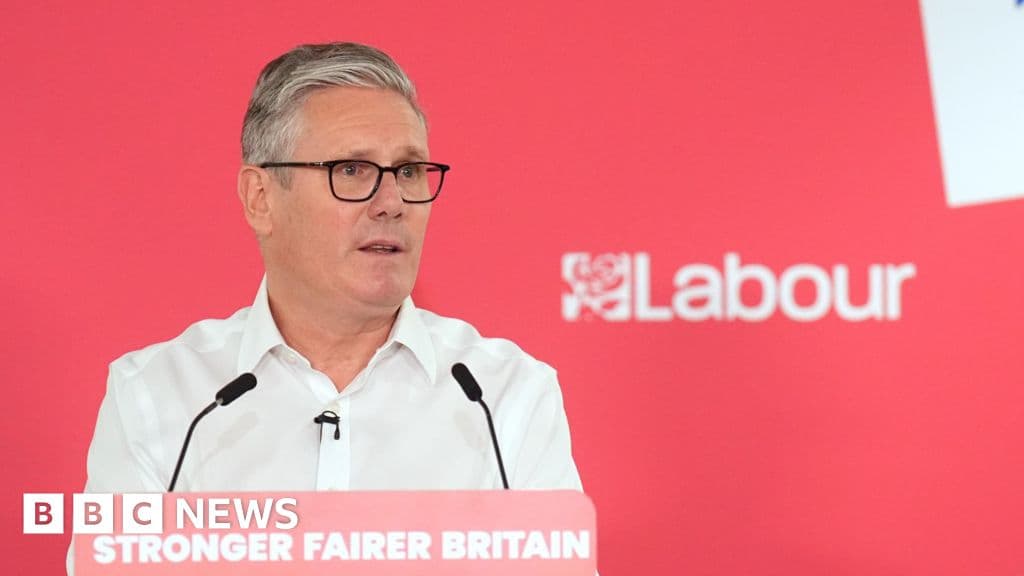
Is Starmer's Leadership Safe? Catherine West May Challenge.

MPs criticize NHS for allowing Palantir access to patient data, calling it dangerous.
See every story in News — including breaking news and analysis.
European capitals have long insisted that no discussions or decisions about Ukraine should take place without Kyiv’s involvement.
Many across the continent now fear that talks between the US, Russia and Ukraine aimed at ending the more than four-year-long war have made little progress, while leaving the EU increasingly sidelined and vulnerable to pressure to accept a deal it does not support.
There is little prospect of Schröder emerging as Europe’s representative with the Kremlin.
Schröder’s record of defending Moscow has repeatedly put him at odds with mainstream European opinion. After evidence of mass killings emerged in the Kyiv suburb of Bucha in April 2022, he said he did not believe the massacre had been ordered by the Kremlin.
Germany’s Europe minister, Gunther Krichbaum, said that Schröder “has not necessarily demonstrated in the past that he could act as a neutral mediator, as an honest broker, so to speak,” as he was “heavily influenced” by Putin.
“Close friendships may be legitimate everywhere in the world, but they don’t contribute to being perceived as an honest negotiating partner.”
Margus Tsahkna, Estonia’s foreign minister, said: “Gerhard Schröder is Putin’s idea. I think they are very close. Gerhard Schröder will not be representing Europe.”
Mark Galeotti, an expert on Russian politics, described the suggestion as a “classic Putin idea”.
“He tries to sound reasonable, but frames any potential dialogue in terms most comfortable to him,” Galeotti told Times Radio.
Schröder has not publicly commented on the idea.