
Trump wants to suspend the federal gas tax as prices soar amid war with Iran
Trump wants to suspend the federal gas tax as prices soar due to the Iran war.
NPR Topics: News1 min read

The EU is set to offer the UK a key concession in agricultural deal talks, allowing the UK to maintain its ban on live animal exports. This move is seen as a significant victory for Prime Minister Keir Starmer in his efforts to strengthen ties with the EU.
Mentioned in this story
Brussels is preparing to offer Keir Starmer a key concession in talks over an agricultural deal, giving the beleaguered prime minister an important victory in his efforts to move closer to the EU.
European officials have conceded that the UK can keep its ban on live animal exports as part of any joint deal on food and agricultural products, according to sources on both sides of the talks, even though the EU has not imposed such a ban.
The carve-out will be a significant fillip for Starmer’s efforts to negotiate closer EU ties in a series of areas including emissions trading and youth mobility.
The prime minister listed his prospective EU deal on Monday as one of three examples of his government’s progress, as he fights for his political career in the face of growing calls from his own MPs for him to quit.
One British official said of the agricultural deal: “We’re confident on this and don’t think it’s going to be an issue but of course negotiations are ongoing.”
Neither the Cabinet Office nor the European Commission, which are leading the negotiations, would comment while talks were still ongoing. But one Brussels source pointed out that, according to a framework agreement signed by both parties last May, the UK can be exempted from EU regulations if the UK rules are stricter than the EU’s. European officials say because the ban would only apply to UK farmers, it would not negatively affect farmers in the EU.
Starmer is hoping to sign an agricultural trade deal as one of three key elements of a new EU agreement to be announced at a summit this summer. He pinned significant political hopes on the deal as he tried to persuade Labour MPs to back him after the local elections last week.
During a speech on Monday billed as a “make-or-break” moment in his premiership, Starmer said: “The last government was defined by breaking our relationship with Europe; this Labour government will be defined by rebuilding our relationship with Europe.”
So far, negotiations are mainly being held up by a standoff over whether European students should pay the same university tuition fees as part of a youth mobility scheme.
The EU is allowing the UK to keep its ban on live animal exports as part of the agricultural deal.
The concession is viewed as a crucial victory for Starmer as he seeks to strengthen EU ties amid pressure from his MPs to resign.
Negotiations are ongoing in areas including emissions trading and youth mobility, alongside the agricultural deal.
The ban is significant as it reflects the UK's regulatory stance and is a point of negotiation in establishing closer ties with the EU.
Trump wants to suspend the federal gas tax as prices soar due to the Iran war.

Israeli airstrikes in southern Lebanon kill at least four and injure eight, including medics.

Central and southern England experienced one of the driest Aprils on record, leading to low river levels and drought fears. The UK hydrological survey indicates potential water shortages if dry conditions continue over the summer.
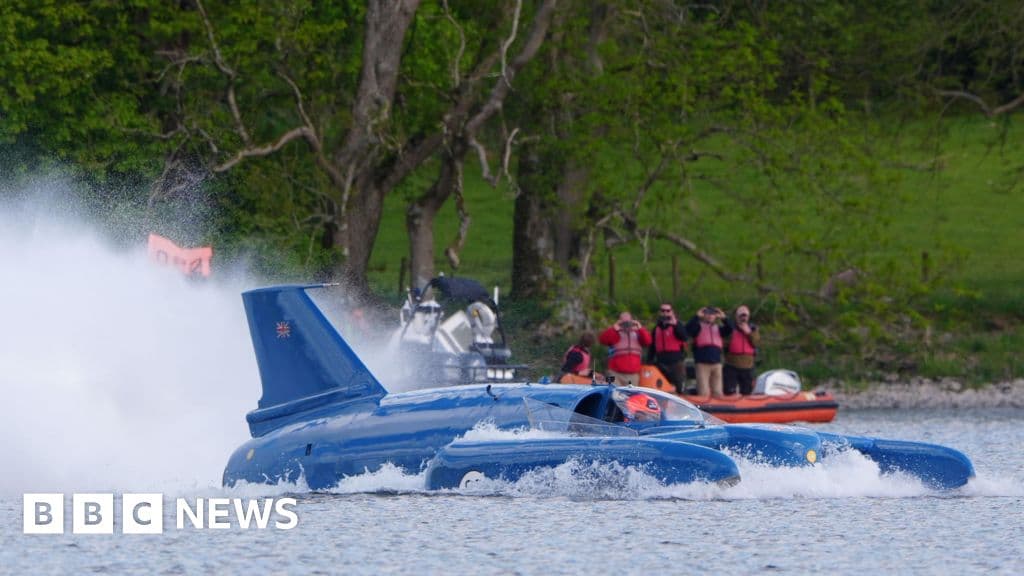
Donald Campbell's Bluebird craft is back on Coniston Water nearly 60 years after his tragic crash.

Two Israeli soldiers face prison for desecrating Virgin Mary statue in Lebanon.
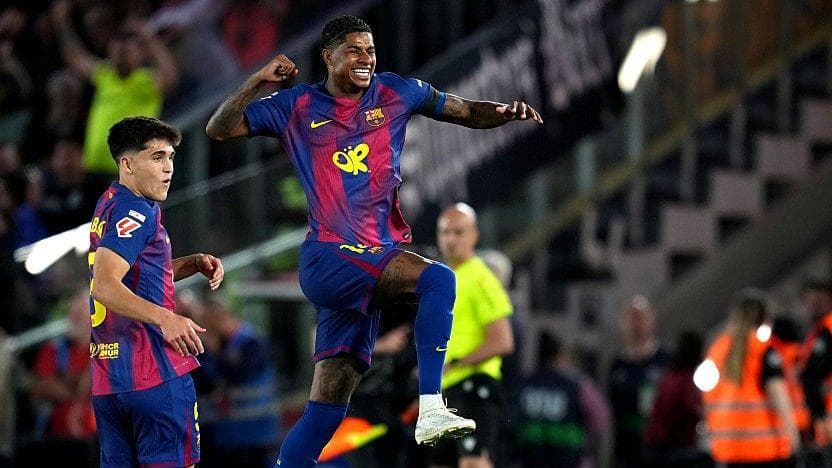
What does the future hold for Marcus Rashford at Barcelona?
See every story in News — including breaking news and analysis.
An agricultural deal is expected to be easier to agree, though negotiators say there are important areas where the UK will want to opt out of EU rules.
One such area is on the export of live animals, including cows, sheep and pigs, for fattening or slaughter. The EU is the world’s largest live farm animal exporter, but animal welfare campaigners say the practice causes overcrowding, exhaustion, dehydration and stress.
Rishi Sunak’s government imposed a ban on such exports in 2024, in a move it said was “capitalising on a post-Brexit freedoms and bolstering the UK’s position as a world leader in animal welfare standards”.
Lawyers and animal welfare experts said that without a specific carve-out, the UK would have to drop the ban altogether.
Catherine Barnard, a professor of European law at the University of Cambridge, said: “There would need to be an express carve-out in the SPS [sanitary and phytosanitary] agreement. People in the UK care very much about this, so while in the EU the UK tried and failed to stop exports in the past.”
David Bowles, the head of public affairs at the RSPCA, said: “It is vital – in the interests of these animals – that this successful ban is protected. An exemption is vital, and will help protect things like the prohibition of live exports, puppy imports, and bans on cages for farmed animals.”
The UK has had to give way on other animal welfare rules during the negotiation process. The Guardian revealed last month the EU was likely to block ministers from enacting their manifesto commitment of banning the import of foie gras, and similarly will not allow the UK to ban fur imports.
In a recent interview with the Guardian, the environment secretary, Emma Reynolds, defended these compromises. “The prize is big,” she said. “We can talk about the detail, but the overall prize here is to bring down the barriers at the border.”