
Western nations warn Israel to end illegal settlement expansion, violence
Nine Western countries call on Israel to stop illegal settlement expansion and violence.
Al Jazeera English1 min read
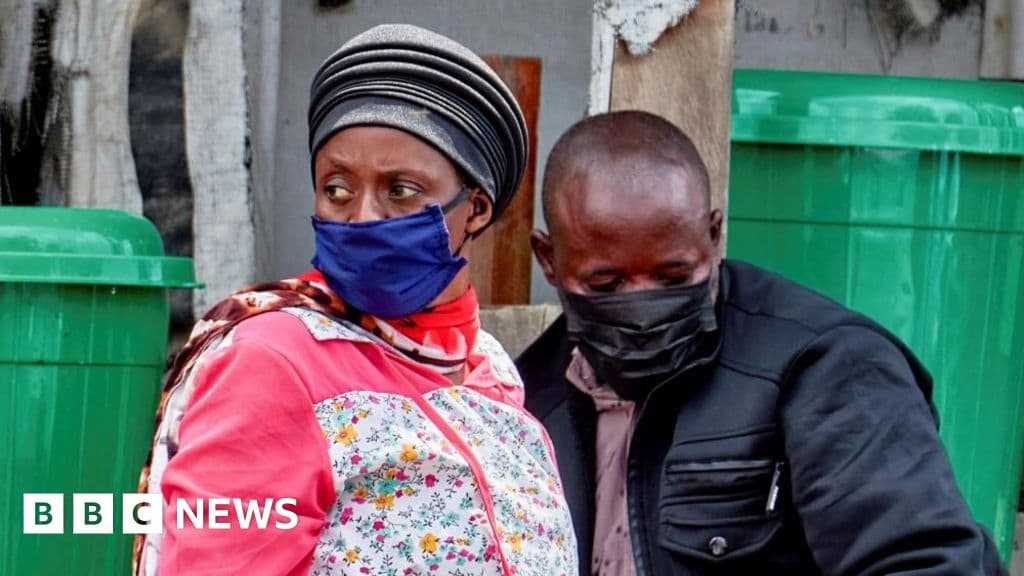
The World Health Organization has raised the Ebola outbreak risk in the Democratic Republic of Congo from 'high' to 'very high'. The outbreak has led to 177 suspected deaths and 750 suspected cases, with no proven vaccine available for the Bundibugyo strain.
The public health risk from the current Ebola outbreak in the Democratic Republic of Congo has been increased from "high" to "very high" by the World Health Organization (WHO).
In an update on Friday, the WHO's head Dr Tedros Adhanom Ghebreyesus also said the risk in the wider region in Africa was "high", but it remained "low" at a global level.
The rare species of Ebola, known as Bundibugyo, has no proven vaccine and kills around a third of those infected. So far, the outbreak centred on DR Congo has resulted in 177 suspected deaths and 750 suspected cases.
It comes as scientists at Oxford University in the UK are developing a new vaccine that could be ready for clinical trials within two to three months.
There are no guarantees the vaccine will prove effective and it will take animal research and trials on people to know if it will be.
Another separate experimental Bundibugyo vaccine is also in development, but it is expected to take six to nine months for any dose of that to be ready for testing.
Speaking at Friday's news briefing in Geneva, Tedros said: "We are now revising our risk assessment to very high at the national level, high at the regional level, and low at the global level."
He said that "so far, 82 cases have been confirmed in DRC, with seven confirmed deaths".
Tedros added the situation in neighbouring Uganda - where they have been two confirmed cases of the Bundibugyo species and one death - was "stable" with both cases from people who travelled from neighbouring DR Congo.
Ebola is a rare but deadly disease caused by a virus. Although less deadly than other Ebola species, the rarity of Bundibugyo means there are fewer tools to stop it.
Ebola viruses normally infect animals, typically fruit bats, but outbreaks among humans can sometimes start when people eat or handle infected animals.
On Sunday, the WHO declared a public health emergency of international concern, but said it was not at pandemic level.
The WHO chief also said on Friday it was crucial to build trust, warning that violence and insecurity in the conflict-ridden region were hampering the response to the Ebola outbreak.
He was speaking after angry relatives set fire to a hospital in the eastern DR Congo after health workers had refused to release the body of a patient, because of the risk of contamination.
The World Health Organization has increased the Ebola outbreak risk level in the Democratic Republic of Congo to 'very high'.
The outbreak in the Democratic Republic of Congo has resulted in 177 suspected deaths and 750 suspected cases.
There is currently no proven vaccine for the Bundibugyo strain of Ebola, although scientists are developing one that may enter clinical trials soon.
Nine Western countries call on Israel to stop illegal settlement expansion and violence.

Pentagon releases second batch of UFO videos, including eyewitness accounts.

Ebola outbreak in DRC sees cases triple in a week, WHO warns of high risk.

Shein is set to acquire Everlane, known for its sustainable fashion practices.

US economic confidence plummets to -45 as inflation rises and Iran war continues.

Tensions between players and Grand Slam tournaments escalated at the French Open, with Novak Djokovic warning of potential fragmentation in the sport. Players are demanding fairer revenue sharing as they limit media appearances to express their grievances.
See every story in News — including breaking news and analysis.