
Iranian group could be labelled national threat under proposed new law
UK legislation could soon label Iran's IRGC a national security threat.
BBC News1 min read

Denmark's Prime Minister Mette Frederiksen has formed a centre-left coalition government after months of negotiations, securing her third consecutive term. This follows a March election that resulted in a loss of majority for her party amid a cost of living crisis.
Mentioned in this story
Denmark’s Social Democratic leader Mette Frederiksen said on Monday she has agreed to form a centre-left coalition government, maintaining her grip on power amid a crisis in ties with Donald Trump over Greenland.
The deal to form a minority cabinet gives Frederiksen a third consecutive term as prime minister, ending months of uncertainty after a March election in which 12 parties won seats in the Danish parliament.
“I have been to see His Majesty the King and announced that a government can be formed after long negotiations,” Frederiksen told reporters.
Her centrist coalition lost its majority in the March 24 vote as Danes revolted over a cost of living crisis, although the Social Democratic party remained the biggest group in parliament with 38 out of 179 seats, down from 50.
After more than two months of haggling, where the Social Democrats and the right-wing Liberals each sought to lead a new government, it was the 48-year-old Frederiksen who secured the necessary backing from parties in parliament.
“It is a government platform for the people who are in Denmark and for the generations to come and also for the animals,” she said.
Animal welfare was one of several major topics debated in the election campaign.
The government’s overall priorities will be presented on Tuesday while ministers will be named on Wednesday, Frederiksen said.
The government’s immediate to-do list includes diplomatic talks over Greenland, which Trump has threatened to annex, and a rapid build-up of Denmark’s military as security in Europe deteriorates amid Russia’s war in Ukraine.
In addition to the Social Democrats, the new government will consist of the Social Liberals, the Green Left and the centrist Moderates, relying primarily on the far-left Red-Green Alliance for a parliamentary majority, though it can also seek backing from other parties on individual votes.
The new government marks a shift to the left for Frederiksen, who in the past four years headed an unusual coalition across the left-right divide with her Social Democrats, the Moderates and the Liberals.
Mette Frederiksen formed a new coalition government after her party lost its majority in the March election, prompting negotiations with other parties to maintain her leadership.
The Social Democrats won 38 out of 179 seats in the Danish parliament, down from 50 seats in the previous election.
The main issue affecting the government formation was a cost of living crisis that led to public dissatisfaction and a revolt against the ruling coalition.
UK legislation could soon label Iran's IRGC a national security threat.

Israeli air strikes hit Tyre, Lebanon, killing eight, despite Iran's warning to stop.

Palantir is suing London Mayor Sadiq Khan after he blocked a £50m police contract.

EU plans to ban Russian soldiers from entering the bloc as part of new sanctions targeting Moscow.

Craig Gordon, the oldest man at the World Cup, faced life-threatening surgery risks but is now preparing in Charlotte.
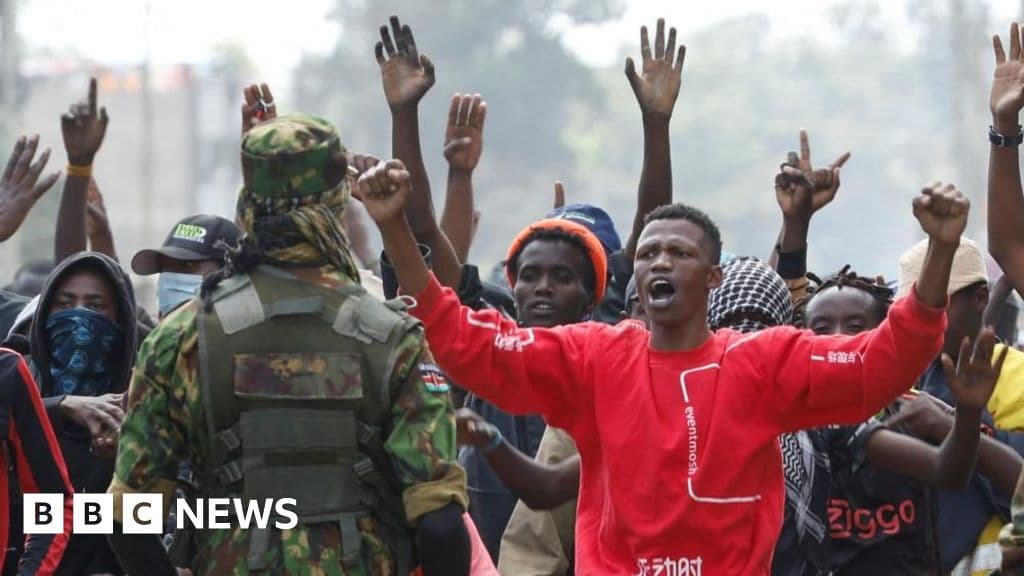
A demonstrator was shot during protests against a US Ebola quarantine centre in Nanyuki, Kenya.
See every story in News — including breaking news and analysis.