
Iran war day 97: Tehran says no progress in talks; Israel attacks Lebanon
Iran's Foreign Minister reports no progress in U.S. talks as tensions escalate; Kuwait suffers casualties from Iranian attacks.
Al Jazeera English1 min read
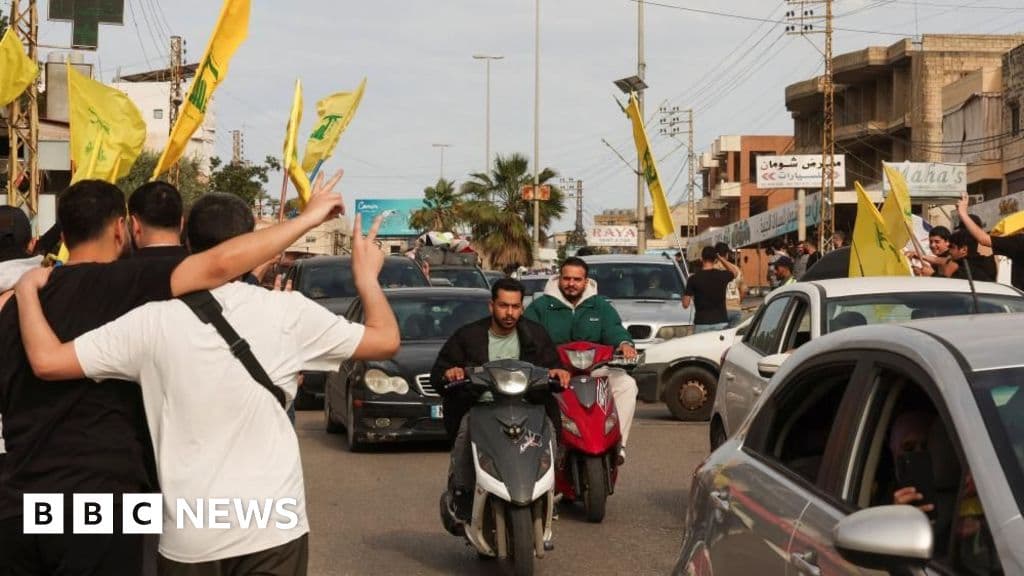
A 10-day ceasefire between Israel and Hezbollah has begun, bringing temporary relief to Lebanon after six weeks of conflict. Over 2,100 people have died, and more than a million have been displaced, highlighting a severe humanitarian crisis.
Mentioned in this story
At the stroke of midnight, gunfire and fireworks celebrated the start of the ceasefire in Beirut.
Throughout the morning, smiling crowds gathered along roads leading to Lebanon's south, the heartland of Hezbollah, playing revolutionary music and waving the group's yellow flag as they started their journey back to where they had been forced from by the war.
This is, initially, a 10-day ceasefire after six weeks of a devastating conflict between Israel and Hezbollah, the Lebanese Shia Muslim militia and political party. But it brings some respite for a country exhausted by the war.
More than 2,100 people have been killed, Lebanese health authorities say, and over a million, or roughly one in five of the population, have been displaced - creating a pressing humanitarian crisis.
Mattresses on top of cars and families on motorbikes indicated that people were on the move - but many are not returning to stay.
In some places, the damage is too extensive and for some there is nothing to go back to at all. Some towns and villages near the border remain under Israeli occupation.
But in the Hezbollah-controlled southern suburbs of Beirut, known as Dahieh, the streets remained relatively quiet. The area has been hammered by Israel during the war, and many residential buildings have been reduced to rubble.
In the city's waterfront, where hundreds of displaced families have been living in improvised tents, some said they feared returning.
Announced by US President Donald Trump, the ceasefire leaves open questions.
First, it does not mention the withdrawal of Israeli troops from southern Lebanon, which has raised fears that parts of the country will remain occupied even after the war. Israeli officials say their goal is to create a so-called security buffer zone, several miles deep, and many residents of those areas may not be allowed to go back.
Secondly, there is the issue over Hezbollah's weapons, which has long divided this country. Disarmament is a demand of the US, Israel and many Lebanese, who accuse the group of defending the interests of its patron, Iran, and dragging the country into unnecessary wars.
Supporters say Hezbollah is the only protection they have in a weak state and, for now, Hezbollah has refused to discuss the future of its weapons.
Speaking to the BBC in a rare interview, Wafiq Safa, a high-ranking member of Hezbollah's political council, said the group would "never, ever" disarm. He also said there "can be no separation" between Hezbollah and Iran, describing the relationship as "two souls in one body".
"There can be no Hezbollah without Iran, and no Iran without Hezbollah," he said.
The government has very little - if any - influence over Hezbollah. President Joseph Aoun has said disarmament cannot be delivered by force, warning of the possibility of violence, and that it would require negotiations with the group. Observers say that, given Iran's role, any decision about the future of the weapons is likely to be taken in Tehran, not in Beirut.
The ceasefire is initially set for 10 days.
More than 2,100 people have been killed according to Lebanese health authorities.
The conflict has displaced over a million people, creating a pressing humanitarian crisis in Lebanon.
Gunfire and fireworks marked the start of the ceasefire, with crowds celebrating by playing revolutionary music and waving Hezbollah flags.
Iran's Foreign Minister reports no progress in U.S. talks as tensions escalate; Kuwait suffers casualties from Iranian attacks.

The US-Israel war on Iran is reshaping the Middle East, but enduring realities will remain unchanged. Historical patterns show that despite wars, the region's ability to absorb shocks and resist drastic change persists.
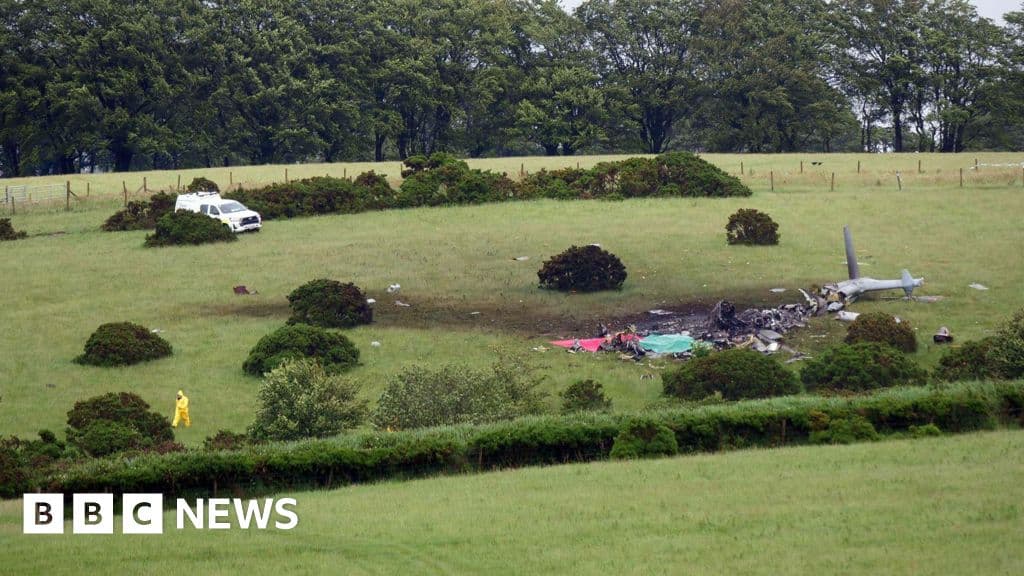
Ongoing investigations into the Royal Navy helicopter crash that killed three personnel.

Gaza's new reconstruction framework emphasizes political control instead of urgent rebuilding efforts.

Victoria's child protection system fails vulnerable children, leading to 35 deaths.

East Africa's Ebola outbreak prompts urgent vaccine research.
See every story in News — including breaking news and analysis.
Finally, according to the deal, Israel may even continue to attack Lebanon, citing security concerns, which may bring the country back to the situation before the most recent fighting - when Israel carried out near-daily attacks on targets and people allegedly linked to Hezbollah, despite the ceasefire that had ended their previous conflict in November 2024. Hezbollah remained quiet.
Trump seems to hope that this could be the beginning of a process to normalise relations between Israel and Lebanon - another divisive topic in the country.
The two neighbours have technically been in a state of war since 1948 and have no diplomatic relations. With parts of Lebanon occupied and Hezbollah yet to be disarmed, progress on that front appears, for now, unlikely.